
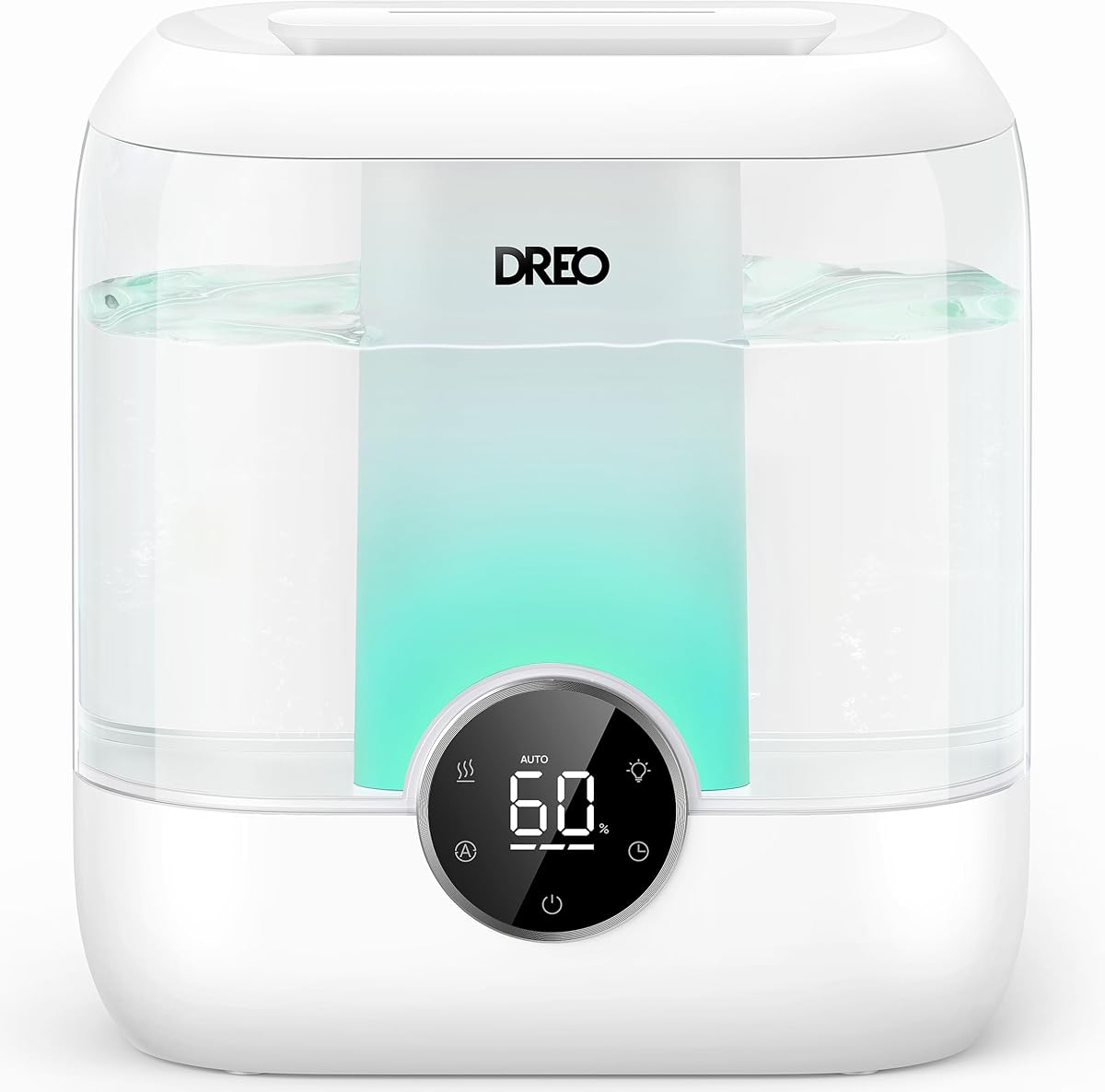
Evaluating Large-Capacity Humidifiers: What the Dreo 6L's Specs Really Mean for You
When considering a humidifier like the Dreo 6L with its 60-hour runtime and 28 dB noise claim, buyers must scrutinize how these features translate to real-world bedroom use. The top-fill design and 'easy to clean' promise are practical benefits, but their effectiveness depends on construction quality and user maintenance habits. This specific model's positioning for nurseries and large rooms requires understanding its actual moisture output and control precision.
Key Considerations Before Buying
- The 6L capacity and 60-hour runtime suggest efficient water use, but verify if this applies to the highest mist setting needed for large spaces or a lower, quieter nursery setting.
- A 28 dB quiet claim is near-whisper level; check reviews specifically for motor hum or gurgling sounds during operation, especially as the water level drops.
- Precise humidity control' requires examining if the humidistat maintains consistent levels or simply cycles the unit on/off within broad ranges.
What Our Analysts Recommend
For top-fill models, assess the opening size and absence of internal crevices that trap mineral deposits. Quality indicators include consistent mist output across the tank's lifespan and a humidistat that responds accurately to room conditions, not just preset timers. The night light should have adjustable brightness or an off option to avoid disrupting sleep.
Humidifiers Market Context
Market Overview
The cool mist humidifier market is saturated with models boasting similar 4-6L capacities and ultra-quiet claims, creating intense competition where build quality and reliability vary significantly. Brands like Dreo compete by emphasizing user-friendly features such as top-filling and precise digital controls, which address common pain points with traditional designs.
Common Issues
Premature failure due to mineral scale clogging the ultrasonic plate is frequent, making 'easy to clean' claims critical to verify. Many units struggle with accurate humidity sensing, often reading the moisture directly at the unit rather than the room's ambient level. Noise levels often increase in the final hours of operation as pumps work harder with lower water levels.
Quality Indicators
Superior models use demineralization cartridges or easy-access ultrasonic plates for maintenance. Look for consistent negative feedback patterns in reviews—if multiple users mention the same leak point or control malfunction, it's likely a design flaw. Truly precise units offer 1% RH adjustment increments rather than vague 'low/medium/high' settings.
Review Authenticity Insights
Grade C Interpretation
A Grade C with 38% potentially inauthentic reviews indicates significant review manipulation, particularly concerning given the high 4.87/5 rating. This discrepancy suggests the product's true performance may be closer to the adjusted 3.90/5 rating, which aligns more with typical humidifier reliability experiences.
Trust Recommendation
Prioritize the 53% of reviews from verified purchases and scrutinize those discussing specific, measurable performance over weeks of use. Be skeptical of reviews emphasizing only the night light or aesthetic features while lacking runtime or cleaning details.
Tips for Reading Reviews
Focus on reviews mentioning actual decibel measurements, cleaning frequency, or humidity consistency over multiple refill cycles. Look for photographic evidence of mineral buildup or detailed descriptions of the top-fill mechanism's convenience in practice.
Expert Perspective
The Dreo 6L presents a feature set targeting common humidifier frustrations, but the authenticity analysis raises red flags about its stellar rating. The 60-hour runtime is impressive if achievable on medium settings, though most users will refill more frequently when used in large rooms. The combination of top-fill design and precise humidity control addresses two major user pain points, but their execution quality determines real value. The significant gap between the displayed and adjusted ratings suggests potential issues with durability or performance consistency not reflected in the top reviews.
Purchase Considerations
Weigh the convenience of top-filling against the need to verify cleaning accessibility for the ultrasonic plate. Consider whether the precise digital controls justify the price premium over simpler dial-controlled models, especially given the review authenticity concerns. For nursery use, verify through detailed reviews that the 28 dB claim holds true during sleep cycles and doesn't include disruptive clicking from humidity adjustments.
Comparing Alternatives
Shoppers should compare the Dreo's cleaning claims and control precision against similar-capacity models from Levoit or Honeywell to assess true innovation versus marketing.


