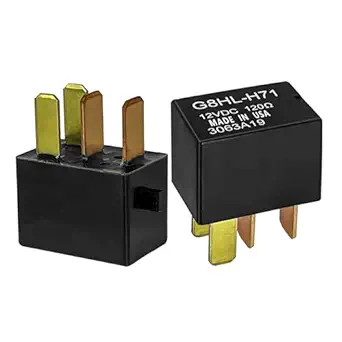
12V 20A 4-Pin SPDT Relays: What to Check Before You Buy
This set of four 12VDC 20A 4-pin SPDT relays is aimed at accessory power switching—think fog lights, horns, cooling fans, or auxiliary circuits. With a 4.75/5 rating across 103 reviews, the core question is whether these high-power relays deliver consistent switching and fitment in real-world automotive use.
Key Considerations Before Buying
- Confirm the 4-pin SPDT configuration matches your wiring: pin 30 (power in), 85 and 86 (coil), and 87 (normally open output). If your application needs a normally closed circuit, a 5-pin relay is required instead.
- Verify the 20A rating against your load's actual current draw, including startup surge. A 20A relay is fine for most accessory circuits, but inductive loads like compressors can spike well above running amperage.
- Check physical fitment and terminal orientation—some relay sockets and fuse-box layouts expect a specific pin arrangement, and a relay that doesn't seat properly can cause intermittent accessory power.
What Our Analysts Recommend
Look for relays with clearly marked terminal numbers, secure crimped or soldered internal connections, and a sealed or gasketed housing if mounted in engine-bay conditions. Copper or silver-alloy contacts and a coil rated for continuous duty are better signs than generic 'high power' claims.
Accessory Power Market Context
Market Overview
The accessory-power relay market is flooded with low-cost imports, and 4-pin 12V relays are among the most commoditized parts in automotive electrical. Price differences often reflect contact material, housing sealing, and quality control rather than dramatic performance gaps.
Common Issues
The most frequent complaints in this category are relays that fail stuck closed (keeping accessories powered), coils that burn out under vibration, and terminals that don't match standard socket spacing. Cheap units can also exhibit contact chatter or voltage drop under load.
Quality Indicators
A quality relay shows consistent terminal spacing, a housing that resists moisture, and contact ratings backed by a recognizable standard. Reviews mentioning long-term use in harsh conditions—heat, vibration, moisture—are more informative than first-day impressions.
Review Authenticity Insights
Grade B Interpretation
A Grade B with an estimated 15% fake review rate means most reviews are genuine, but a meaningful minority may be incentivized or unverified. The adjusted 4.40/5 rating is still solid for an inexpensive electrical component, suggesting real users are largely satisfied.
Trust Recommendation
Treat the 4.75/5 headline rating with mild caution and focus on the adjusted 4.40/5 figure. Look for reviews that mention specific applications (e.g., 'used for a fan on a 2012 Civic') and long-term outcomes rather than one-line praise.
Tips for Reading Reviews
For relays, prioritize reviews that describe installation details, load type, and duration of use. Brief five-star reviews like 'works great' carry little weight, while detailed accounts of failure modes or fitment issues are far more useful.
Expert Perspective
This Relay 15328866 set offers four 12VDC 20A SPDT relays at a price point typical for commodity electrical parts. The adjusted rating of 4.40/5 and a B authenticity grade suggest a product that generally performs as expected, with the usual caveats of budget relays—contact durability and sealing vary. For basic accessory switching, it's a reasonable value; for mission-critical or high-vibration applications, consider higher-spec alternatives.
Purchase Considerations
Weigh the cost savings against the consequence of a relay failure—a stuck-closed relay on a cooling fan or fuel pump circuit can be serious. If you're replacing a failed OEM relay, match the original's pin count and amperage exactly, and consider buying a spare given the four-pack format.
Comparing Alternatives
Shoppers should compare with name-brand relays (e.g., Bosch, Hella) or sealed automotive-grade units if reliability is paramount, and check whether a 5-pin version is needed for normally closed circuits.