
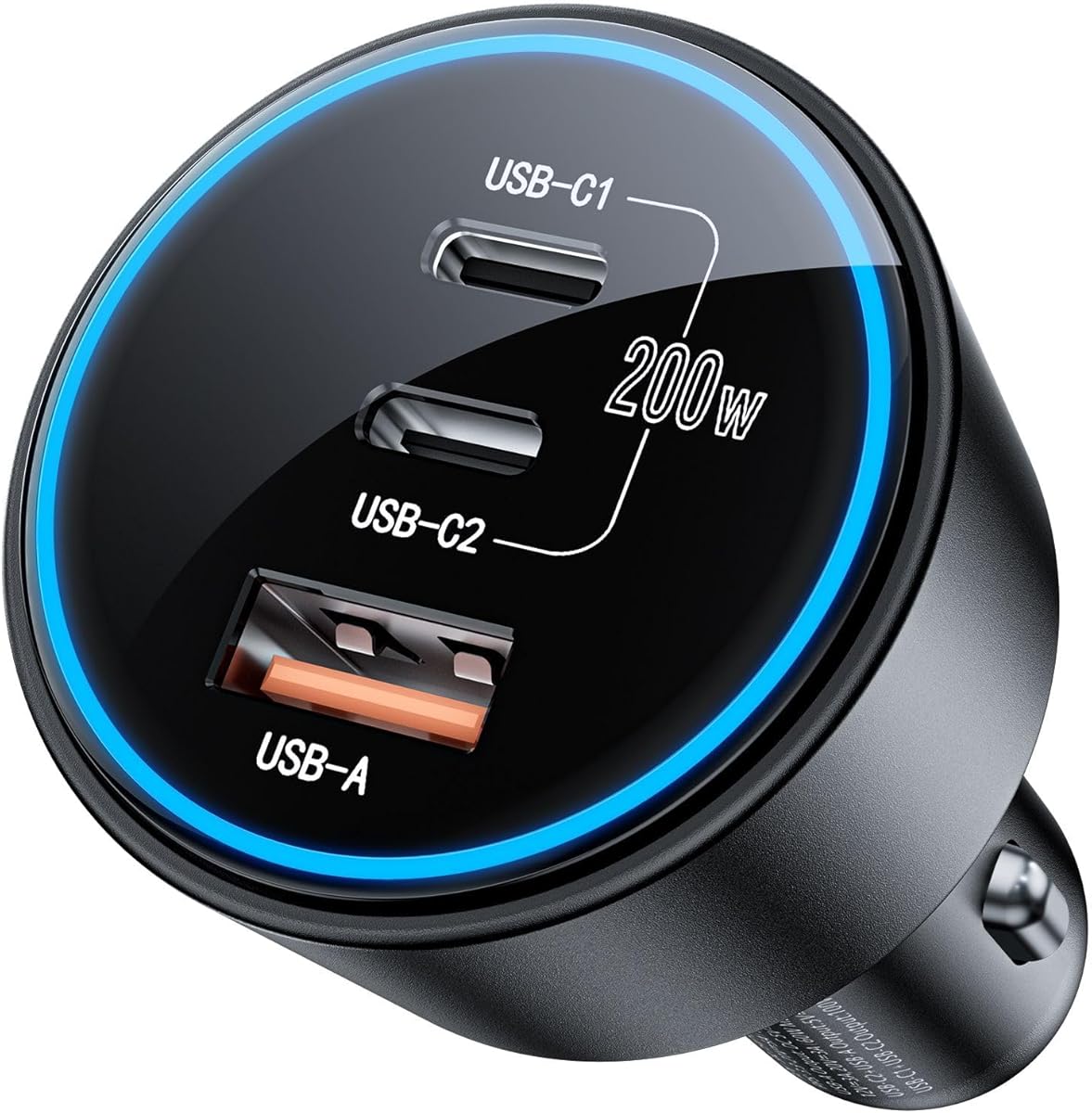
200W Dual USB-C Car Charger: What High-Power Users Need to Know
This 200W dual PD 100W car charger represents the current peak of in-vehicle charging technology, capable of powering demanding devices like MacBooks while simultaneously fast-charging phones. Buyers should understand that true 100W per port requires specific cables and compatible devices to achieve maximum performance. The inclusion of PD3.0, QC4.0, and PPS protocols makes this particularly versatile for mixed-device households.
Key Considerations Before Buying
- Verify your vehicle's cigarette lighter fuse rating—sustained 200W draw requires at least a 15-20A circuit, which some older vehicles may not support.
- True 100W charging requires USB-C cables rated for 5A/100W (E-marked cables), not just any USB-C cable you have on hand.
- The dual 100W ports can deliver full power simultaneously only if your vehicle's electrical system can handle the ~16.7A draw without voltage drop.
- Check device compatibility—while iPhones and Galaxy phones benefit from PPS, some laptops require specific voltage/current combinations this charger may not negotiate.
What Our Analysts Recommend
Quality indicators include robust heat dissipation design (visible ventilation), proper certification markings (UL, CE, FCC), and cables that maintain voltage under load. Premium chargers use gallium nitride (GaN) technology for efficiency, though this product's description doesn't specify its architecture. Look for reviews mentioning sustained performance during long drives, not just brief testing.
Automobile Chargers Market Context
Market Overview
The automotive charger market has shifted dramatically toward high-wattage USB-C PD solutions, with 200W representing the current consumer ceiling before requiring direct battery connections. Competition centers on simultaneous multi-device charging, with dual 100W ports being the premium configuration for travelers with laptops and tablets.
Common Issues
Overheating during sustained high-wattage use remains prevalent, especially in sun-exposed vehicles. Many chargers advertise peak wattages but cannot maintain them due to thermal throttling or voltage instability. Cigarette lighter sockets with worn springs often lose connection during vehicle vibration, interrupting charging.
Quality Indicators
Superior units implement temperature monitoring with automatic power reduction, use premium capacitors for stable output, and include over-current/over-voltage protection. Physical construction should feel substantial, not lightweight plastic, with secure port connections that don't wobble when cables are inserted.
Review Authenticity Insights
Grade A Interpretation
A Grade B with 11% estimated fake reviews indicates generally trustworthy feedback with some promotional padding. The 0.29-point drop from 4.89 to 4.60 when adjusting for suspicious reviews suggests genuine satisfaction sits in the mid-to-high 4-star range rather than near-perfect scores.
Trust Recommendation
Focus on reviews discussing specific device combinations (e.g., 'charged my MacBook Pro while also charging my iPhone 15 Pro Max') and those mentioning long-term use over months. Be slightly skeptical of reviews emphasizing packaging or customer service rather than technical performance.
Tips for Reading Reviews
Prioritize verified purchases that mention actual wattage measurements with USB-C meters, describe real-world road trip performance, or compare against previous chargers. Look for critical reviews discussing thermal performance—legitimate concerns often mention charger temperature during summer use or extended navigation sessions.
Expert Perspective
This charger's 4.60 adjusted rating from 1,293 reviews indicates strong real-world performance, particularly notable given the technical complexity of delivering stable 200W from a 12V system. The dual 100W PD configuration is genuinely useful for professionals traveling with multiple high-power devices, though most users will rarely utilize full capacity. The protocol support (PD3.0/QC4.0/PPS) covers nearly all modern devices, making it future-proof for several device generations. The high rating suggests it likely manages heat and voltage regulation better than many competitors in this wattage class.
Purchase Considerations
Consider whether you truly need 200W—users charging only phones might find lower-wattage options more cost-effective. Evaluate your typical passenger count and device combinations; families with multiple tablet users may benefit more than solo commuters. Check your vehicle's manual for accessory socket amperage limits, as some compact cars have 10A fuses that can't support sustained 200W draws.
Comparing Alternatives
Shoppers should compare thermal performance claims, warranty length (often 12-18 months for quality chargers), and whether competing models include voltage displays or individual port controls.


