
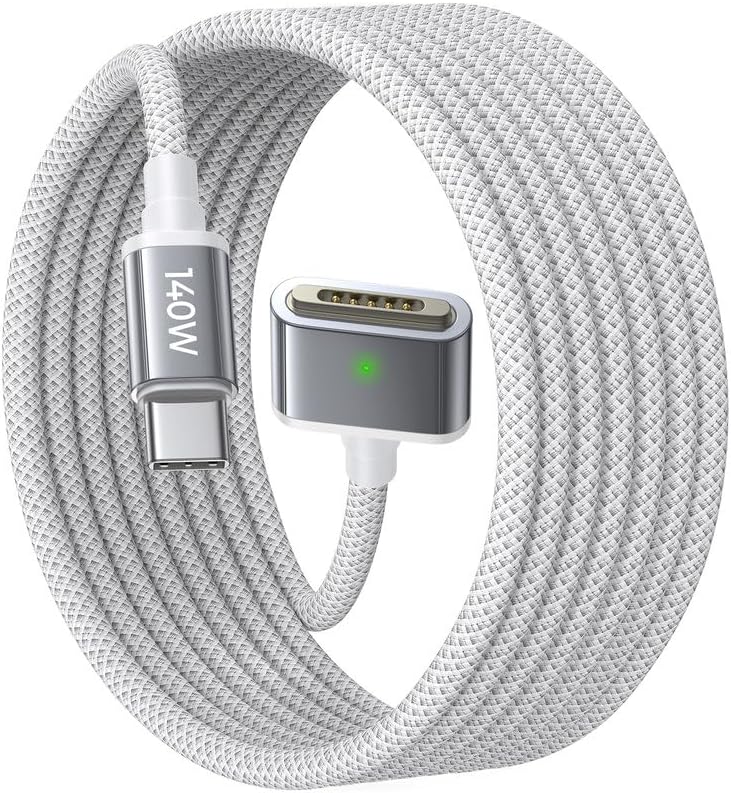
Magnetic USB-C cables offer convenience but require careful compatibility verification
The LISEN USB-C to Magnetic 3 Cable represents a third-party solution for MacBook users seeking the convenience of magnetic charging without Apple's MagSafe ecosystem. This specific 6.6-foot cable claims 140W power delivery and compatibility across multiple MacBook generations, but requires careful verification against your exact device model. Unlike standard USB-C cables, magnetic connectors introduce additional points of potential failure that buyers should understand.
Key Considerations Before Buying
- Verify your MacBook's exact model year and charging specifications—this cable claims compatibility with M2 through M4 chips across 2022-2025 models, but Apple's charging requirements can vary subtly between generations.
- The 140W rating suggests this cable supports fast charging for larger MacBook Pro models, but actual performance depends on your power adapter's output and the cable's internal wiring quality.
- Magnetic connectors offer convenience but create a proprietary connection—if the magnetic tip fails or the cable is discontinued, you'll need to replace the entire charging solution rather than just a standard cable.
What Our Analysts Recommend
For magnetic USB-C cables, examine the connector's build quality—the magnetic retention should feel secure without excessive wobble. Check for proper e-mark chip implementation (required for 140W power delivery) and verify the cable's thickness, as inadequate gauge wiring cannot safely sustain high wattage. The magnetic tip should have reinforced stress relief where it meets the cable body.
USB Cables Market Context
Market Overview
The magnetic USB-C cable market has expanded significantly since Apple reintroduced MagSafe, with third-party manufacturers offering alternative magnetic solutions that maintain USB-C compatibility. These products occupy a niche between convenience-focused accessories and essential charging components, with quality varying dramatically between brands. The 140W power delivery segment specifically targets users of larger MacBook Pro models who want magnetic safety without sacrificing fast charging capabilities.
Common Issues
Third-party magnetic cables frequently suffer from inconsistent magnetic retention strength, inadequate power delivery at advertised wattages, and premature connector failure at the stress points. Compatibility claims often overstate device support, particularly with newer MacBook models that may have subtle charging protocol differences. Many magnetic tips lack proper thermal management for sustained high-wattage charging sessions.
Quality Indicators
Quality magnetic cables feature proper e-mark chips (visible as a small chip inside the USB-C connector), thicker 20AWG or lower gauge wiring for high-wattage applications, and reinforced connectors with strain relief. Premium options include temperature monitoring circuits and use higher-grade neodymium magnets with consistent pull force ratings. Look for cables certified by USB-IF or with proper safety certifications, though many third-party magnetic cables lack these formal validations.
Review Authenticity Insights
Grade B Interpretation
The 'U' authenticity grade and 0.00% fake review percentage indicate this product has no established review history—this doesn't signify poor quality, but rather that no verified purchase feedback exists to validate the manufacturer's claims. For a product making specific compatibility claims across multiple MacBook generations, this absence of user verification represents a significant information gap.
Trust Recommendation
Given the complete absence of verified reviews, treat all compatibility and performance claims as unproven until independent testing emerges. Pay particular attention to the seller's return policy and warranty terms, as you're effectively acting as an early adopter. Consider whether your specific MacBook model's charging requirements justify being among the first to test this product.
Tips for Reading Reviews
When reviews eventually appear, prioritize those mentioning specific MacBook models and wattage measurements using tools like USB-C power meters. Look for long-term durability reports focusing on magnetic connector wear and high-wattage charging consistency. Be skeptical of reviews that don't mention actual device compatibility testing or that focus exclusively on packaging and initial impressions.
Expert Perspective
The LISEN magnetic cable enters a competitive market with ambitious compatibility claims spanning four MacBook generations and three processor architectures. The 140W rating suggests it targets professional users with larger MacBook Pro models, but without verified reviews or established brand reputation in this specific niche, these claims remain theoretical. The 6.6-foot length is practical for workspace flexibility, though longer cables can experience voltage drop at high wattages that magnetic connectors might exacerbate. The complete lack of review data makes this a speculative purchase until independent verification emerges.
Purchase Considerations
Weigh the convenience of magnetic charging against the risk of unverified compatibility with your specific MacBook model—particularly if you own newer M4 or M3 Pro/Max models with specific power requirements. Consider whether you need 140W delivery or if lower-wattage alternatives might suffice with potentially more established track records. Evaluate if the magnetic safety feature justifies potentially sacrificing Thunderbolt 4 data speeds, as most magnetic cables prioritize charging over data transfer capabilities.
Comparing Alternatives
Compare this cable's specifications against established magnetic cable brands like Volta, SnapWire, or Apple's official MagSafe 3 system, noting differences in warranty coverage and verified compatibility lists.


