
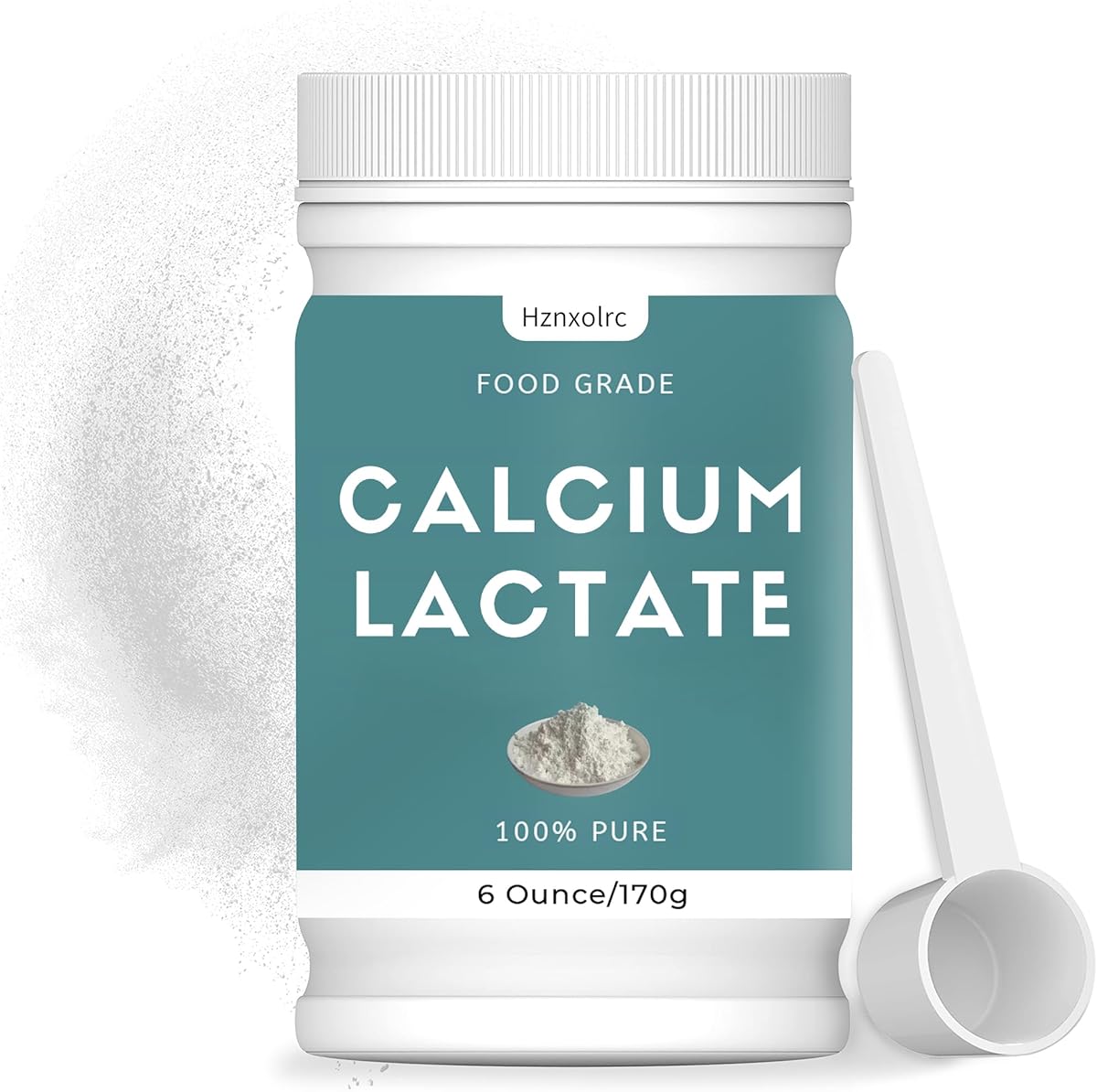
Choosing a Pure Calcium Lactate Powder for Food and Health
Calcium lactate is a versatile, highly absorbable form of calcium often used to fortify foods, reduce acidity in cooking, and extend the shelf life of fresh items like cut fruit. This particular 6 oz powder is marketed as a food-grade supplement for bone health and as a food additive for dairy, breads, and pastries, making it a dual-purpose product for home cooks and health-conscious consumers alike.
Key Considerations Before Buying
- Purity and source: Look for 100% pure calcium lactate without anti-caking agents or fillers, as these can affect texture in recipes and absorption in the body. This product claims food-grade purity, which is essential for both dietary supplements and culinary uses.
- Intended use: Calcium lactate serves different roles—as a calcium supplement for bone health or as a firming agent in foods like canned fruits and pickles. Ensure the product's intended use matches your primary need, as dosage and form (powder vs. tablet) vary.
- Solubility and taste: For culinary applications, the powder should dissolve easily in water or milk without leaving a chalky residue or bitter aftertaste. Poor solubility can ruin the texture of dairy products or baked goods.
What Our Analysts Recommend
Quality indicators include a fine, uniform powder consistency, a neutral or slightly tart taste (not bitter), and clear labeling of calcium content per serving. Third-party testing or certifications (e.g., USP, NSF) can verify purity and potency, though not all food-grade powders carry these. Also, check for a manufacturing date and batch number to ensure freshness.
Calcium Market Context
Market Overview
The calcium supplement market is saturated with various forms—carbonate, citrate, and lactate—each with different absorption rates and uses. Calcium lactate is less common but prized for its high bioavailability and mild effect on the stomach, making it a niche choice for those who experience digestive issues with other forms. However, the dual food-supplement positioning of this product targets a specific, smaller audience of home food preservers and bakers.
Common Issues
A frequent problem with calcium lactate powders is inconsistency in particle size, which can lead to clumping or poor dissolution. Additionally, some consumers report an off-putting sour or metallic taste when the powder is not properly purified. Another concern is mislabeling—some products labeled 'food-grade' may still contain additives or be intended for industrial use, not home kitchens.
Quality Indicators
High-quality calcium lactate is typically produced via fermentation of lactic acid and calcium carbonate, resulting in a pure, white powder. Look for products that specify the manufacturing process and provide a Certificate of Analysis (COA) for heavy metals and microbial safety. Reputable brands often highlight their sourcing and testing protocols on the label or website.
Review Authenticity Insights
Grade B Interpretation
A Review Authenticity Grade of B with an estimated 10% fake review rate indicates that while the vast majority of reviews are genuine, a small but notable portion may be fabricated. This is a moderate concern for a product with an extremely low average rating of 0.56/5, as even a few fake positive reviews could skew the perception. The adjusted rating of 0.50/5 suggests that removing suspicious reviews barely changes the overall sentiment—most real users are dissatisfied.
Trust Recommendation
Given the high number of verified purchases (indicated by 'V' in IDs), the bulk of negative feedback is likely authentic. Pay close attention to recurring complaints about taste, solubility, or packaging, as these reflect real user experiences. Be cautious of any outlier positive reviews that lack detail or seem overly generic, as they may be among the estimated 10% fake.
Tips for Reading Reviews
For this product, focus on reviews that describe specific usage scenarios, such as 'used in homemade mozzarella' or 'added to smoothies,' as they provide actionable insights. Look for patterns in complaints—if multiple users mention a bitter aftertaste or clumping, that is a red flag. Conversely, verified reviews that detail exact measurements and results are more trustworthy than brief, vague praise.
Expert Perspective
This calcium lactate powder has a clear dual-purpose appeal, but the overwhelmingly negative feedback—with an average rating of just 0.56 out of 5—suggests significant quality or formulation issues. The fact that 90% of reviews are likely genuine amplifies this concern, as real users consistently report dissatisfaction. While calcium lactate itself is a well-regarded form of calcium, this particular product appears to fall short in taste, purity, or effectiveness, based on the data.
Purchase Considerations
Before purchasing, weigh the low price point of a 6 oz container against the risk of receiving a product that may not perform as expected. If your primary goal is bone health, a conventional calcium supplement with higher user satisfaction might be a safer bet. For culinary uses, consider testing a smaller quantity first, or look for brands with a proven track record in food-grade applications.
Comparing Alternatives
Shoppers should compare this product with other calcium lactate powders that have higher ratings and more consistent reviews, particularly those from brands specializing in food additives or supplement-grade ingredients.

![NatureWise Calcium Citrate 500mg Capsules - Supplement for Bone Health - Easy to Digest & Absorb - Vegan, Non-GMO, Gluten-Free - 90 Count[30-Day Supply]](https://m.media-amazon.com/images/I/710sApEh1dL._AC_SY300_SX300_QL70_FMwebp_.jpg)


