
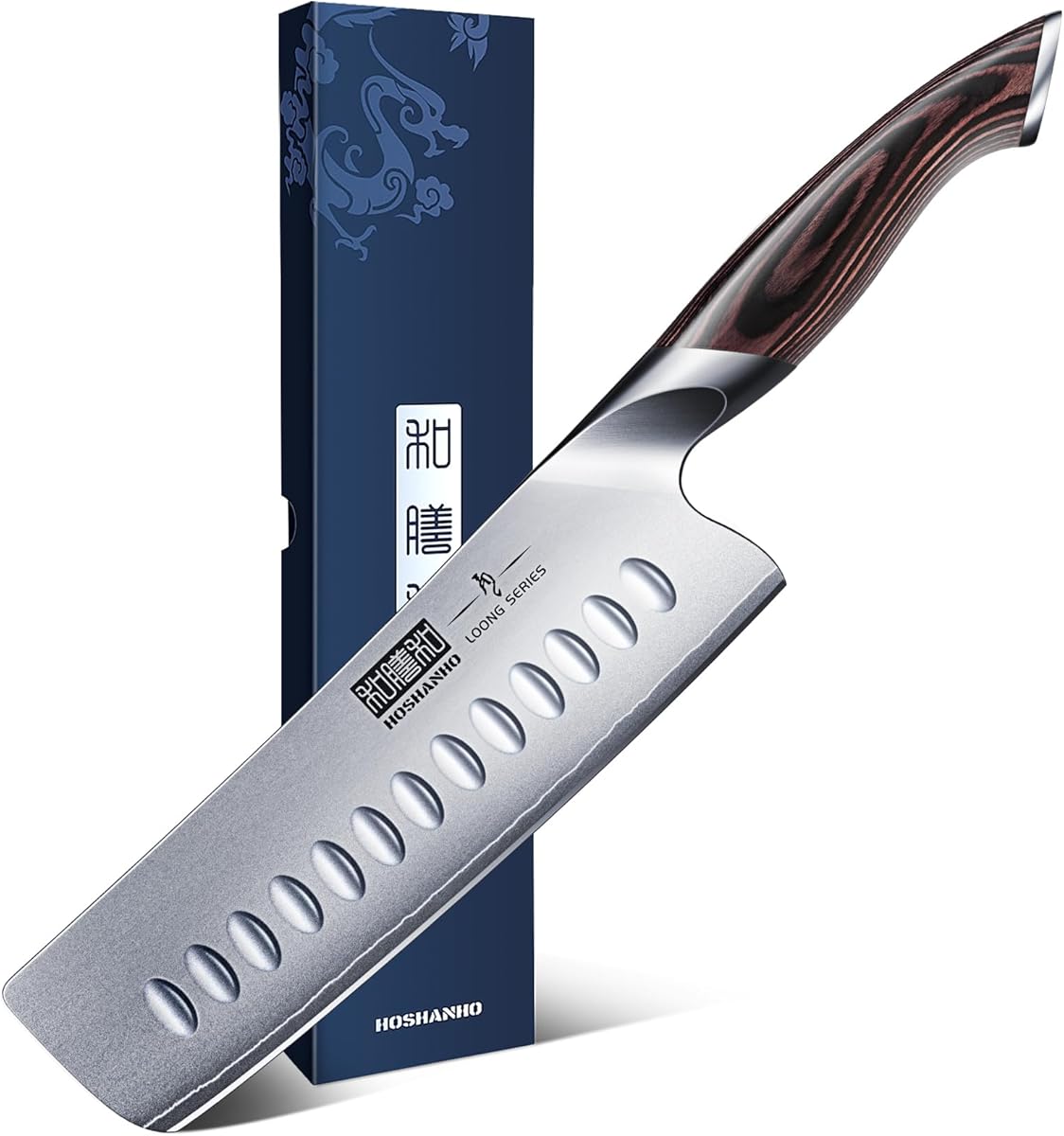
Master Your Veggie Prep: HOSHANHO 7-Inch Nakiri Knife Buying Guide
If you're considering the HOSHANHO 7-Inch Nakiri Knife, you're looking at a specialized Japanese blade designed for precision vegetable work. This guide helps you understand what makes a great Nakiri—from its straight edge for clean cuts to the ergonomic Pakkawood handle that balances comfort and control.
Key Considerations Before Buying
- Blade steel matters: The HOSHANHO uses high-carbon stainless steel, which offers a sharp edge that resists rust better than pure carbon steel—ideal for frequent use on wet vegetables.
- Handle ergonomics: The Pakkawood handle on this knife is moisture-resistant and shaped for a secure grip, critical for the push-cut motions typical of Nakiri knives.
- Edge retention: A Nakiri's thin blade requires frequent honing; look for models like this one that balance hardness (for longevity) with ease of sharpening.
What Our Analysts Recommend
Quality Nakiri knives feature a flat, double-bevel edge for straight chops and a thin profile to reduce wedging in dense veggies like squash. The HOSHANHO's 7-inch length is standard for home cooks, offering enough blade to slice large cabbages or melons without being unwieldy. Check for a full tang and balanced weight—this knife's design suggests solid construction.
Usuba & Nakiri Knives Market Context
Market Overview
The Nakiri knife market has grown as home cooks embrace Japanese-style vegetable preparation, with options ranging from budget-friendly to artisan-forged. Many brands now offer high-carbon stainless steel blades, but quality varies in heat treatment and edge geometry.
Common Issues
Common complaints in this category include blades that chip easily due to overly hard steel, handles that loosen over time, and edges that dull quickly with heavy use. Some lower-cost Nakiri knives also suffer from poor balance, making precise cuts difficult.
Quality Indicators
Look for a blade hardness around 58-60 HRC on the Rockwell scale, a seamless handle-to-tang fit, and a consistent edge grind. Reviews that mention specific tasks (e.g., 'glides through carrots' or 'no wedging in sweet potatoes') are strong indicators of real-world performance.
Review Authenticity Insights
Grade B Interpretation
The B grade with an estimated 10% fake reviews means most of the 1,604 reviews are genuine, but a small fraction may be incentivized or non-representative. This is typical for popular kitchen knives, where some sellers might boost ratings early on.
Trust Recommendation
You can trust the overall 4.89 rating, but focus on reviews that describe specific usage—like chopping herbs or dicing onions—rather than vague praise. The adjusted rating of 4.60 is still excellent and aligns with authentic user experiences.
Tips for Reading Reviews
When reading reviews, prioritize verified purchases (nearly all here) and look for comments on edge retention after weeks of use, handle comfort during long prep sessions, and any chipping or rusting. Photos of the knife in action are especially valuable for Nakiri knives.
Expert Perspective
The HOSHANHO 7-Inch Nakiri Knife appears to be a strong performer in its price range, with a high authenticity rating suggesting real user satisfaction. Its high-carbon stainless steel and ergonomic handle address key Nakiri needs, and the 4.60 adjusted rating indicates reliable quality. The 10% fake review rate is minor and unlikely to skew the overall positive sentiment.
Purchase Considerations
Weigh the knife's specific vegetable-focused design—if you primarily chop meats or bones, a different blade shape may be better. Also consider your sharpening routine; while the steel holds an edge well, it will need periodic honing to maintain that razor feel.
Comparing Alternatives
Shoppers should compare this with other Nakiri knives in the $30-$60 range, such as those from Tojiro or Dalstrong, to assess blade thickness and handle preferences. The HOSHANHO's Pakkawood handle is a standout feature for those who prioritize comfort.


