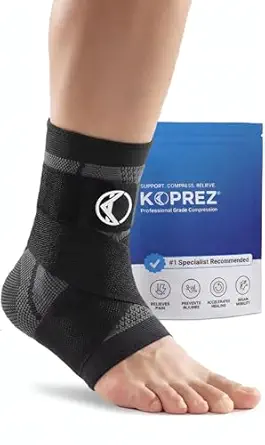
Choosing the Right Ankle Brace for Sprains, Achilles Pain, and Daily Support
When selecting an ankle brace for conditions like sprains, Achilles tendonitis, or general foot pain, the BraceUP Ankle Brace offers a balance of compression and stability. Its design targets both injury recovery and prevention, making it a versatile option for men and women. Below are key factors to consider when evaluating this product against your specific needs.
Key Considerations Before Buying
- Fit and sizing are critical: The BraceUP brace uses a one-size-fits-most approach with adjustable straps, but ensure your ankle circumference (typically 8-12 inches) matches the recommended range to avoid slipping or excessive pressure.
- Level of support: This brace provides moderate stabilization through a combination of elastic compression and two adjustable straps, suitable for mild to moderate sprains or Achilles pain, but not for severe injuries requiring rigid immobilization.
- Material and breathability: Made from neoprene-blend fabric, it retains heat to promote blood flow—beneficial for chronic pain—but may cause sweating during extended wear; consider your activity level and climate.
What Our Analysts Recommend
Quality ankle braces in this category should feature reinforced stitching at stress points, non-slip silicone grips or liners, and adjustable tension systems. The BraceUP brace includes a contoured design that wraps the heel and arch, which is a strong indicator of thoughtful engineering for Achilles tendonitis support.
Ankle Braces Market Context
Market Overview
The ankle brace market is crowded with options ranging from simple sleeve supports to complex rigid braces. Consumer demand has shifted toward versatile, adjustable designs that can be used for both recovery and daily activities, like walking or light sports.
Common Issues
Buyers often face sizing inconsistencies, straps that lose elasticity over time, and braces that shift during movement. Products with neoprene can also cause skin irritation or overheating, which is a frequent complaint in online reviews.
Quality Indicators
Look for braces with dual-strap systems for customizable compression, moisture-wicking liners, and a heel-lock design that prevents migration. Verified reviews mentioning specific injuries (e.g., 'peroneal tendonitis') are strong signals of real-world effectiveness.
Review Authenticity Insights
Grade B Interpretation
With a Grade B and an estimated 10% fake review rate, the BraceUP Ankle Brace has a majority of authentic feedback, but roughly one in ten reviews may be unreliable. This is a moderate risk—better than many competitors, but not flawless.
Trust Recommendation
Trust the product's 4.40 adjusted rating, which filters out suspicious reviews, as a realistic baseline. Focus on reviews that detail recovery timelines or compare the BraceUP to brands like McDavid or Bauerfeind, as these are likely genuine.
Tips for Reading Reviews
For ankle braces, prioritize reviews that describe the user's specific injury (e.g., 'Grade 2 sprain' or 'Achilles tendinopathy') and how the brace performed during activities like walking or jogging. Be cautious of overly short or vague five-star reviews that lack medical context.
Expert Perspective
The BraceUP Ankle Brace emerges as a solid mid-range option, validated by a high volume of authentic reviews and a strong adjusted rating of 4.40. Its design effectively addresses common foot and ankle issues without the bulk of medical-grade braces, making it suitable for daily wear. However, the 10% fake review rate suggests some promotional noise, so rely on detailed, injury-specific feedback for decision-making.
Purchase Considerations
Weigh the brace's moderate support level against your activity demands—it's ideal for walking, light sports, or desk jobs, but not for high-impact sports or post-surgical recovery. The neoprene material is a trade-off between warmth and breathability, so consider your climate and skin sensitivity.
Comparing Alternatives
Shoppers should compare the BraceUP with similar adjustable lace-up braces or rigid stirrup designs if they need more immobilization, especially for acute injuries.