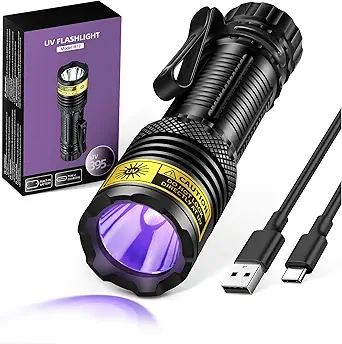
Choosing a Dual-Wavelength UV Flashlight: Key Factors for Mineralogy and Detection
This specific UV flashlight combines both shortwave 254nm UVC and longwave 365nm/395nm UVA LEDs in one tool, which is distinct from single-wavelength models. Buyers should understand that the ZWB3 filter glass is crucial for blocking visible light and enhancing fluorescence, making it suitable for specialized applications like mineral identification and security verification.
Key Considerations Before Buying
- The dual-wavelength capability means you can switch between shortwave (ideal for many fluorescent minerals and tagged stamps) and longwave (better for yooperlites and general currency checking) without needing two separate lights.
- Consider the intended use: 254nm UVC is more specialized and potentially hazardous, requiring eye protection, while 365nm UVA is more common for general fluorescence and is safer for casual use.
- The build quality around the filter mounting is critical; a poorly seated ZWB3 filter will leak visible light, significantly reducing the effectiveness for detecting faint fluorescence in minerals or security features.
What Our Analysts Recommend
High-quality UV flashlights in this niche will explicitly state the LED's peak nanometer output (e.g., 254nm, 365nm) rather than just 'UV.' Look for mentions of a properly installed filter, like the ZWB3, and reviews that comment on the purity of the UV output and the absence of a visible purple haze, which indicates a cheap, unfiltered LED.
Handheld Flashlights Market Context
Market Overview
The market for handheld UV flashlights has expanded beyond basic blacklight party lights to include serious tools for rockhounds, prospectors, and security professionals. Products now segment sharply between inexpensive, unfiltered longwave lights and more expensive, filtered dual-wavelength models like this one.
Common Issues
Common problems include misleading wavelength labeling, where a light advertised as 365nm actually emits 395nm or higher, resulting in weaker fluorescence. Another issue is poor heat dissipation from the high-output LEDs, leading to reduced lifespan or the need for intermittent use to prevent overheating.
Quality Indicators
Quality is indicated by the use of genuine ZWB2 or ZWB3 filter glass (not just a coated lens), separate switches for different wavelengths, and a metal housing for heat management. Authentic product reviews will often include photos demonstrating the light's effect on known fluorescent minerals or security threads.
Review Authenticity Insights
Grade B Interpretation
A Grade 'B' with an 11% estimated fake review rate suggests the majority of feedback is reliable, but a small portion may be inauthentic. For a specialized tool like this, fake reviews often generically praise 'brightness' without demonstrating knowledge of UV-specific performance.
Trust Recommendation
Focus on the detailed reviews that mention specific use cases, like checking a particular mineral's response or comparing the 254nm and 365nm outputs. Be skeptical of overly vague 5-star reviews that lack this technical context, as they may constitute the estimated 11% inauthentic portion.
Tips for Reading Reviews
Prioritize reviews that discuss the filter's effectiveness, the distinct difference between the two UV modes, and battery life under UV operation. Reviews from users with profile names related to geology or collecting are often more credible for this niche product.
Expert Perspective
This product's adjusted rating of 4.10/5, derived from authentic reviews, indicates it is a well-regarded performer in its category. The combination of both shortwave and longwave UV in a single handheld torch is a significant value for serious hobbyists, though the presence of some lower ratings suggests potential variability in unit quality or user expectations regarding output intensity. The 'B' authenticity grade provides reasonable confidence in the overall feedback.
Purchase Considerations
Weigh the convenience of a dual-light against your primary need; if you only require longwave for yooperlites or currency, a dedicated 365nm light may suffice. Also consider the safety aspect: operating the 254nm UVC emitter requires strict avoidance of eye or skin exposure, which may not be suitable for all users.
Comparing Alternatives
Shoppers should compare the wavelength specifications, filter type, and battery configuration (e.g., 18650 vs. AA) with other dual-wavelength models, as these details critically impact performance and convenience.