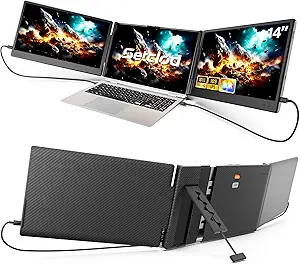
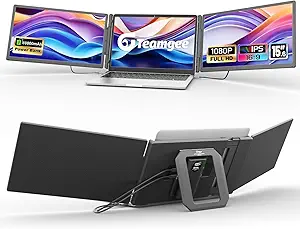
Portable Touchscreen Monitor Buying Guide: What to Know Before You Buy
A 15.6-inch FHD portable touchscreen monitor like the CAPERAVE can transform a laptop into a dual-display workstation, but touchscreen functionality adds considerations beyond a standard portable monitor. You'll want to confirm compatibility with your devices, understand how touch input is delivered, and weigh connectivity options.
Key Considerations Before Buying
- Touchscreen input typically requires a USB data connection in addition to video, so check whether the monitor supports USB-C single-cable operation or needs a separate USB link for touch to function.
- Confirm operating system support—Windows generally offers the broadest touchscreen driver support, while macOS and some Android devices may have limited or no touch functionality depending on the model.
- Portable monitors are often bus-powered, so verify the monitor's power draw and whether your laptop's USB-C port can supply enough wattage, or if a separate power adapter is needed.
What Our Analysts Recommend
Prioritize an IPS panel for consistent viewing angles and color, and check that the resolution is true 1920x1080 rather than a lower panel scaled up. Look for a protective cover that doubles as a stand, and confirm the included cables match your laptop's ports—USB-C, mini-HDMI, or both.
Monitors Market Context
Market Overview
The portable monitor market has exploded as remote work and travel-friendly setups gain popularity, with 15.6-inch FHD models becoming the de facto standard size. Touchscreen variants remain a smaller niche, often commanding a premium over non-touch versions, and quality varies widely between established brands and lesser-known entrants.
Common Issues
Buyers frequently report connectivity headaches—cables that don't carry both video and touch, laptops that can't output enough power over USB-C, or drivers that don't install automatically. Other recurring complaints include dead pixels, backlight bleed, and stands that feel flimsy or don't hold the monitor at a usable angle.
Quality Indicators
A reputable portable monitor should specify panel type (IPS is preferred), brightness in nits (250+ is usable indoors), and list supported operating systems for touch. Build quality matters too: an aluminum or reinforced plastic chassis, a magnetic cover that securely props the screen, and clearly labeled ports are signs of a thoughtfully designed product.
Review Authenticity Insights
Grade B Interpretation
A Grade B authenticity rating with an estimated 12% fake reviews is middling—not alarming, but not pristine. For a product with a 4.89-star average and over 1,100 reviews, the adjusted 4.60 rating suggests that while most feedback is genuine, a small portion may be inflated or incentivized, so the true customer satisfaction is likely still strong but slightly lower than the headline score.
Trust Recommendation
Trust the adjusted 4.60 rating more than the 4.89 display score, and focus on reviews that describe specific use cases, mention drawbacks, or include photos. Verified purchase reviews with detailed pros and cons are your best signal; be wary of short, generic praise that could be fabricated.
Tips for Reading Reviews
When scanning reviews for this monitor, look for mentions of touchscreen responsiveness, compatibility with your specific laptop model, and whether the included cables worked out of the box. Pay attention to repeated complaints about the same issue—if multiple reviewers cite the same flaw, it's likely a real product limitation rather than a one-off defect.
Expert Perspective
The CAPERAVE 15.6'' FHD Portable Monitor Touchscreen appears to be a solid mid-tier option, backed by a large volume of mostly authentic reviews and a high adjusted rating. Its appeal lies in adding touch input to a portable form factor, which is uncommon at this price point. However, the 12% estimated fake review rate means you should calibrate expectations to the adjusted 4.60 score rather than the near-perfect 4.89. If touch functionality and portability are priorities, this monitor likely delivers, provided your devices are compatible.
Purchase Considerations
Before buying, verify that your laptop supports video output over USB-C or has an HDMI port, and confirm that your operating system supports touch input for external monitors. Consider whether you need a built-in battery or if bus-powered operation is sufficient, and check the return policy in case of dead pixels or compatibility issues.
Comparing Alternatives
Compare this model against other 15.6-inch portable touchscreens from brands like ASUS, Lepow, or AOC, paying attention to panel brightness, warranty length, and customer support reputation.