
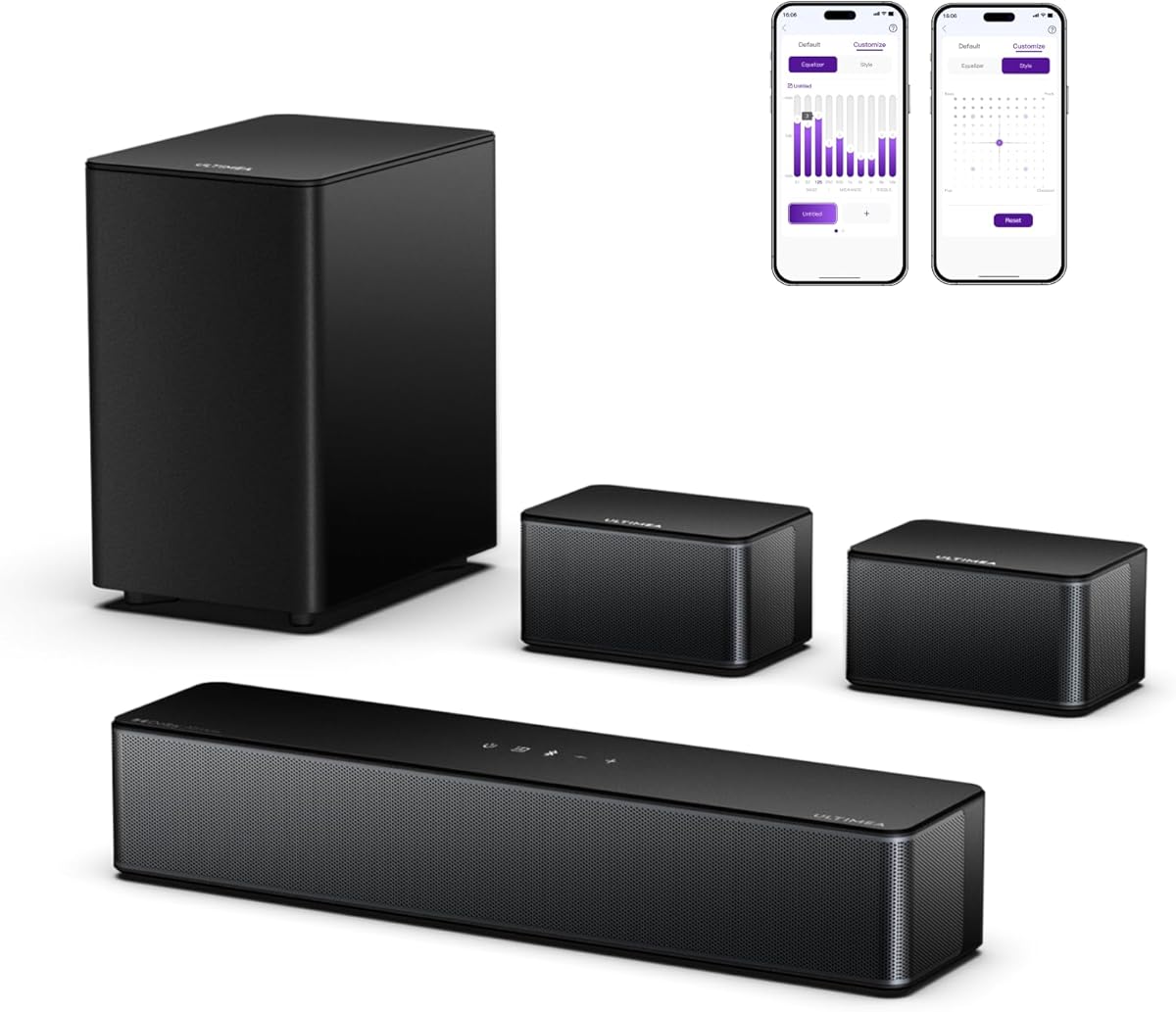
Choosing a 5.1 Dolby Atmos Sound Bar: What the ULTIMEA D60 Reveals
When evaluating the ULTIMEA Poseidon D60, buyers should focus on how its specific 5.1 channel configuration and 410W peak power translate to room-filling audio. This model's 'Surround Adjustable' feature and dedicated wireless subwoofer are key differentiators that require scrutiny against your living space and content preferences, as not all implementations of Dolby Atmos at this price point deliver equal immersion.
Key Considerations Before Buying
- Room size and acoustics are critical for the D60's 5.1 surround effect; its wireless rear speakers need placement flexibility, and the subwoofer's bass boost can overwhelm smaller rooms if not properly calibrated via its app.
- The 'APP Control' feature is a central selling point; verify its stability and depth of settings, as a buggy app can neuter the soundbar's adjustable surround and EQ capabilities, turning a premium feature into a frustration.
- Dolby Atmos support varies; this soundbar uses upward-firing drivers to create height effects, but its performance depends heavily on your ceiling's material and height—a flat, reflective ceiling under 10 feet yields the best results.
What Our Analysts Recommend
For sound bars like the D60, prioritize user reviews detailing specific content tests (e.g., Atmos movie scenes, music genres) and setup experiences. Genuine reviews often mention the subwoofer's wireless connectivity stability over time and the tangible difference when toggling the 'Surround Adjustable' mode, rather than just praising 'great sound.'
Sound Bars Market Context
Market Overview
The mid-range sound bar market is fiercely competitive, with brands like ULTIMEA challenging established names by packing features like Dolby Atmos and high peak power into sub-$500 systems. The 2025 model year sees increased focus on app integration and customizable sound fields, moving beyond preset modes.
Common Issues
Common pitfalls include wireless subwoofer dropouts, rear speaker latency syncing with the main bar, and overstated Atmos performance that fails to create a convincing overhead effect. Many apps promise granular control but offer limited practical adjustments or suffer from connectivity bugs.
Quality Indicators
Look for consistent praise in verified reviews for specific strengths, like dialogue clarity during loud action scenes or seamless Bluetooth switching. In the D60's case, its 4.89 Amazon rating, though slightly adjusted to 4.50, suggests strong user satisfaction, particularly regarding its power output and bass performance.
Review Authenticity Insights
Grade B Interpretation
A Grade B with a 15% estimated fake review rate indicates generally reliable feedback but warrants cautious optimism. For the ULTIMEA D60, this means the overwhelming positive sentiment is likely genuine, but you should discount vague, overly effusive reviews that lack setup or performance specifics.
Trust Recommendation
Focus on the 782 verified purchase reviews, especially those discussing long-term use (beyond 30 days) of the wireless subwoofer and app stability. The adjusted 4.50 rating is a more conservative and likely realistic benchmark of performance than the raw 4.89 score.
Tips for Reading Reviews
Prioritize reviews that mention the 'Surround Adjustable' function by name and describe its audible impact. Be skeptical of reviews that only praise packaging or initial sound without detailing calibration, Atmos content testing, or comparisons to other audio setups.
Expert Perspective
The ULTIMEA Poseidon D60 presents a compelling value proposition on paper, bundling a full 5.1 Dolby Atmos system with app control at a competitive price point. The exceptionally high user rating (4.89) and large review volume (782) signal strong market reception, though the adjusted rating of 4.50 and Grade B authenticity suggest a minor degree of review inflation. Its 410W peak power and dedicated wireless subwoofer are standout specs for immersive home theater, but its performance hinges on proper setup and room acoustics.
Purchase Considerations
Weigh the D60's feature density against your technical comfort; optimizing its adjustable surround and app EQ requires effort. Consider if your primary content (streaming movies, gaming, music) benefits from its specific 5.1 Atmos configuration, or if a simpler 3.1 system would suffice. The wireless subwoofer is a significant pro, but ensure you have placement flexibility for optimal bass response.
Comparing Alternatives
Shoppers should compare the D60's performance and connectivity against similarly priced 5.1 systems from Vizio, Samsung, and Sony, paying close attention to real-world Atmos performance and app reliability.


