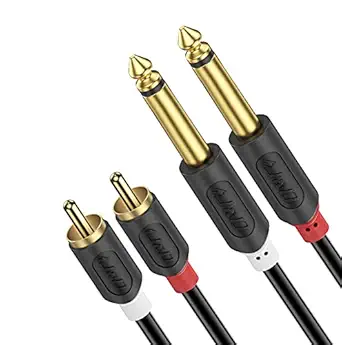
When a 90-Degree RCA Connector Solves Your Subwoofer Installation Dilemma
The VANAUX 90-degree subwoofer cable addresses a specific spatial challenge in home theater setups: routing cables in tight rear-panel spaces where traditional straight connectors won't fit. This product's unique angled design allows for cleaner installations against walls or in cramped AV racks, while maintaining the signal integrity needed for low-frequency audio transmission.
Key Considerations Before Buying
- Measure your available clearance behind your subwoofer and AV receiver—angled connectors typically need 1-1.5 inches less depth than straight connectors for proper seating.
- Verify your subwoofer's input type; while most use RCA inputs, some models require different connections or have proprietary locking mechanisms that might not accommodate angled plugs.
- Consider cable management needs—the 10-foot length provides flexibility but requires planning for excess cable coiling in visible areas versus shorter runs that might limit placement options.
What Our Analysts Recommend
For angled RCA cables, examine the connector's pivot point—quality versions like this VANAUX model use reinforced strain relief where the cable meets the angled connector to prevent internal wire fatigue. Gold plating on the contacts, while not essential for pure conductivity, provides corrosion resistance that's valuable in humid environments or for long-term installations.
RCA Market Context
Market Overview
The RCA cable market is saturated with generic options, but specialized designs like 90-degree connectors represent a growing niche addressing real installation challenges. While basic RCA cables have become commoditized, products solving specific spatial problems command premium pricing and attract discerning home theater enthusiasts.
Common Issues
Many angled RCA connectors suffer from poor mechanical design—either being too stiff to rotate for optimal positioning or so loose they don't maintain connection. Another frequent complaint involves the angle actually creating interference with adjacent ports on crowded receiver panels, defeating the space-saving purpose.
Quality Indicators
Look for oxygen-free copper (OFC) conductors specifically mentioned for subwoofer cables, as they better handle the high-current, low-frequency signals. Quality angled connectors will have precise 90-degree bends without stressing the internal wiring, and should include threaded collars or secure locking mechanisms to prevent accidental disconnection.
Review Authenticity Insights
Grade B Interpretation
A Grade B authenticity rating with 11% estimated fake reviews suggests generally reliable feedback, but advises extra scrutiny of overly enthusiastic 5-star reviews lacking installation specifics. The adjusted 4.40 rating (down from 4.67) indicates some review inflation, but still reflects strong genuine satisfaction.
Trust Recommendation
Focus on verified purchase reviews that mention specific equipment brands or installation scenarios—these provide the most actionable insights for your setup. Pay particular attention to reviews discussing long-term performance over months of use, as these are less likely to be incentivized early reviews.
Tips for Reading Reviews
For installation-specific products like this, prioritize reviews that detail the exact spatial constraints solved (e.g., 'fit my SVS SB-1000 Pro against a wall with only 2 inches clearance'). Be skeptical of reviews that praise generic 'sound quality' improvements without mentioning their previous cable or specific bass response changes.
Expert Perspective
The VANAUX cable appears to successfully address a genuine installation problem based on authentic reviewer feedback, with particular praise for its mechanical durability and secure connection. The 90-degree design isn't just a gimmick—it solves real spatial constraints in modern home theater setups where components are often placed flush against walls. While the gold plating and 'premium' labeling follow category conventions, the angled connector execution seems to be the legitimate value proposition here.
Purchase Considerations
This cable makes most sense if you're currently struggling with a tight installation or planning a new setup with limited rear access. If you have ample space behind your equipment, a standard straight RCA cable might serve equally well at lower cost. Consider whether the 10-foot length matches your specific run requirements—too much excess cable can create management challenges.
Comparing Alternatives
Compare with angled connectors from brands like Monoprice or Mediabridge, which may offer different pivot mechanisms or strain relief designs that better suit your specific equipment configuration.