
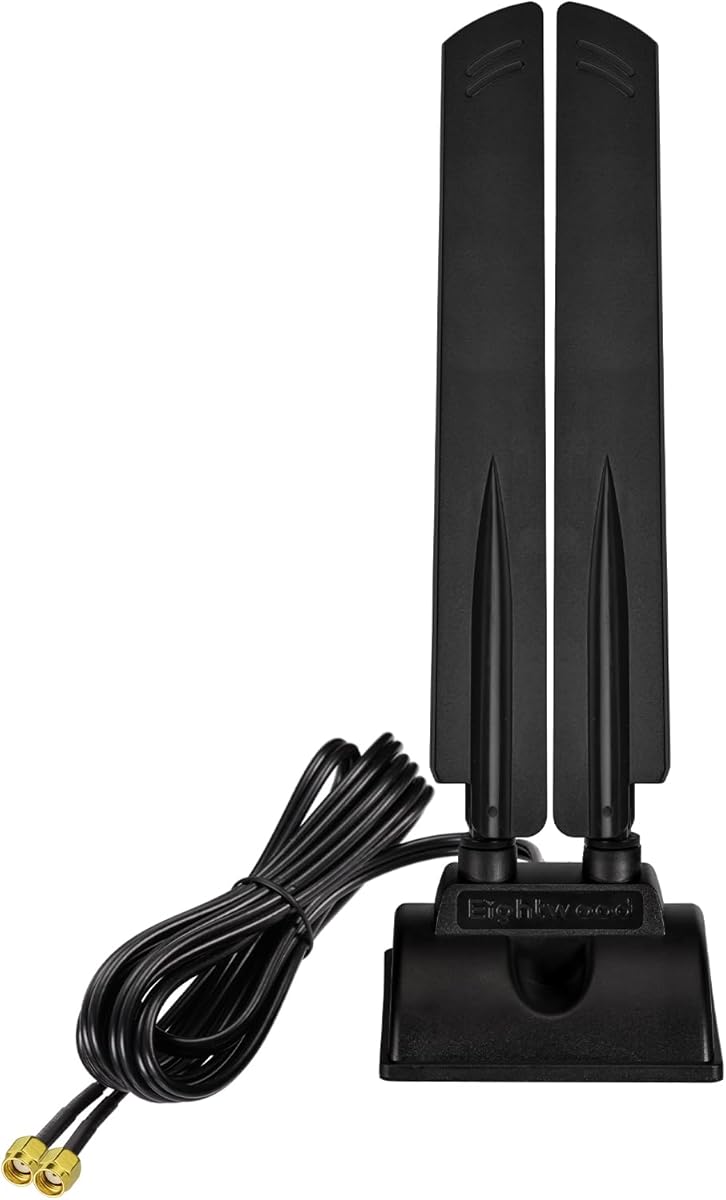
What to Know Before Buying a Tri-Band WiFi 6E RP-SMA Antenna
The Eightwood WiFi 6E antenna is a tri-band RP-SMA antenna designed to extend coverage across 2.4GHz, 5GHz, and the newer 6GHz band. If you're upgrading a router, PCIe card, or access point to take advantage of WiFi 6E, the antenna itself must support 6GHz—not all 'WiFi 6' antennas do. This guide covers what matters when choosing an RP-SMA tri-band antenna for your setup.
Key Considerations Before Buying
- Confirm your device uses an RP-SMA connector (reverse-polarity SMA), not standard SMA; the two look similar but are not cross-compatible, and using the wrong one can damage the connector. Check your router or card's spec sheet before ordering.
- Verify true 6GHz support: WiFi 6E requires antennas tuned for the 5.925–7.125GHz range. A tri-band label alone doesn't guarantee 6GHz performance, so look for explicit frequency coverage in the product listing.
- Antenna gain and form factor affect real-world range: higher-gain antennas can improve signal in a specific direction but may not suit multi-room coverage, while compact antennas trade range for placement flexibility. Match the antenna to your coverage goal.
What Our Analysts Recommend
Look for clearly stated frequency ranges (including 6GHz), RP-SMA connector type, and gain figures (dBi) rather than vague 'high gain' claims. Build quality matters too—solid connector threading, a stable articulating joint, and consistent impedance (typically 50 ohms) are signs of a reliable antenna. Reviews mentioning fit and signal improvement on specific routers are more useful than generic praise.
Network Antennas Market Context
Market Overview
The WiFi antenna market is crowded with low-cost options, and the shift to WiFi 6E has created confusion because many antennas sold as 'WiFi 6' don't cover the 6GHz band. RP-SMA is the most common connector on consumer routers and network cards, but listings often blur the distinction between RP-SMA and SMA. As 6GHz routers become more common, demand for genuinely tri-band antennas is rising.
Common Issues
The most frequent problem is connector mismatch—buyers order an SMA antenna for an RP-SMA device or vice versa. Another common complaint is overstated performance: antennas marketed as 'high gain' may show little measurable improvement, especially if the router's radio is the limiting factor. Poor build quality, such as loose threads or flimsy joints, also leads to returns.
Quality Indicators
Quality antennas specify exact frequency bands and gain, use standard 50-ohm impedance, and have precisely machined RP-SMA connectors that thread smoothly. Clear dimensional specs and a stable articulating base are good signs. Listings that explain compatibility and include real-world setup notes tend to come from more reliable sellers.
Review Authenticity Insights
Grade A Interpretation
An A authenticity grade with an estimated 5% fake review rate is strong for this category, where low-cost accessories often attract review manipulation. All reviews are verified purchases, and the content is specific and varied, which supports the 4.0/5 rating as a genuine reflection of user experience. The adjusted 3.9/5 rating suggests the product performs reasonably but isn't exceptional.
Trust Recommendation
You can treat the review set as broadly trustworthy, but still read for patterns rather than isolated ratings. Look for reviewers who mention their specific router model and whether 6GHz performance improved, since those details are hard to fake. A 3.9 adjusted rating means most buyers are satisfied, but a meaningful minority are not—so check the critical reviews for recurring issues.
Tips for Reading Reviews
Focus on reviews that name the device they connected the antenna to and describe signal or speed changes, as these are the most actionable. Pay attention to complaints about connector fit or build quality, which are common failure points for RP-SMA antennas. Ignore reviews that only praise 'great quality' without specifics.
Expert Perspective
The Eightwood tri-band RP-SMA antenna is a credible option for buyers who need 6GHz coverage and have confirmed RP-SMA connectors. Its 4.0/5 rating with a 3.9 adjusted score and Grade A authenticity indicates a solid but not standout product—most users get the expected performance, while some report fit or range issues. The genuine review base makes it easier to gauge real-world results than with many rival listings.
Purchase Considerations
Before buying, verify your router or card uses RP-SMA and actually supports 6GHz, since the antenna can't add a band your hardware lacks. Consider whether you need a single replacement antenna or a matched pair, and whether higher gain or a compact design suits your space. If your current antenna already performs well on 5GHz, the upgrade benefit may be modest.
Comparing Alternatives
Compare with other tri-band RP-SMA antennas that explicitly list 6GHz coverage and have similarly authentic review profiles, as small differences in gain and build quality can matter more than brand.


