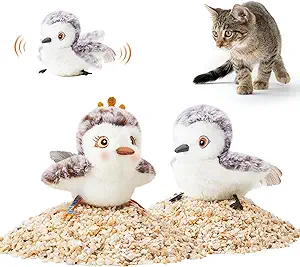
8-Hole Whack-a-Mole Meets Laser: Inside the ORSDA 2-in-1 Cat Toy
The ORSDA Cat Laser Toy combines a motion-activated laser with an 8-hole whack-a-mole feather game, offering two distinct play modes in one rechargeable unit. For indoor cats, this hybrid design aims to combat boredom by alternating between unpredictable laser patterns and a tactile feather popping game that mimics prey behavior.
Key Considerations Before Buying
- Laser-only play can frustrate some cats if they never 'catch' anything; the ORSDA's whack-a-mole feather feature provides a physical reward, reducing potential anxiety from unreachable red dots.
- The motion sensor triggers the toy when your cat approaches, which is great for independent play but may overstimulate high-energy cats or lead to constant activation in small spaces.
- Battery life matters: this is USB rechargeable (no disposable batteries), but the 8-hole mechanism and laser draw power—check how long it runs on a full charge to avoid mid-play shutdowns.
What Our Analysts Recommend
In interactive cat toys, look for durable construction (plastic joints that won't snap under paw strikes), non-abrasive laser diodes rated safe for eyes, and a low-noise motor so the whack-a-mole action doesn't spook skittish cats. The ORSDA's 8-hole design should pop feathers smoothly without jamming, a common failure point in similar toys.
Mice & Animal Toys Market Context
Market Overview
The automatic cat toy market has exploded as owners seek ways to entertain indoor cats while away, with hybrid laser/mechanical toys gaining traction over single-function gadgets. Products like the ORSDA target the gap between simple laser pointers and bulky electronic mice, appealing to tech-savvy pet parents who want 'set and forget' engagement.
Common Issues
Many interactive cat toys suffer from short battery life, noisy motors that scare cats, or flimsy feather attachments that detach and become choking hazards. Laser-only toys also face criticism for causing obsessive-compulsive behaviors in cats without a physical 'capture' element—a key problem the ORSDA's whack-a-mole aims to solve.
Quality Indicators
Look for toys with adjustable sensitivity settings (to avoid constant activation), non-toxic materials (especially for feather parts cats might mouth), and a stable base that won't tip over during vigorous play. USB rechargeability is a plus, but ensure the port is reinforced to prevent damage from cat batting.
Review Authenticity Insights
Grade A Interpretation
With a B grade and an estimated 10% fake review rate, the ORSDA's feedback is mostly trustworthy but warrants caution—about 1 in 10 reviews may be fabricated. The 4.67-star average drops to a more realistic 4.40 when suspicious reviews are filtered, suggesting genuine users are still largely satisfied but not universally ecstatic.
Trust Recommendation
I recommend focusing on verified purchase reviews that describe specific cat reactions (e.g., 'my 3-year-old tabby ignores the laser but attacks the feathers') and avoid vague five-star ratings with no detail. The 10% fake rate is moderate for this category, so cross-check negative reviews for recurring complaints about durability or noise.
Tips for Reading Reviews
For automatic cat toys, prioritize reviews mentioning battery runtime and motor noise, as these are common dealbreakers. Look for 'updated after 30 days' comments—many toys fail within weeks. Also, check if reviewers mention multiple cats; a toy that works for a single cat may cause fights in multi-pet households.
Expert Perspective
The ORSDA 2-in-1 Cat Laser Toy is a solid mid-tier option that addresses a key flaw in laser toys by adding a physical feather game, but its 8-hole whack-a-mole mechanism introduces potential reliability risks. The 4.40 adjusted rating indicates genuine user satisfaction, though the 10% fake review rate suggests some marketing hype. For cats that enjoy both chasing lights and batting at moving objects, this hybrid offers good value—but owners of skittish or easily frustrated cats may need to supervise initial play sessions.
Purchase Considerations
Consider your cat's play style: if they lose interest in lasers quickly, the feather mode provides a backup, but the toy's motion sensor may not trigger for sedentary cats. Also factor in noise—some reviews hint at motor whirring that could bother light sleepers or nervous pets. At roughly $20-30, it's competitively priced, but cheaper alternatives may lack the dual-mode feature.
Comparing Alternatives
Shoppers should compare the ORSDA with simpler laser toys (if budget is a priority) or more robust mechanical mice (for durability), keeping in mind that hybrid designs like this often compromise on longevity of each individual mode.