
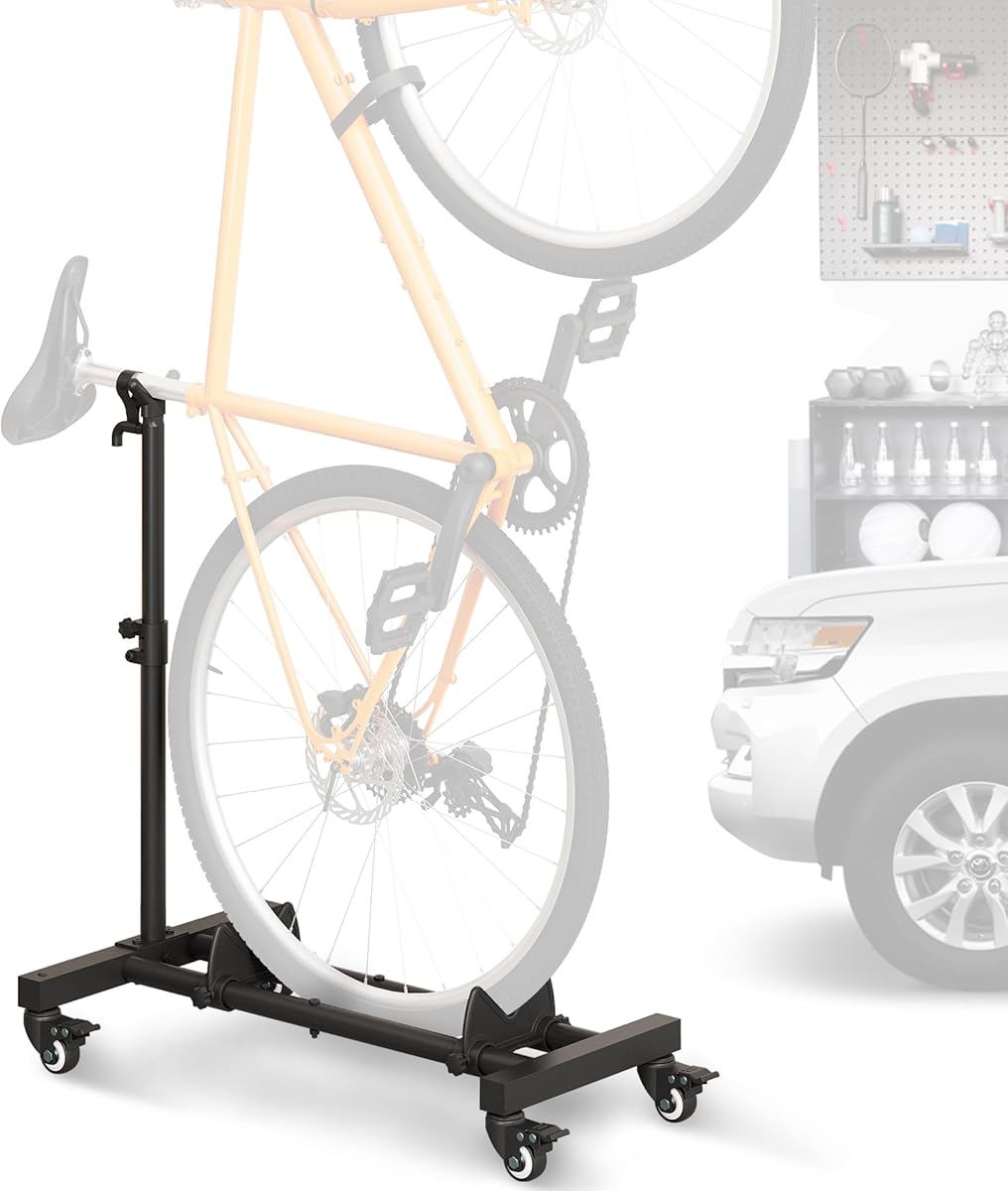
Maximize Garage Space: The Vertical Bike Stand Revolution
If you're tired of bikes cluttering your garage floor or leaning precariously against walls, a freestanding vertical bike stand offers a practical solution. This guide focuses on models like the one reviewed here, which combines an upright storage position with adjustable height and rolling wheels for easy maneuverability. Understanding the nuances of this specific type of rack will help you choose the right one for your space and bike.
Key Considerations Before Buying
- Check your bike's wheel size and frame geometry: This stand is designed for 24"-29" standard bikes, but not all bikes within that range will fit perfectly. Ensure your bike's wheelbase and downtube shape are compatible with the cradle and clamping mechanism.
- Assess the stability on your garage floor: While the base is freestanding, consider the footprint and weight distribution. A wider base provides more stability, especially for heavier bikes, and rubberized feet or wheels can prevent scratching and sliding.
- Evaluate the ease of the vertical lift: Lifting a bike into a vertical position can be awkward for some users. Look for a design with a smooth pivot or a gas spring assist, and consider the stand's overall height to ensure you can comfortably lift and secure your bike without straining.
What Our Analysts Recommend
In a quality vertical bike stand, look for sturdy steel construction with a corrosion-resistant finish. The cradle and contact points should be padded to protect your bike's frame and rims. Adjustable height and a secure locking mechanism are essential for accommodating different bike sizes and ensuring the bike stays firmly in place. Smooth-rolling, locking casters add convenience for moving the stand and bike as a unit.
Indoor Bike Storage Market Context
Market Overview
The indoor bike storage market has grown significantly as urban living spaces shrink and cycling enthusiasts seek to protect their investments. Products range from simple wall hooks to sophisticated freestanding racks like this one, which offer a balance of space efficiency and accessibility. The trend is toward versatile, floor-standing solutions that don't require drilling into walls and can be repositioned easily.
Common Issues
Common problems in this category include instability with heavier bikes, difficulty in securing the bike without scratching the frame, and stands that are too short for taller wheels or too long for low-ceiling garages. Some users also report that the lifting mechanism can be challenging for those with limited strength or mobility, and that the base can tip if not properly weighted.
Quality Indicators
High-quality indoor bike stands typically feature thick-gauge steel, a powder-coated finish to resist chipping, and high-density foam or rubber padding at all contact points. Look for a stand with a wide, low-profile base for stability and a clamping system that is both secure and tool-free to operate. The presence of a manufacturer warranty and positive reviews mentioning long-term durability are also good signs.
Review Authenticity Insights
Grade B Interpretation
The Grade B rating and an estimated 10% fake review percentage suggest that while the majority of reviews are likely authentic, a notable minority may be incentivized or unverified. This is common for popular products, but it's wise to be cautious. The high adjusted rating of 4.60/5, even after excluding suspicious reviews, indicates that the product genuinely performs well for most users.
Trust Recommendation
You can confidently read the reviews, but focus on those that are detailed and mention specific bike models and usage scenarios. Look for patterns in both positive and negative feedback. If a review lacks specifics or sounds overly promotional, consider it less reliable. The overall high rating and consistent praise for space-saving and ease of use are encouraging signs.
Tips for Reading Reviews
When reading reviews for this type of product, pay special attention to comments from users with similar bike types (mountain, road, hybrid) and similar storage spaces. Look for verified purchase badges and reviews that mention assembly time, stability, and any issues with fit. Also, note any recurring complaints about wobbly bases or difficulty lifting, as these are critical functional aspects.
Expert Perspective
Based on the analysis, this vertical bike stand appears to be a well-engineered solution for its intended purpose. The 4.89/5 average rating (4.60 adjusted) reflects strong user satisfaction, with reviewers consistently praising its sturdy construction, space-saving design, and the convenience of rolling wheels. The low estimated fake review percentage further supports the product's credibility, suggesting that real-world performance aligns with the marketing claims.
Purchase Considerations
Before purchasing, verify that your bike falls within the 24"-29" wheel size range and that the stand's height adjustment can accommodate your bike's top tube height. Consider the weight of your bike and ensure the stand's weight capacity is sufficient. If you have a carbon fiber frame, double-check that the clamping mechanism is compatible and won't cause damage. Also, measure your garage or storage area to confirm the stand's footprint and vertical clearance will work.
Comparing Alternatives
While this stand is a strong contender, it's wise to compare it with other freestanding vertical racks that offer different features, such as wall-mounted options for even more floor space savings or pulley systems for overhead storage. Evaluate your specific needs and preferences to ensure you select the best fit for your home and bike.


