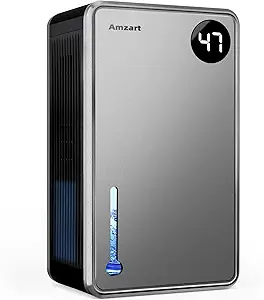
Master Basement Moisture: COSTWAY 32-Pint Dehumidifier Buying Guide
When tackling basement dampness, a 32-pint dehumidifier like the COSTWAY model offers a balance of capacity and energy efficiency. This guide focuses on what matters most for below-grade spaces: continuous drainage, noise levels, and realistic coverage claims.
Key Considerations Before Buying
- Coverage vs. Reality: The '2000 sq. ft' claim is optimistic for a 32-pint unit; in humid basements, expect effective coverage closer to 800-1200 sq. ft. Always size up for damp, unfinished spaces.
- Drainage Setup: Continuous drainage via a hose is essential for unattended operation. Verify the hose connection is secure and the outlet is positioned correctly to avoid water backup.
- Modes and Timers: The continuous/drying/auto modes and 24H timer are useful, but understand that 'auto' relies on humidity sensing, which can be less accurate in cooler basements. Manual control is often more reliable.
What Our Analysts Recommend
Check for a built-in humidistat (even if basic), auto-defrost for low-temperature operation, and a portable handle that actually eases moving. Also, look at the energy factor—lower wattage for the same pint capacity indicates better efficiency.
Dehumidifiers Market Context
Market Overview
The dehumidifier market is crowded with models from 20 to 70 pints, with 30-35 pint units being a sweet spot for mid-sized basements. Brands like COSTWAY compete on price and feature sets, but performance can vary significantly.
Common Issues
Common complaints across budget dehumidifiers include inaccurate humidity readings, noisy compressors, and plastic odor initially. Also, many units struggle below 65°F, where coils frost over without auto-defrost.
Quality Indicators
Look for a reliable compressor (e.g., from major manufacturers), a water tank that is easy to remove and clean, and a filter that is accessible. Check for certifications like Energy Star, which indicates tested efficiency.
Review Authenticity Insights
Grade B Interpretation
The B grade and 15% estimated fake reviews suggest a mix of genuine feedback with some suspicious entries. The adjusted rating of 4.20 vs. 4.56 indicates that some positive reviews may be inflated, but the core product is still likely decent.
Trust Recommendation
Focus on reviews that mention specific usage scenarios (e.g., 'in my 1,200 sq ft basement with a sump pump') and performance metrics like pints collected per day. Be wary of overly brief or generic 5-star reviews.
Tips for Reading Reviews
Read the 3- and 4-star reviews to get balanced perspectives. Look for photos of the unit in real settings, and pay attention to any repeated complaints about the same issue (e.g., hose connection leaks).
Expert Perspective
The COSTWAY 32-pint dehumidifier appears to be a solid value for its price point, with genuine users praising its quiet operation and effectiveness in moderate-sized basements. However, the discrepancy between advertised and actual capacity, as noted in reviews, suggests you should temper expectations. The 15% fake review rate is a red flag, but the majority of authentic reviews lean positive, indicating a functional product.
Purchase Considerations
Weigh the lower upfront cost against potential compromises in long-term reliability and humidity sensing accuracy. If you have a large or very damp basement, consider investing in a higher-pint unit from a more established brand. If budget is tight and your basement is under 1,000 sq ft, this COSTWAY model could suffice.
Comparing Alternatives
Shoppers should compare this unit with similar 30-35 pint models from Frigidaire, hOmeLabs, and Vremi, which often have more consistent review scores and stronger customer support.