
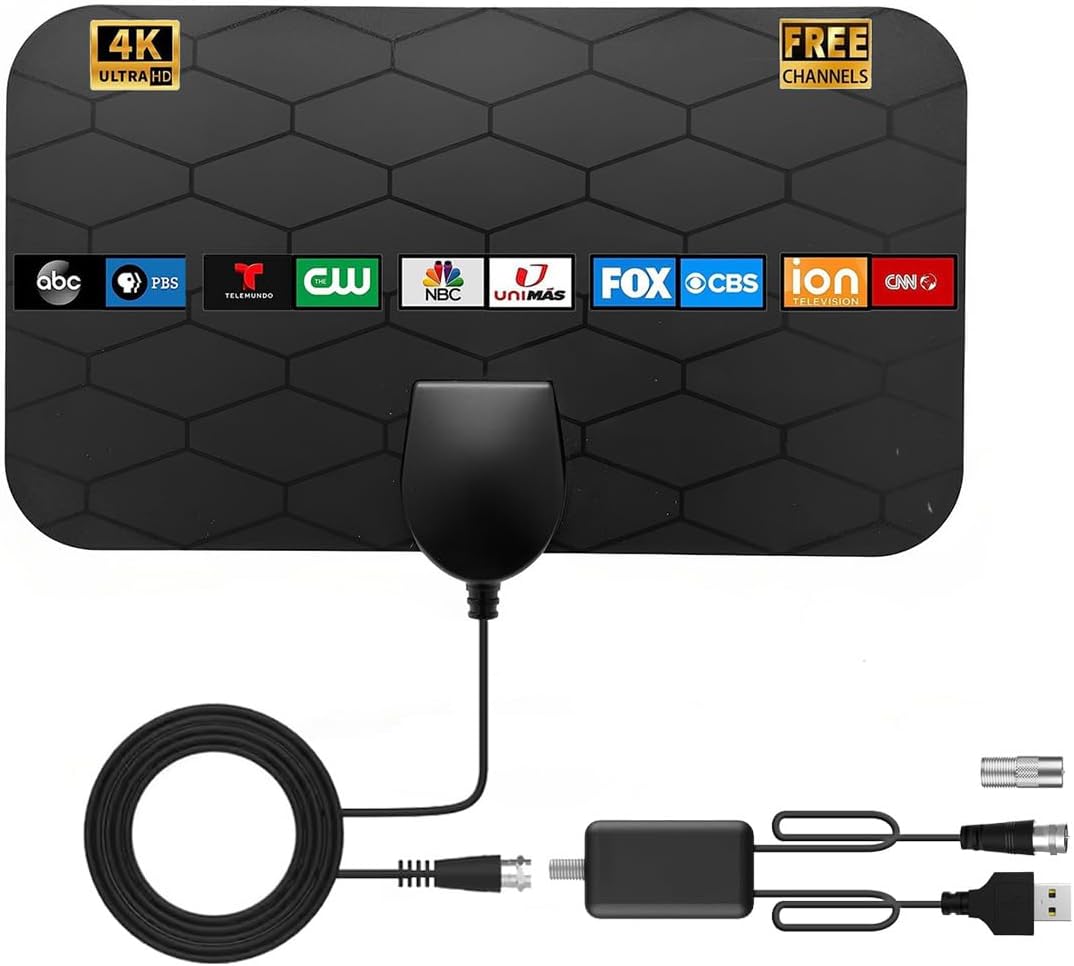
Choosing an Indoor TV Antenna: What This 360° Amplified Model Actually Delivers
This specific indoor antenna promises 360° reception and includes a signal amplifier, targeting cord-cutters seeking free local channels in 4K/1080p. Buyers should understand that its performance is heavily dependent on your location relative to broadcast towers, and the built-in amplifier can be both a solution and a source of interference. The 'portable' claim means it's designed for easy repositioning to find the optimal signal spot in your home.
Key Considerations Before Buying
- Signal amplifiers, like the one included here, boost weak signals but can also overload and distort reception if you're already close to broadcast towers, making the amplifier's on/off switch a critical feature.
- The 360° reception claim refers to the antenna's ability to pull signals from multiple directions without manual rotation, but physical obstructions like walls and building materials will significantly impact its effectiveness.
- While marketed as supporting 4K, the broadcast standard for over-the-air TV is ATSC 1.0, with 4K ATSC 3.0 (NextGen TV) in limited rollout; this antenna receives the current HD and 4K broadcasts that stations transmit, but compatibility with future ATSC 3.0 varies.
What Our Analysts Recommend
For this category, scrutinize reviews that mention specific channel counts and stability (e.g., 'gets 25 channels but ABC is spotty'), not just star ratings. A quality indoor antenna will have a low-noise amplifier and durable, flexible coaxial cabling. The mounting options—this model uses adhesive strips—should suit your placement needs near a window or high on a wall.
TV Antennas Market Context
Market Overview
The indoor TV antenna market is saturated with nearly identical-looking flat, amplified panels, making performance claims difficult to verify without real-world testing. Products compete heavily on range claims (often exaggerated) and bundled accessories like long coaxial cables and amplifier power adapters.
Common Issues
Users frequently report inconsistent channel reception day-to-day, signal dropout during bad weather, and confusion when the amplifier causes pixelation on strong local channels. The adhesive mounting often fails on textured walls, and the thin coaxial cable connectors can be fragile.
Quality Indicators
Look for transparency about reception range in miles (not the maximum 150+ mile claims), a shielded amplifier to reduce interference, and detailed channel scan instructions. Products with a higher percentage of 3- and 4-star reviews often provide more realistic performance narratives than those dominated by 5-star ratings.
Review Authenticity Insights
Grade B Interpretation
A Grade B with an 11% estimated fake review rate indicates a generally trustworthy review pool with a moderate level of potentially incentivized or biased feedback. The adjusted rating dropping from 3.78 to 3.60 suggests some positive reviews were likely artificial, bringing the score closer to genuine user experience.
Trust Recommendation
Focus on the 3-star reviews for this antenna, as they typically detail the specific conditions where it succeeded or failed. Be skeptical of 5-star reviews that lack location details or channel counts, and cross-reference mentions of the amplifier's on/off function—a common pain point in genuine reviews.
Tips for Reading Reviews
Prioritize reviews that specify the user's general location (urban, suburban, rural), distance from major cities, and the results of a rescan after repositioning the antenna. Look for discussions about whether the amplifier improved or worsened their channel lineup, as this is a key functional test.
Expert Perspective
With a genuine-adjusted rating of 3.6, this antenna performs typically for its category—adequate for many but not a universal solution. The inclusion of an amplifier is standard but, as reviews indicate, is not a magic fix for poor signal areas. The 360° design is convenient but doesn't overcome the fundamental physics of UHF/VHF signal propagation through building materials. Its value hinges on your proximity to broadcast towers and your willingness to experiment with placement.
Purchase Considerations
Consider this model if you live within 25-30 miles of broadcast towers and have a window or wall facing the general transmitter direction. The amplifier may help in weak-signal areas but be prepared to turn it off if channels appear pixelated. Your home's construction materials (especially brick or metal siding) will be a significant factor in its success.
Comparing Alternatives
Shoppers should compare this model's reception reports with similar amplified flat antennas from brands like Mohu or Antennas Direct, paying close attention to reviews from users in similar geographic areas.


