
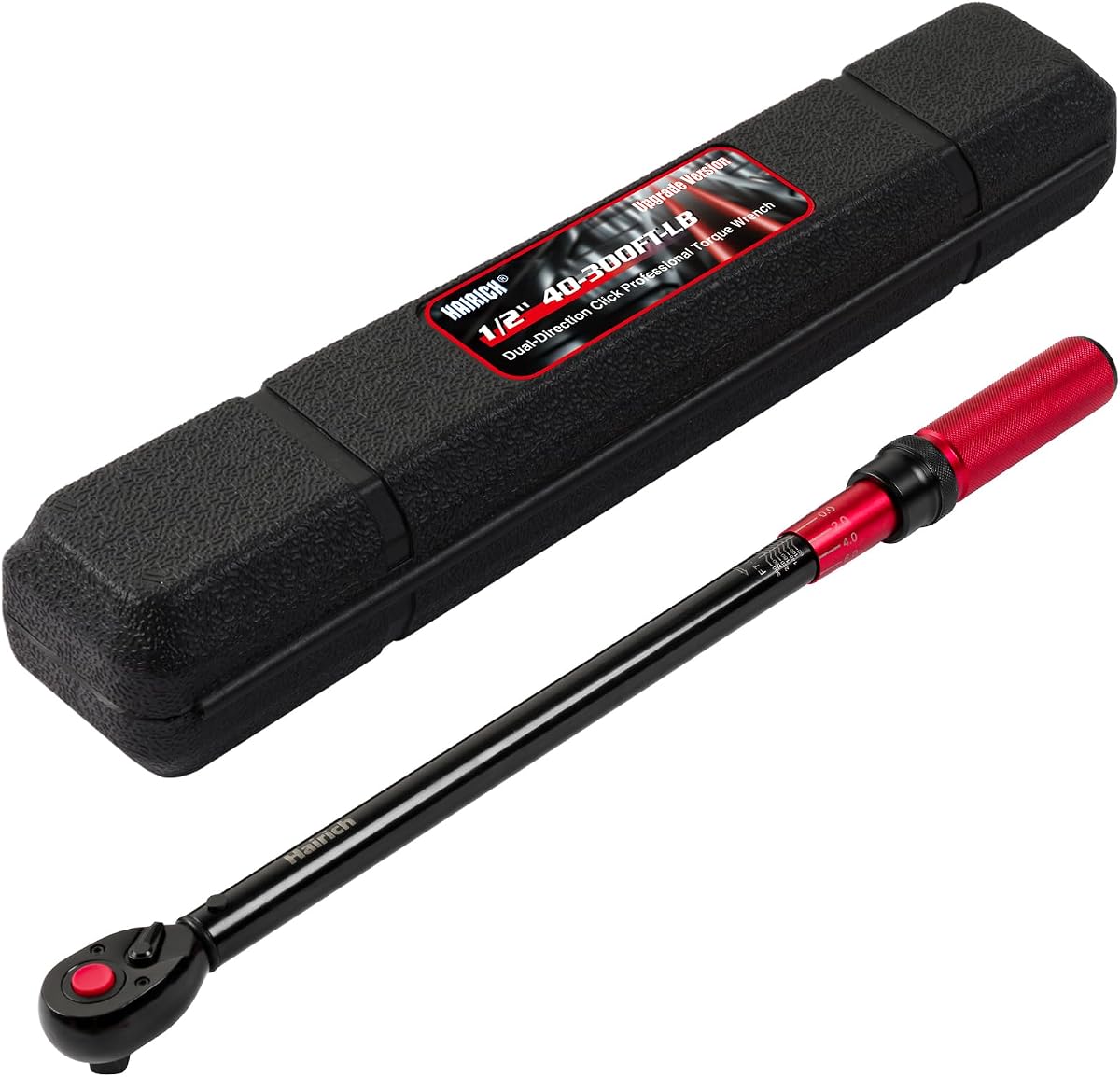
Choosing a Reliable Click Torque Wrench for Precision Fastening
When selecting a click torque wrench like the Hairich 1/2-inch model with a 40-300 ft-lb range, understanding its dual-direction capability and 72-tooth drive mechanism is crucial for achieving accurate torque on both left and right threads. This guide helps you evaluate key features to ensure your fastening tasks meet manufacturer specifications.
Key Considerations Before Buying
- Torque range: The Hairich covers 40-300 ft-lb, suitable for automotive lug nuts and suspension work, but verify it matches your typical fastening needs without operating at extremes.
- Drive size and tooth count: A 1/2-inch drive with 72 teeth offers a 5-degree swing arc, enabling use in tight spaces while maintaining precision—critical for engine components.
- Dual-range scales and accuracy: The wrench displays ft-lb and Nm, and its ±3% accuracy meets most DIY and professional standards, but calibrate annually to sustain reliability.
What Our Analysts Recommend
Quality indicators include a clear, audible click at set torque, a smooth ratcheting mechanism, and a durable, non-slip handle. Check for a calibration certificate or traceable standard, and ensure the dual-direction switch feels positive without play.
Torque Wrenches Market Context
Market Overview
The torque wrench market is saturated with options from budget to pro-grade, with click-type wrenches dominating due to their simplicity and affordability. Hairich competes in the mid-tier segment, offering features like dual scales and high tooth counts typically found in pricier brands.
Common Issues
Common problems include drift in calibration over time, especially with frequent use or dropping, and inconsistent click mechanisms that fail to provide clear feedback. Some budget wrenches also suffer from inaccurate scales or poorly machined ratchets.
Quality Indicators
Look for wrenches with a published accuracy spec (e.g., ±3% or better), a robust storage case to protect calibration, and positive user feedback on long-term consistency. Verified purchase reviews detailing specific applications signal genuine performance.
Review Authenticity Insights
Grade B Interpretation
A Grade B with an estimated 10% fake review rate suggests the bulk of feedback is trustworthy, but about 30 of 308 reviews may be unreliable. This is typical for popular tools on Amazon, where some sellers inflate ratings, but the high verified purchase rate here bolsters confidence.
Trust Recommendation
Focus on reviews that describe exact uses (e.g., 'torquing wheel lugs to 100 ft-lb') and note any calibration checks. Skim past overly vague praise or repetitive language, and prioritize verified buyers who mention the wrench's performance over time.
Tips for Reading Reviews
For torque wrenches, seek reviews that mention specific torque values, applications (e.g., engine work vs. general maintenance), and any issues with the click mechanism or scale readability. Photos of the tool in use add credibility.
Expert Perspective
The Hairich torque wrench presents a solid value for DIYers and light professionals, with its 72-tooth ratchet and dual-range scales aligning with user needs for versatility. The 4.67-star rating, tempered by a 10% fake review estimate, still indicates genuine satisfaction among most buyers, though the adjusted 4.40 rating suggests minor quality control variances. Its ±3% accuracy is adequate for most automotive tasks, but serious mechanics may prefer a higher-end brand for critical fastenings.
Purchase Considerations
Weigh the cost against competing models from brands like TEKTON or CDI, especially if you need certified calibration or a longer warranty. The Hairich is a strong candidate for occasional use, but verify its performance on your first few jobs with a torque tester.
Comparing Alternatives
Shoppers should compare this wrench with similar 1/2-inch drive click models from established brands to assess long-term durability and customer support differences.


