
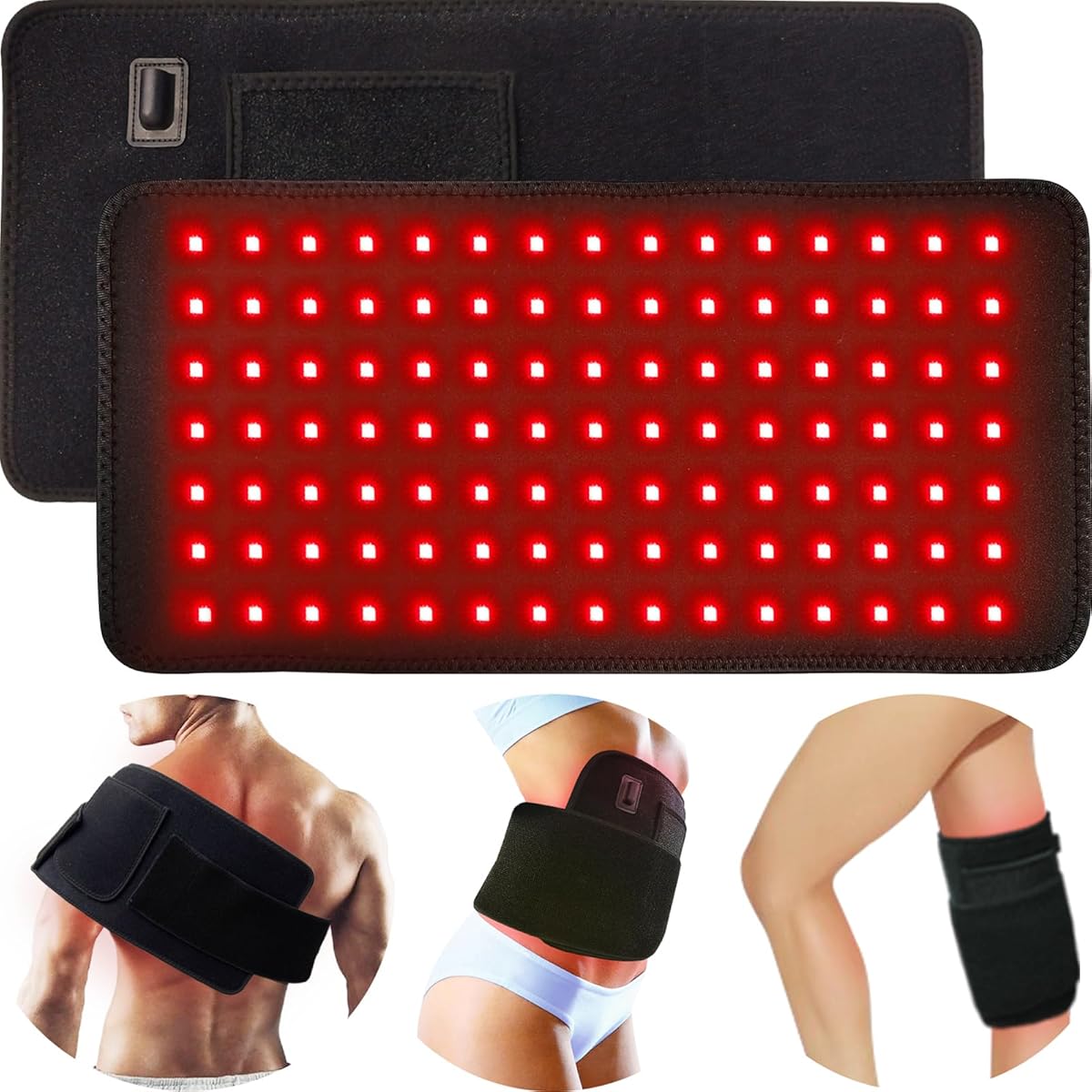
Choosing a Red Light Therapy Pad: Wavelengths, Portability, and Targeted Relief
This specific therapy pad combines 660nm red light for surface tissue with 850nm near-infrared (NIR) for deeper penetration, a dual-wavelength approach critical for addressing both muscle and joint pain. Unlike rigid panels, its flexible wrap design allows for targeted application on knees, back, and hands, making portability and conformability key features to evaluate. Buyers should understand that efficacy hinges on proper wavelength delivery and adequate power density, not just the number of LEDs.
Key Considerations Before Buying
- Verify the dual-wavelength specification (660nm & 850nm) matches your needs: 660nm primarily benefits skin and surface inflammation, while 850nm penetrates deeper for joints and muscle tissue.
- Assess the pad's flexibility and strap system; for knee or elbow use, a secure, adjustable wrap is more effective than a flat pad that won't stay in place.
- Consider treatment area size: This pad's dimensions will cover a localized region (like a knee or lower back), not large body areas, so manage expectations for full-body therapy.
What Our Analysts Recommend
Quality indicators include clear specifications on irradiance (power density in mW/cm²) and FDA registration as a wellness device, though this specific model's listing may omit these technical details. Look for reviews mentioning build quality of the connectors and durability of the Velcro straps, as these are common failure points in wrap-style devices. A quality product should have a timer with auto-shutoff for safety and consistent treatment protocols.
Light Therapy Market Context
Market Overview
The at-home red light therapy market is saturated with low-cost, low-power pads and wraps, making it difficult to discern clinically effective devices from those offering merely a placebo effect. Products like this wrap belt target the growing demand for portable, targeted pain relief solutions outside of professional clinic settings. Differentiation often comes down to the legitimacy of the wavelength specs, build quality, and whether the device generates meaningful heat as a secondary therapeutic effect.
Common Issues
Common problems include LEDs dimming or failing over time, poor heat distribution creating 'hot spots,' and flimsy wiring or connectors. Many users report confusion over treatment protocols (duration, frequency) due to vague manuals. Another frequent issue is pads losing adherence or shape, reducing contact with the skin and diminishing light penetration, which is critical for NIR effectiveness.
Quality Indicators
Beyond wavelength specs, a quality pad will use medical-grade silicone for LED encapsulation for durability and easy cleaning. Reliable products often provide third-party test reports for spectral output. Look for devices with a robust power adapter, as underpowered units are a hallmark of inferior products that cannot deliver the promised irradiance.
Review Authenticity Insights
Grade B Interpretation
A 'B' grade with an estimated 15% fake review rate suggests the majority of feedback is credible, but a notable portion of reviews may be incentivized or inauthentic. For this product, the adjusted rating of 4.20/5 (down from 4.53/5) is a more reliable indicator of genuine user satisfaction, still reflecting a positively received device.
Trust Recommendation
Prioritize reviews that discuss specific, longer-term use cases (e.g., 'after 3 weeks for knee arthritis') over vague, hyperbolic praise. Given the verified purchase status of all reviews, focus on critical 3- and 4-star reviews, which often provide balanced insights on limitations like battery life or strap durability that 5-star reviews may gloss over.
Tips for Reading Reviews
Search for reviews mentioning 'heat' or 'warmth,' as genuine user experiences with NIR therapy often note a mild heating sensation. Be skeptical of reviews that sound like marketing copy repeating technical specs verbatim without personal context. Pay close attention to reviews discussing customer service interactions, as this is a strong indicator of a real purchase experience.
Expert Perspective
The data indicates this is a legitimate product within its category, with a solid adjusted rating of 4.2 from verified purchasers. The combination of 660nm and 850nm wavelengths is the correct approach for a therapeutic device targeting both superficial and deep tissue. However, the 'wrap belt' design inherently limits the treatment area and uniform pressure, which can affect light penetration consistency compared to rigid, medical-grade panels. The high number of reviews provides a substantial data set, increasing confidence in the reported patterns of pain relief and portability benefits.
Purchase Considerations
Weigh the convenience and targeted application of this wrap against the need for whole-body or larger-area treatment. Consider if your primary use case (e.g., a specific knee) aligns with the pad's size and flexible design. The authenticity analysis suggests you can trust the overall sentiment but should diligently read mid-tier reviews to set realistic expectations for build quality and long-term durability.
Comparing Alternatives
Shoppers should compare the size, wavelength specs, and stated power output (if available) with other wrap-style pads, as well as consider the trade-offs with larger, non-portable panel systems.


