
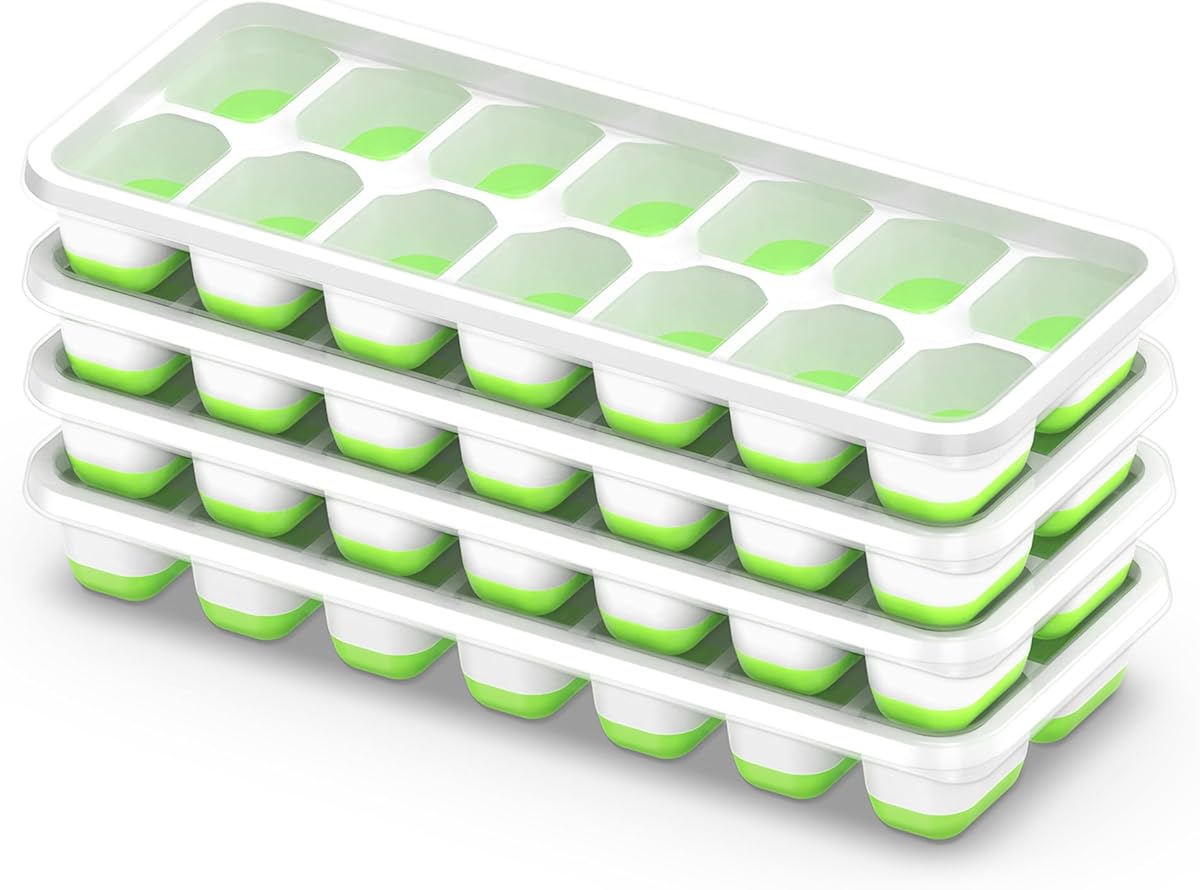
Choosing Stackable Ice Trays: Why Material and Lid Design Matter Most
When evaluating the ChefAide 4-pack system, focus on its hybrid plastic-silicone construction and removable lids. This specific design addresses common freezer space issues while promising easier ice release than traditional rigid trays. The 56-cube capacity across four units represents a particular approach to household ice management.
Key Considerations Before Buying
- The hybrid plastic frame with silicone bottoms aims to balance structural rigidity during filling with flexible release, but check reviews for how well this seam holds up over repeated freezer cycles.
- Removable lids are critical for stackability; ensure they seal tightly to prevent odor transfer and freezer burn, which some users note can occur if lids warp.
- Consider your freezer's geometry—while stackable, these trays still require flat, stable surfaces and may not fit in narrow door shelves despite their space-saving claims.
What Our Analysts Recommend
Examine the silicone's thickness where it meets the plastic grid; thin spots can tear. Quality stackable trays should have interlocking lids that don't slide when stacked under weight. The hinge design on the lid—if present—should withstand repeated opening without cracking.
Ice Cube Molds & Trays Market Context
Market Overview
The ice tray market has shifted from basic plastic units toward specialized systems featuring stackability, quicker release mechanisms, and cocktail-specific shapes. The ChefAide enters a crowded segment where durability claims often conflict with real-world performance in home freezers.
Common Issues
Silicone-only trays often lack structure, while hard plastic trays struggle with ice release. Lids frequently fail to seal properly, leading to frost-tainted ice. Stacking mechanisms can fail if trays warp from temperature fluctuations.
Quality Indicators
Superior trays use food-grade silicone with adequate thickness (2mm minimum) and rigid frames that resist bending when full. Look for lids with full-perimeter seals rather than partial coverage. Frost-resistant materials prevent cloudy ice cubes.
Review Authenticity Insights
Grade B Interpretation
A Grade B with 11% estimated fake reviews suggests generally reliable feedback, but shoppers should be slightly more critical of extreme 5-star reviews. The adjusted 4.40 rating from 4.67 indicates some review inflation, though not severe manipulation.
Trust Recommendation
Prioritize reviews discussing long-term use over six months, as these reveal durability issues with silicone detachment or lid warping. Verified purchase reviews mentioning specific freezer types (French door, top-freezer) provide more contextual reliability.
Tips for Reading Reviews
Search for reviews mentioning 'silicone separation' or 'lid fit after washing'—these identify material failure points. Pay attention to reviews comparing these to other stackable brands like OXO or Tovolo, as they offer relative performance insights.
Expert Perspective
The ChefAide system's 4.40 adjusted rating reflects a product that performs adequately for most users but shows material limitations under heavy use. Its value proposition lies in the four-tray bundle addressing constant ice demand, though the plastic-silicone bond represents a potential failure point. The high genuine review percentage suggests users appreciate the stackable convenience despite some durability trade-offs. This product suits moderate users rather than commercial-style daily cycling.
Purchase Considerations
Choose this set if you need multiple trays for entertaining and value stackability over absolute durability. Consider alternatives if you require dishwasher-safe components or larger cocktail-sized cubes, as these standard cubes measure approximately 1-inch square. The removable lids add convenience but create more parts to manage.
Comparing Alternatives
Compare with silicone-only trays for easier release or heavy-duty plastic trays if dishwasher compatibility is non-negotiable.


