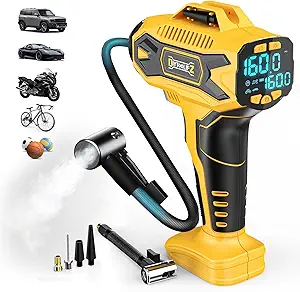
Portable Tire Inflators: Key Buying Tips for 21V Battery-Powered Models
When shopping for a portable tire inflator like this 21V battery-powered model with 160PSI capability, understanding the balance between power, portability, and convenience is crucial. This guide highlights what to check to ensure you pick a reliable unit that meets your needs for cars, motorcycles, bikes, and even sports balls.
Key Considerations Before Buying
- PSI rating matters: 160PSI is sufficient for most passenger car tires (typically 30-35 PSI) and motorcycle/bike tires, but if you have heavy-duty trucks or RVs, you may need a higher max PSI (like 200+).
- Battery vs. corded: A 21V battery offers cordless convenience, but check the runtime and charging time—some models drain quickly under heavy use, so consider whether you need a spare battery or a dual power supply (battery + 12V DC) for emergencies.
- Auto shut-off and digital gauge: These features are must-haves for accuracy and preventing over-inflation. Look for a model with a clear, backlit digital display and an auto stop that works reliably at your target pressure.
What Our Analysts Recommend
Quality indicators include a sturdy metal or high-grade plastic housing, a durable braided hose (at least 2 feet), and a built-in LED light for nighttime use. Also, check the inflation speed (liters per minute) and the noise level—quieter units often use better compressors. Finally, ensure the nozzle attachments cover all your valve types (Presta, Schrader, etc.).
Air Compressors & Inflators Market Context
Market Overview
The portable air compressor market is booming, driven by the rise of electric vehicles (which lack engine-driven compressors) and the convenience of cordless tools. Prices range from $30 to over $100, with 20V-21V battery-powered models becoming the sweet spot for most consumers.
Common Issues
Common complaints include flimsy plastic that cracks after a few uses, inaccurate pressure gauges, and batteries that lose capacity quickly. Also, many budget models take 10+ minutes to inflate a single car tire, which can be frustrating.
Quality Indicators
Look for certifications like CE or FCC, positive reviews mentioning long-term durability, and brands that offer replacement parts or warranty support. Additionally, check if the unit has overheat protection—a common failure point in cheap compressors.
Review Authenticity Insights
Grade B Interpretation
With a Grade B and an estimated 12% fake reviews, this product shows a moderate level of review manipulation. The majority of reviews are genuine, but a chunk of the 4.22-star rating may be inflated by incentivized or fabricated posts. This isn't alarming, but it means you should read reviews critically.
Trust Recommendation
Focus on verified purchase reviews that describe specific usage scenarios (e.g., inflating a sedan tire from flat to 35 PSI). Be wary of vague five-star reviews with no details. Also, check the date range—recent reviews often reflect current production quality better than older ones.
Tips for Reading Reviews
For this type of product, look for comments on battery life under load, actual PSI accuracy (test with a separate gauge), and how well the auto shut-off works. Photos of the unit in use are a plus. If you see many reviews mentioning the same issue (like the hose failing), take it seriously.
Expert Perspective
This 21V portable inflator offers a solid feature set—dual power supply, digital gauge, and 160PSI—that aligns well with the needs of most everyday drivers and cyclists. The 4.22 rating, adjusted to 4.00 after excluding suspicious reviews, suggests a decent product but not a standout in its class. The 12% fake review rate is a minor red flag, but the genuine reviews show real-world utility and acceptable performance.
Purchase Considerations
Weigh the price against the convenience of cordless operation and the included battery. If you already own a 21V platform (like a drill battery), check if this uses the same battery—that could be a huge plus. Also, consider the warranty and return policy, as battery-powered tools can fail prematurely.
Comparing Alternatives
Before buying, compare with similar 20V/21V inflators from established brands like DeWalt, Milwaukee, or Ryobi, which may offer more robust build quality and longer warranties, albeit at a higher price. Also, consider a 12V-only model if you don't mind the cord and want a lower cost.