
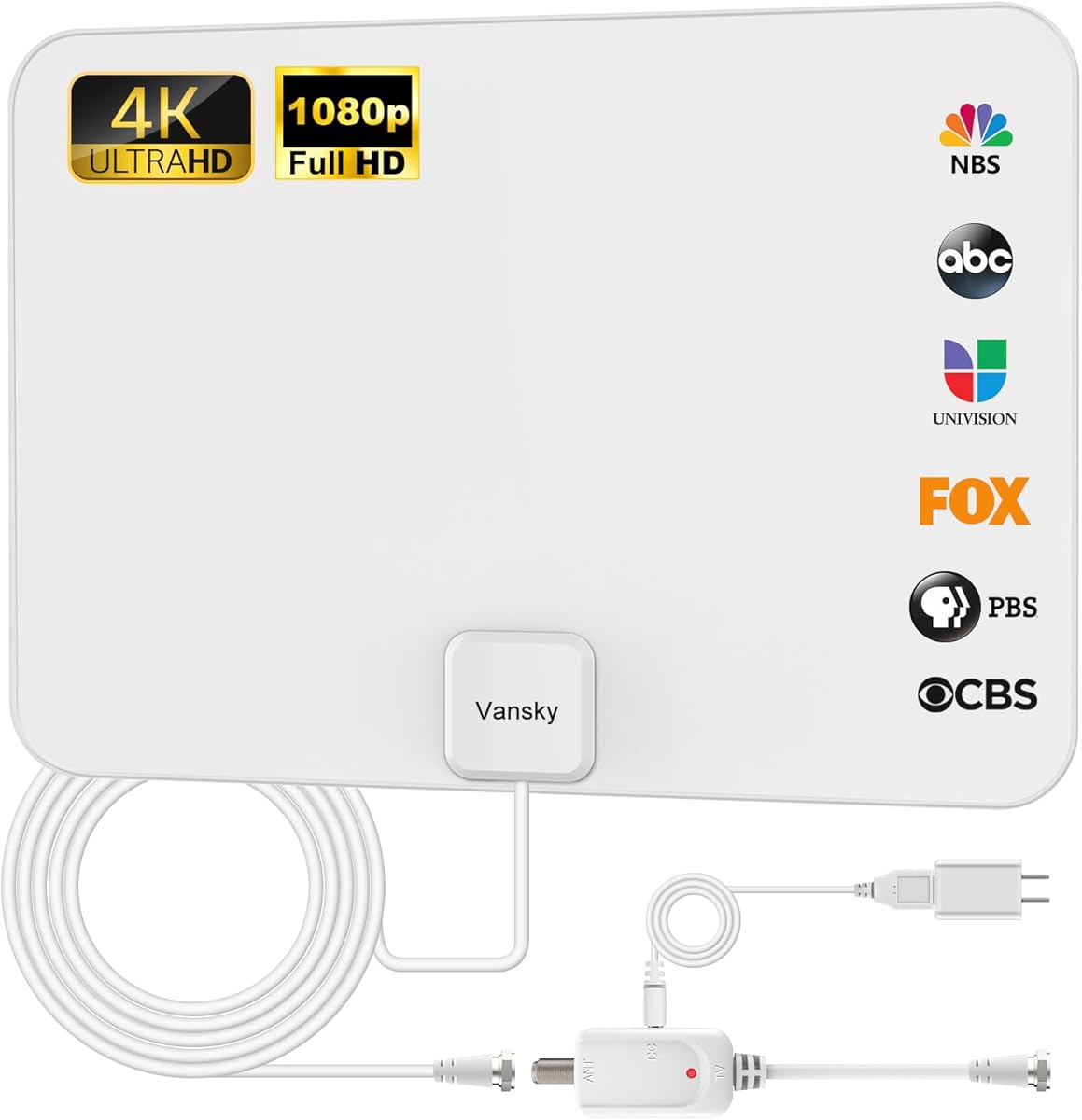
Cut the Cord: Key Buying Tips for Indoor Amplified HDTV Antennas
If you're looking to ditch cable and still watch local channels in crisp 1080p, an indoor amplified HDTV antenna like this model is a smart start. This specific antenna features a detachable signal amplifier and a 16.5-foot coax cable, which gives you flexibility in placement—crucial for picking up VHF and UHF signals through walls or windows. Before you buy, understand that performance heavily depends on your distance from broadcast towers and your home's construction.
Key Considerations Before Buying
- Amplifier vs. non-amplified: An amplifier boosts weak signals, but if you're close to towers, it can overload and cause pixelation. This antenna's detachable amplifier lets you test both modes, a key feature for optimizing reception.
- Cable length matters: With a 16.5-foot coax cable, you have room to position the antenna higher or near a window. Shorter cables limit placement, which can be a dealbreaker in rooms with few outlets near windows.
- Frequency support: Ensure the antenna covers both VHF (channels 2-13) and UHF (14-51). This model does, but many cheap antennas only handle UHF, missing networks like CBS or NBC that broadcast on VHF.
What Our Analysts Recommend
Quality indoor antennas typically include a built-in signal meter or LED indicator to help you find the sweet spot for placement. Look for models with a durable, flat design that can be mounted on walls or windows without sagging, and check that the amplifier has a simple on/off switch for troubleshooting.
TV Antennas Market Context
Market Overview
The indoor TV antenna market has surged as cord-cutters seek free over-the-air (OTA) broadcasts, with many models now claiming ranges up to 50+ miles. However, real-world performance varies widely due to signal interference from buildings and electronics, making user feedback critical. This product sits in the mid-range, balancing affordability with features like a detachable amplifier.
Common Issues
Buyers often report that 'amplified' antennas cause signal overload in urban areas, leading to dropped channels. Another frequent complaint is that advertised ranges (e.g., '200 miles') are unrealistic—most indoor antennas effectively pull in signals from 30-50 miles under optimal conditions. Placement is also a pain point, as even a few feet can make or break reception.
Quality Indicators
A reliable indoor antenna uses high-quality copper elements (not cheap aluminum) for better conductivity, and includes a long, shielded coax cable to minimize interference. Consistent positive reviews mentioning specific channel counts and signal stability across different home types are strong indicators of a well-designed product.
Review Authenticity Insights
Grade B Interpretation
With a Grade B and an estimated 10% fake review rate, this product's review pool is mostly trustworthy but warrants some caution. The 4.44 average rating drops to 4.20 after adjusting for suspicious reviews, suggesting genuine buyers are slightly less enthusiastic—likely due to real-world signal limitations rather than product defects.
Trust Recommendation
Focus on verified purchase reviews that describe specific channels received (e.g., 'I get ABC, NBC, and Fox') and mention home setup details like distance from towers or wall thickness. Avoid reviews with vague praise like 'works great' without context, as these are more likely to be fake.
Tips for Reading Reviews
For antennas, prioritize reviews that discuss signal strength on VHF vs. UHF channels separately, as indoor models often struggle with VHF. Also look for mentions of the amplifier's performance—whether it improved reception or caused interference—since this is a key feature of this specific model.
Expert Perspective
This indoor amplified HDTV antenna offers solid value for cord-cutters in suburban or urban areas with moderate signal strength, thanks to its detachable amplifier and generous 16.5-foot cable. The 4.44 rating from over 18,800 reviews indicates broad satisfaction, but the adjusted 4.20 score and 10% fake rate suggest some buyers experience subpar reception, likely due to placement challenges or tower distance. It's a competitive choice for its price point, but not a magic bullet for weak signal zones.
Purchase Considerations
Weigh your home's location (use a site like AntennaWeb to check tower proximity) and whether you need VHF support—this antenna covers both bands. If you live in a dense urban area, the detachable amplifier is a plus to test non-amplified mode; if you're rural, you may need a larger outdoor antenna instead.
Comparing Alternatives
Shoppers should compare this model with flat-panel designs like the Mohu Leaf or Antennas Direct ClearStream, which offer similar features but may have different reception patterns. Your best bet depends on your specific room layout and broadcast tower configuration.


