
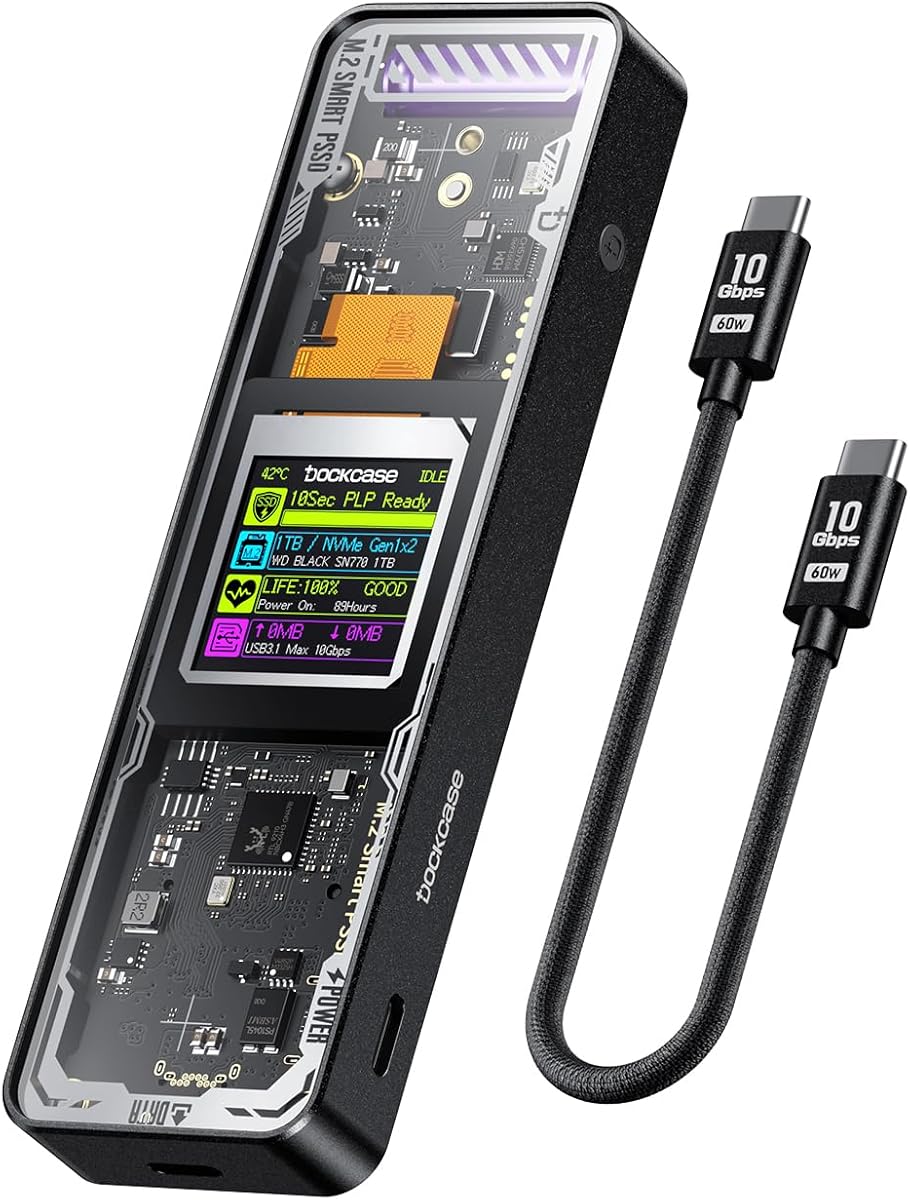
Choose the Right NVMe Enclosure: Performance, Data Safety, and Fit
When selecting an M.2 NVMe SSD enclosure, key factors include transfer speeds, build quality, and data protection features. The DOCKCASE Explorer Edition offers USB 3.2 Gen 2 at 10 Gbps and a unique 10-second Power Loss Protection (PLP) to prevent data corruption during unexpected power cuts, making it a standout for sensitive data transfers.
Key Considerations Before Buying
- Ensure the enclosure supports your SSD size: DOCKCASE fits 2230, 2242, 2260, and 2280 drives, but verify your specific NVMe length before purchase.
- The 10-second PLP feature is rare in this price range; consider if you often transfer critical files on unstable power sources, as it adds a safety net against write data loss.
- Check compatibility with your device's USB-C port: this enclosure uses USB 3.2 Gen 2 (10 Gbps) and is backward compatible, but for full speed, your host must support the same standard.
What Our Analysts Recommend
For a quality NVMe enclosure, look for robust heat dissipation (e.g., aluminum shell or thermal pads), support for UASP for better throughput, and a secure locking mechanism to hold the drive. Verified reviews mentioning sustained transfer rates and real-world testing are strong quality indicators.
Enclosures Market Context
Market Overview
The NVMe enclosure market is crowded with options ranging from budget plastic models to premium aluminum ones with advanced cooling. USB 3.2 Gen 2 at 10 Gbps is now standard, but features like PLP and universal size support (2230-2280) are less common, setting certain products apart.
Common Issues
Many enclosures overheat during extended writes, leading to throttling or data errors. Also, compatibility issues with different NVMe key types (M-Key vs B+M Key) and poor build quality causing loose connections are frequent complaints among users.
Quality Indicators
High-quality enclosures typically feature full aluminum construction for heat management, tool-less installation, and support for both M-Key and B+M Key SSDs. Positive reviews that detail specific use cases (e.g., video editing, external OS booting) signal reliable performance.
Review Authenticity Insights
Grade B Interpretation
With a Grade B and an estimated 10% fake review rate, the DOCKCASE Explorer Edition's review pool is largely trustworthy but not flawless. This means most of the 389 reviews are genuine, though you should be cautious of overly promotional or vague 5-star entries.
Trust Recommendation
Given the high verified purchase rate and detailed technical feedback, you can generally trust the 4.44 rating, but consider the adjusted 4.20 as a more realistic baseline. Focus on reviews that discuss the PLP feature and thermal performance, as these are likely from real users.
Tips for Reading Reviews
For NVMe enclosures, prioritize reviews that mention specific SSD models tested, sustained transfer speeds, and any issues with heat or driver compatibility. Skip reviews that lack detail or repeat generic phrases like 'works great' without context.
Expert Perspective
The DOCKCASE Explorer Edition stands out in a saturated market by integrating Power Loss Protection, a feature typically found in enterprise-grade storage. This, combined with universal size support and USB 3.2 Gen 2 speeds, makes it a strong choice for users who prioritize data integrity over raw speed. However, the 10% fake review rate suggests some marketing noise, so rely on detailed, verified feedback. Its adjusted rating of 4.20 indicates solid but not exceptional performance, likely due to minor thermal or compatibility quirks.
Purchase Considerations
If you regularly work with critical data on the go or in environments with unstable power, the PLP feature is a compelling reason to choose this enclosure over cheaper alternatives. However, if you need absolute top speeds for large file transfers, consider models with Thunderbolt 3/4 support, though at a higher cost.
Comparing Alternatives
For shoppers, compare this with enclosures from brands like Sabrent or Orico that offer similar speeds but lack PLP, or consider higher-end options like the Acasis Thunderbolt enclosure for faster throughput.


