
Choosing a high-capacity water filter pitcher requires balancing filtration power with ongoing costs
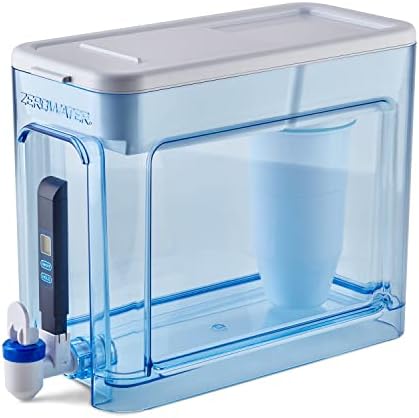
The ZeroWater 32-Cup dispenser stands out for its 5-stage filtration and integrated TDS meter, promising 0 TDS water. Buyers should understand that achieving this purity level impacts filter lifespan differently than standard carbon-only pitchers. This model's IAPMO certification for lead, chromium, and PFOA/PFOS reduction indicates third-party validation of specific contaminant claims.
Key Considerations Before Buying
- Filter replacement economics are critical: ZeroWater's ion-exchange resin achieves 0 TDS but typically requires more frequent changes than basic pitchers, especially in areas with high dissolved solids.
- The 32-cup capacity (about 2 gallons) suits families but requires significant refrigerator space; measure your shelf clearance before purchasing.
- The built-in TDS meter provides immediate feedback on water quality and filter exhaustion, a unique feature that shifts maintenance from a schedule to a performance-based trigger.
What Our Analysts Recommend
Prioritize pitchers with independent certifications like IAPMO or NSF for specific contaminant reduction claims, not just general 'improved taste.' For large capacities, examine dispenser ergonomics—the ZeroWater's spigot design and lid stability during refills affect daily usability. Check that replacement filters are readily available and budget for their cost, which is higher than standard carbon filters.
Pitcher Water Filters Market Context
Market Overview
The pitcher filter market has segmented into basic taste-improvers and advanced contaminant-reduction systems, with ZeroWater occupying the latter niche through its ion-exchange technology. Consumers increasingly seek certifications for PFAS reduction, moving beyond chlorine taste removal.
Common Issues
Users often underestimate the ongoing filter cost and frequency, particularly with 0 TDS systems that exhaust faster in hard water. Large-capacity pitchers can become unwieldy when full, and spigot mechanisms sometimes leak or require excessive force. Some pitchers claim broad contaminant reduction without third-party verification.
Quality Indicators
Look for clear filtration performance data against specific contaminants, not vague promises. A well-designed pitcher should have a balanced center of gravity when full and a drip-free dispensing mechanism. Quality filters maintain consistent flow rate throughout their lifespan without dramatic slowdowns.
Review Authenticity Insights
Grade B Interpretation
A Grade B with 12% estimated fake reviews suggests generally reliable feedback but warrants scrutiny of overly simplistic 5-star reviews. The adjusted rating dropping from 4.80 to 4.50 indicates some review inflation, though 4.50 remains strong for this category.
Trust Recommendation
Focus on verified purchase reviews discussing long-term use (3+ months) and filter replacement experiences, as these address the system's true cost of ownership. Be skeptical of reviews that don't mention water source characteristics or TDS readings, as filter performance is highly source-dependent.
Tips for Reading Reviews
Prioritize reviews that specify initial and post-filter TDS readings from the built-in meter—this quantitative data is more valuable than subjective taste claims. Look for mentions of how many gallons or weeks filters lasted in their water conditions, as this varies dramatically by geography.
Expert Perspective
The ZeroWater 32-Cup represents a trade-off: it delivers laboratory-grade purity (0 TDS) verified by IAPMO certification, but at a higher operational cost than standard carbon pitchers. Its 4.50 adjusted rating from over 16,000 reviews indicates strong user satisfaction, particularly among those prioritizing contaminant reduction over filter economy. The integrated TDS meter is a genuine differentiator, providing transparency most competitors lack. However, this system makes most sense for users with measurable dissolved solids or specific concerns about the certified contaminants.
Purchase Considerations
Calculate your true cost per gallon including replacement filters, which for ZeroWater typically ranges $0.25-$0.40 depending on source water. Consider whether you need 0 TDS water or would be satisfied with the taste improvement of simpler filtration. The large capacity benefits households of 3+ people but may be excessive for single users.
Comparing Alternatives
Compare with Brita's Longlast filter for longer lifespan or clearly define if your primary need is taste versus specific contaminant reduction.


