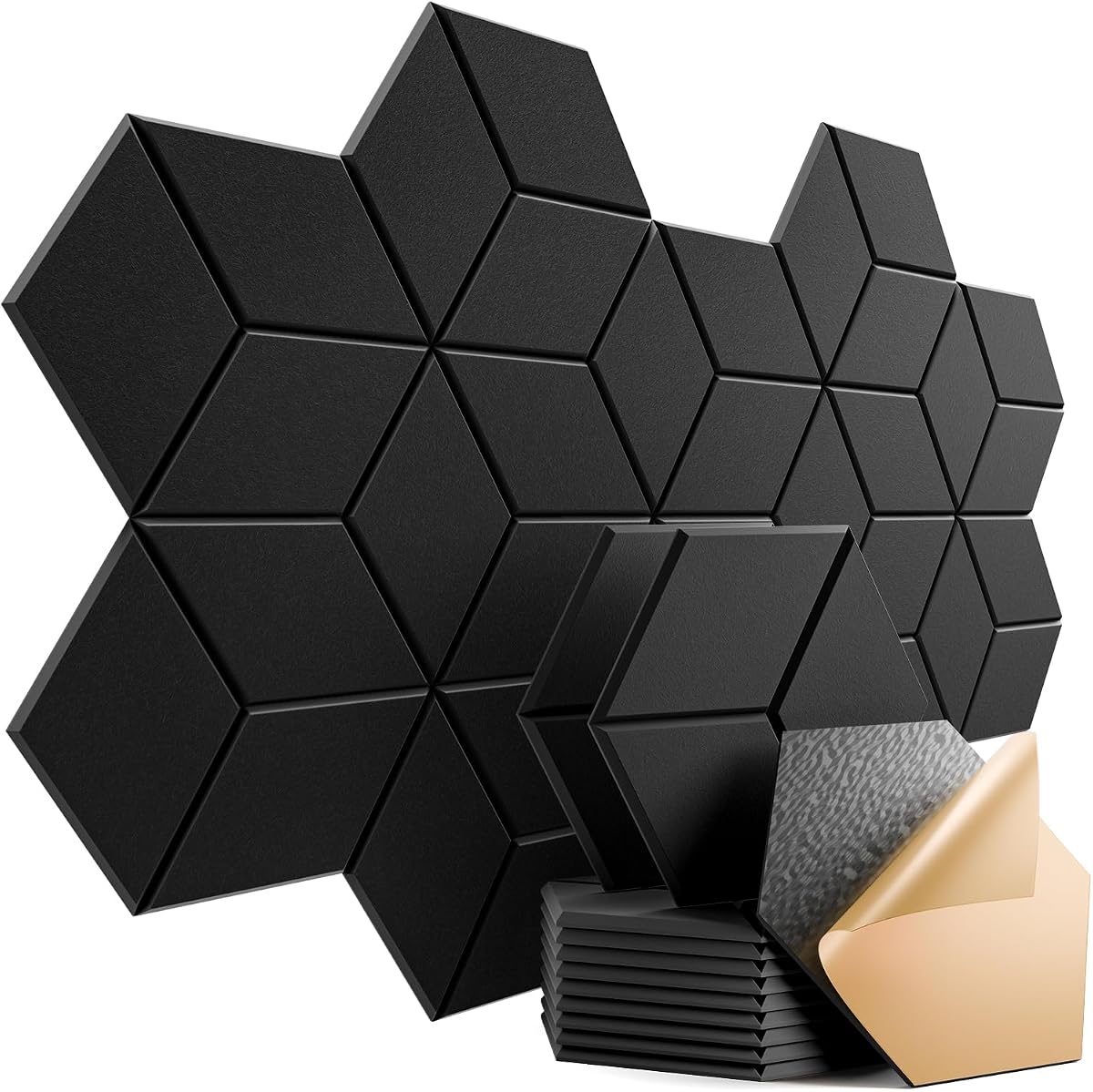
12-Pack Y-Lined Acoustic Panels: Do They Really Tame Echoes?
When you're setting up a home studio or a podcast corner, acoustic foam panels are your first line of defense against slapback echo and comb filtering. The 12-pack of 12" x 10" x 0.4" self-adhesive panels with a Y-lined design offers a convenient, peel-and-stick solution for treating small to medium spaces without the need for professional installation.
Key Considerations Before Buying
- Thickness matters: At 0.4 inches, these panels are on the thinner side, making them more effective for dampening high-frequency reflections than for solving serious bass management issues. If you're mixing music with heavy low-end, you'll need to pair these with bass traps or thicker absorbers.
- Coverage area: Each panel covers 120 square inches, so the 12-pack covers about 10 square feet. That's roughly enough to treat a 5x5-foot reflection zone behind your monitors or around your desk—plan your layout before you peel.
- Adhesive backing: While the self-adhesive design simplifies mounting, the quality of the adhesive can vary. Ensure your wall is clean, dry, and free of texture to get a lasting bond, and be prepared that removal might leave residue or damage paint.
What Our Analysts Recommend
For acoustic panels in this class, look for high-density foam (at least 1.5 pounds per cubic foot) to ensure effective sound absorption. The Y-lined (also called pyramid) pattern increases surface area, which helps scatter and absorb mid-to-high frequencies, but be sure the foam is flame-resistant (UL 94 or similar) for safety. Also, check the panel's NRC rating—a value of 0.7 or higher is solid for home studio use.
Acoustical Treatments Market Context
Market Overview
The acoustic treatment market is flooded with budget foam panels, ranging from thin, decorative tiles to professional-grade absorbers. Most consumers are hobbyists and home-studio owners looking for affordable, easy-to-install solutions that improve audio clarity for podcasts, voiceovers, and music production. The 12-pack format is popular because it offers a complete starter kit at a reasonable price point.
Common Issues
A frequent complaint with budget foam panels is that they underperform on low frequencies, despite marketing claims of 'soundproofing.' Another issue is inconsistent density across batches, which can lead to uneven absorption. Additionally, some panels arrive with a strong chemical odor (off-gassing) or with adhesive that fails to stick properly to textured walls.
Quality Indicators
Look for panels with uniform cell structure (dense and consistent), a clean cut, and a Y-line pattern that is deep and well-defined. The foam should feel firm, not spongy, and should spring back after compression. A flame-resistant certification is a must, and clear specs on density and NRC rating are signs of a reputable manufacturer.
Review Authenticity Insights
Grade B Interpretation
The product earned a Grade B for review authenticity, with an estimated 12% fake reviews. This means while the majority of the 806 reviews are likely genuine, a small segment could be incentivized or non-verified. The adjusted rating of 4.40 (down from 4.67) suggests that when you strip away potentially inauthentic reviews, the product still performs well, but not spectacularly.
Trust Recommendation
Given the 12% fake rate, you should read reviews with a critical eye—focus on the 4-star and 3-star reviews for balanced feedback. Look for reviewers who mention specific installation details (e.g., 'stick well to painted drywall') and who note limitations (e.g., 'doesn't help with bass'). These are more likely to be authentic.
Tips for Reading Reviews
For acoustic panels, pay attention to reviews that mention the foam's density and thickness, as these directly affect performance. Also, watch for reviews that compare this product to others in the same price range—they often highlight real-world trade-offs. Skip reviews that are overly enthusiastic or lack specifics, as they may be fake.
Expert Perspective
Based on the analysis, this 12-pack of self-adhesive acoustic panels appears to be a reliable, budget-friendly option for reducing flutter echo and high-frequency reflections in small rooms. The 4.40 adjusted rating indicates solid performance, but the 0.4-inch thickness and foam construction mean it's not a substitute for proper acoustic treatment in professional studios. It's best suited for podcasters, streamers, and home recording enthusiasts who need a quick, effective improvement in sound quality.
Purchase Considerations
Weigh the convenience of self-adhesive panels against potential wall damage and the need for additional coverage. If your room has large reflective surfaces or you're dealing with low-frequency standing waves, you'll need to supplement these panels with bass traps or thicker absorbers. Also, consider the black color—it may show dust or blend differently with your decor.
Comparing Alternatives
Before committing, compare this set with other 12-pack acoustic foam options that offer higher density or thicker profiles (e.g., 1-inch or 2-inch) if you have the budget, as they may provide better overall absorption across a wider frequency range.