
USB-C Power Tester Buying Guide: What to Know Before You Buy
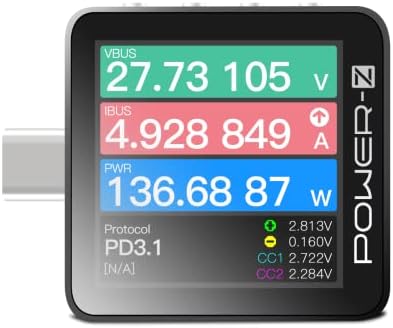
A USB-C tester like the ChargerLAB Power-Z KM003C is a specialized diagnostic tool that measures voltage, current, and power delivery protocols, helping you verify charger performance and cable quality. Unlike basic multimeters, these devices decode fast-charging protocols such as PD3.2 and QC5.0, making them essential for tech enthusiasts and professionals.
Key Considerations Before Buying
- Protocol support: Ensure the tester supports the fast-charging standards you use, such as USB PD 3.2, QC 5.0, or proprietary protocols like Apple 2.4A or Samsung AFC. The KM003C covers major protocols, but verify compatibility with your specific devices.
- Accuracy and resolution: Look for voltage and current measurement accuracy within ±0.1% and a high-resolution display (e.g., 0.0001V/0.0001A) for precise readings. The KM003C offers this level of precision, which is crucial for diagnosing subtle charging issues.
- Build quality and usability: A sturdy aluminum alloy casing and a clear OLED screen with multiple viewing angles are important for durability and ease of use. Consider whether you need Bluetooth connectivity or data logging, as found in higher-end models.
What Our Analysts Recommend
When evaluating USB-C testers, prioritize models with firmware upgradeability to support future protocols, and check for safety features like over-voltage protection. User reviews often highlight reliability and ease of use, so look for consistent feedback on accuracy and build quality.
Accessories Market Context
Market Overview
The USB-C tester market has grown with the proliferation of fast-charging technologies, offering tools ranging from basic voltage displays to advanced analyzers with Bluetooth and PC connectivity. Brands like ChargerLAB, AVHzY, and FNIRSI compete on accuracy, protocol support, and price, with the KM003C positioned as a mid-to-high-end option.
Common Issues
Common problems include inaccurate readings at low currents, limited protocol support, and poor build quality leading to early failure. Some testers also struggle with firmware updates or have confusing interfaces, which can frustrate users.
Quality Indicators
High-quality testers typically feature precise measurement circuitry, robust connectors, and regular firmware updates. They often have a dedicated community or manufacturer support for troubleshooting. Certifications like CE or RoHS can also indicate reliability.
Review Authenticity Insights
Grade B Interpretation
The B authenticity grade and 12% estimated fake review percentage suggest that while most reviews are genuine, there is a notable minority of potentially suspicious reviews. This is relatively common for niche technical products, where enthusiastic early adopters may post overly positive reviews.
Trust Recommendation
Trust the overall 4.44/5 rating but be aware that the adjusted rating of 4.20/5 is more realistic. Focus on reviews that provide detailed technical insights, as these are more likely to be authentic and helpful for evaluating the product's performance.
Tips for Reading Reviews
When reading reviews, look for specific details about measurement accuracy, protocol compatibility, and build quality. Reviews that mention particular use cases (e.g., testing a specific charger model) are more credible than generic praise. Also, check for reviews from users with technical backgrounds.
Expert Perspective
The ChargerLAB Power-Z KM003C is a well-regarded USB-C tester that offers comprehensive protocol support and high accuracy, making it suitable for both enthusiasts and professionals. Its 4.44/5 rating from 248 reviews indicates strong satisfaction, though the adjusted rating of 4.20/5 suggests some reviews may be inflated. The product's ability to handle PD3.2 and QC5.0 ensures it remains relevant for current and future fast-charging standards.
Purchase Considerations
Consider your need for advanced features like Bluetooth or data logging; if you require only basic voltage/current readings, a cheaper model might suffice. However, for those who need to verify charging performance across multiple devices, the KM003C's precision and protocol support justify its price. Also, check for warranty and firmware update policies.
Comparing Alternatives
Before purchasing, compare the KM003C with similar testers like the AVHzY CT-3 or FNIRSI FNB58, which may offer different feature sets or price points.

![Spigen AluminaCore Tempered Glass Screen Protector [Glas.tR EZ Fit - Privacy] designed for iPhone 17 Pro | iPhone 17 | iPhone 16 Pro [2 Pack] 9H+ Hardness, Aluminum-Enhanced Durability](https://m.media-amazon.com/images/I/61Ec+KwkVTL._AC_SY300_SX300_QL70_ML2_.jpg)
![LK 3 Pack for Apple Watch Ultra 3 Screen Protector 49mm [Zero-Fault] HD Top 9H Tempered Glass Apple Watch Ultra/Ultra 2 Screen Protector 49mm with Auto-alignment Installation Frame, Anti-Scratchch](https://m.media-amazon.com/images/I/71yFHZGA0kL._AC_SY300_SX300_QL70_FMwebp_.jpg)


