Choosing a magnetic privacy screen requires balancing optical clarity with secure attachment
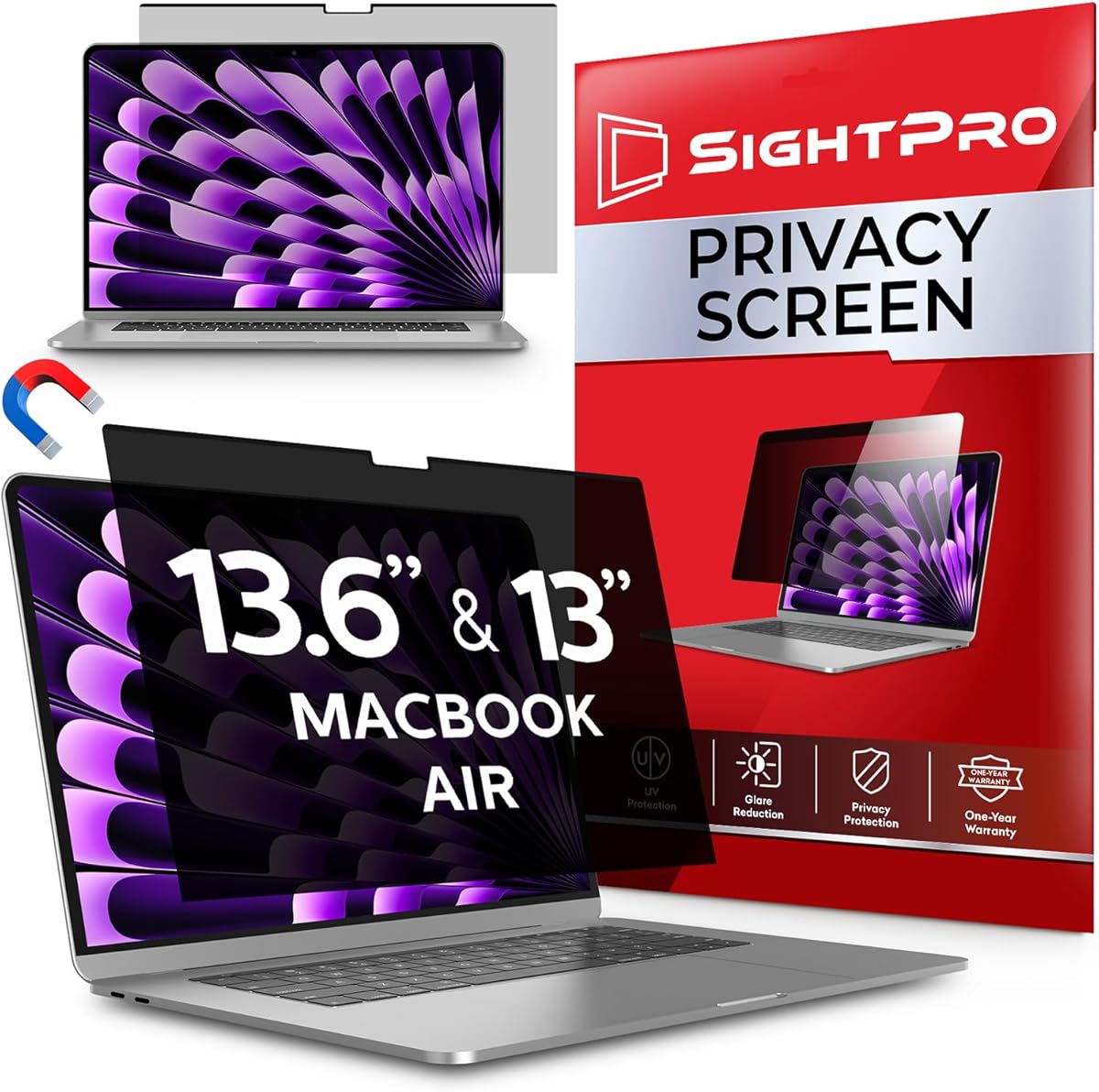
For MacBook Air users needing visual security in public spaces, the SightPro's magnetic attachment system offers a distinct advantage over adhesive-based filters. This specific model targets the precise dimensions of 2022-2025 13-inch and 13.6-inch MacBook Airs, including M2, M3, and M4 chip models, ensuring proper bezel coverage without interfering with the camera notch. The patented removable design promises convenience but demands scrutiny of magnet strength and screen material quality.
Key Considerations Before Buying
- Magnet placement and strength are critical; weak magnets can cause the filter to detach when opening the laptop lid, while overly strong magnets might create alignment issues or pressure points on the display.
- The optical film's viewing angle restriction should be balanced with brightness loss; a good filter maintains screen legibility for the primary user while effectively obscuring side views at around 30-45 degrees.
- Compatibility with specific MacBook Air models (2022-2025, 13" & 13.6") is non-negotiable, as even slight bezel variations can cause light leakage or improper magnetic alignment, defeating the privacy purpose.
What Our Analysts Recommend
High-quality privacy filters use multi-layer optical coatings rather than simple tinted film, which minimizes color distortion and reduces eye strain during prolonged use. Check for mentions of anti-glare treatment that works in conjunction with the privacy function, as this is a key differentiator from cheaper, single-purpose films. The magnetic frame should be slim and use precisely placed neodymium magnets that align with the laptop's metal casing without requiring permanent adhesive strips.
Screen Filters Market Context
Market Overview
The laptop privacy filter market has shifted significantly toward magnetic attachment systems, particularly for Apple devices where users resist permanent adhesives. For MacBook Air models, this has created a niche of precision-engineered filters that must account for Apple's thin bezels and camera notch designs introduced in recent years. Competition focuses on achieving the thinnest possible profile while maintaining effective privacy angles and secure attachment.
Common Issues
Consumers frequently report problems with magnetic filters falling off during transport, creating distracting glare patterns from overhead lighting, or causing noticeable color shifting that affects photo and video work. Light leakage from imperfect bezel alignment is another persistent complaint, as even a 1-2mm gap can reveal screen content in certain environments. Some filters also interfere with laptop lid closure or add unacceptable thickness.
Quality Indicators
Look for filters that specify multi-layer optical construction (not just 'privacy film'), mention anti-reflective coatings, and provide exact millimeter measurements for bezel coverage. Quality manufacturers use micro-thin magnetic strips integrated into a rigid frame, not just glued-on magnetic dots. Premium filters maintain at least 85% of the screen's original brightness while achieving a 60-degree or narrower viewing angle restriction.
Review Authenticity Insights
Grade B Interpretation
A Grade B authenticity rating with an 11% estimated fake review rate indicates predominantly genuine feedback with some promotional content mixed in. For this SightPro model, this suggests most experiences reflect actual customer use, though you should be slightly skeptical of overly enthusiastic reviews that lack specific details about daily usage scenarios. The 0.20-point drop from the displayed 4.00 to the adjusted 3.80 rating is moderate and typical for accessories in this competitive price segment.
Trust Recommendation
Focus on verified purchase reviews that mention specific MacBook Air model numbers (like 'M2 MacBook Air 13.6-inch 2023') and describe real-world usage contexts like coffee shops, open offices, or travel. Be particularly attentive to reviews discussing long-term durability of the magnetic attachment, as this is where less authentic reviews often lack convincing detail. The substantial review count (5200+) provides enough data points to identify consistent patterns despite the modest fake review presence.
Tips for Reading Reviews
Prioritize reviews that discuss both the privacy effectiveness and the tactile experience of attaching/removing the magnetic filter multiple times. Look for mentions of compatibility with specific MacBook Air generations, as the 2022 redesign introduced different dimensions. Pay special attention to critical reviews that detail exactly how the product failed—whether magnets detached, optical clarity suffered, or installation proved problematic—as these often provide the most useful purchasing insights.
Expert Perspective
The SightPro's magnetic approach addresses a legitimate pain point for MacBook Air users who need intermittent privacy without permanent adhesive residue. The product's specific targeting of 2022-2025 models shows manufacturer awareness of Apple's design nuances, particularly the camera notch integration. With an adjusted 3.80 rating from authentic reviews, this product performs adequately in its category, though the magnetic attachment system likely represents both its primary advantage and potential failure point depending on usage patterns and magnet quality.
Purchase Considerations
This product makes most sense for users who regularly work in semi-public spaces but also need clear screen visibility for personal media consumption or color-sensitive work. Consider whether you'll frequently remove the filter—if yes, the magnetic system provides value; if no, a permanently installed filter might offer better optical alignment. The compatibility with multiple recent MacBook Air generations adds value if you plan to upgrade your laptop within the 2022-2025 model range.
Comparing Alternatives
Shoppers should compare the SightPro's magnetic design against adhesive-based privacy filters, which typically offer better edge sealing but require permanent installation, and consider whether clip-on models might suit their less frequent privacy needs.