
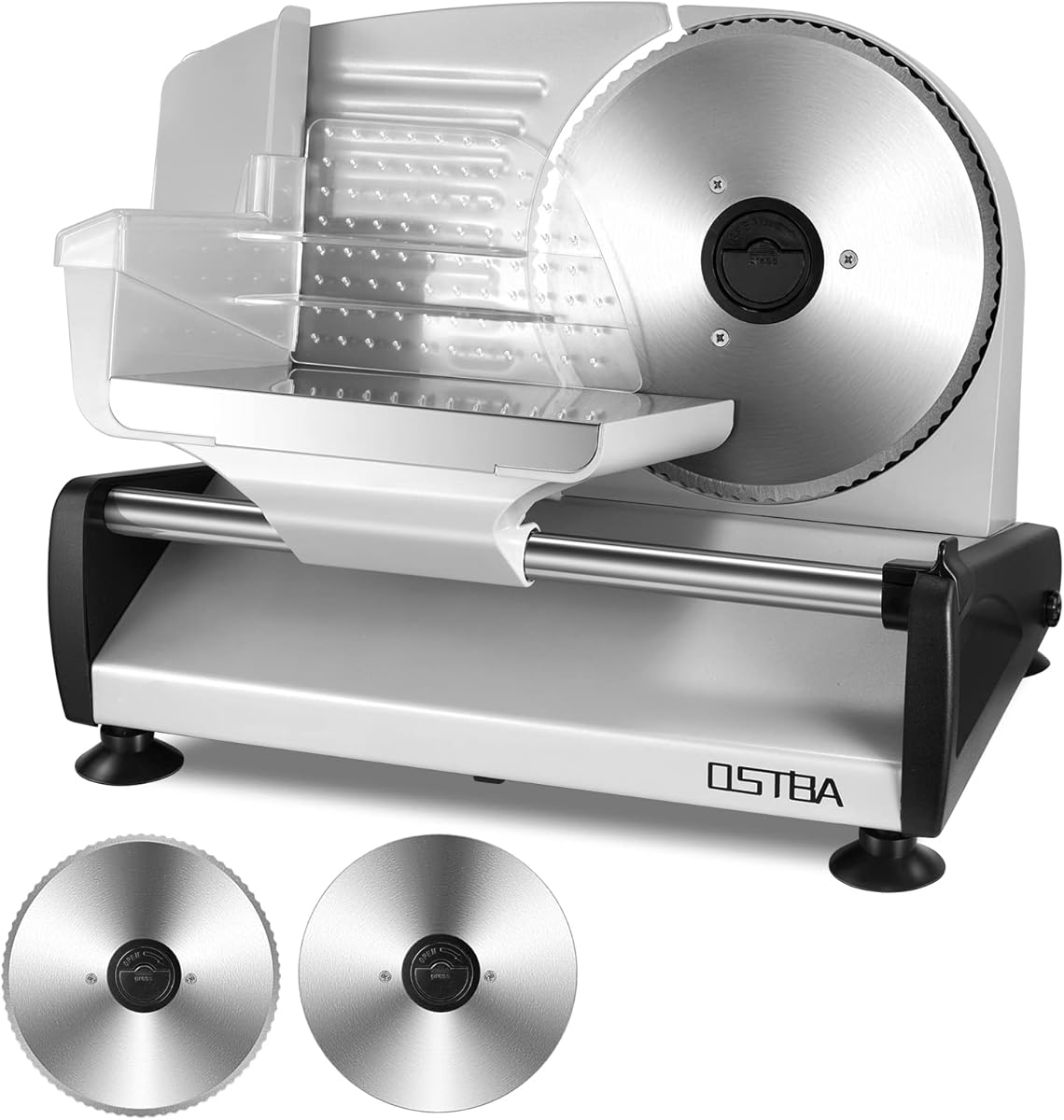
Choosing a Home Meat Slicer: Balancing Power, Safety, and Cleanability
When evaluating this specific 200W electric deli slicer with dual removable 7.5" blades, home cooks should understand that wattage directly impacts slicing performance on tougher cuts like roast beef or hard cheeses. The child lock protection and removable blade features address key safety and maintenance concerns that differentiate this model from basic kitchen slicers. Unlike commercial units, this home-focused design prioritizes compact storage and dishwasher-safe components over continuous heavy-duty operation.
Key Considerations Before Buying
- The 200W motor is adequate for occasional home use but may struggle with frozen meats or dense, fibrous cuts that require more torque than typical deli meats.
- Removable stainless steel blades offer easier cleaning but require careful handling during assembly and disassembly to maintain sharpness and prevent accidents.
- Adjustable thickness settings must provide consistent results across different food textures—look for reviews mentioning whether the 0-15mm range actually delivers uniform slices of both soft bread and firm cheddar.
What Our Analysts Recommend
Quality home slicers demonstrate minimal blade wobble during operation and maintain consistent slice thickness across the entire carriage travel. Pay particular attention to reviews mentioning the stability of the food carriage and whether the thickness adjustment dial stays securely in position during use. The plastic housing should feel substantial, not flimsy, especially around the blade housing where vibration occurs.
Electric Slicers Market Context
Market Overview
The home electric slicer market has expanded significantly as consumers seek restaurant-quality cuts for charcuterie boards and homemade jerky, with most models clustering in the 150-250W range for kitchen countertop use. Current offerings increasingly emphasize safety features like child locks and blade guards, responding to concerns about handling sharp industrial-style blades in domestic environments.
Common Issues
Home users frequently report inconsistent slice thickness, particularly with softer foods that compress against the blade, and difficulty cleaning food particles from under fixed blade assemblies. Many lower-wattage models struggle with heat buildup during extended slicing sessions, potentially affecting motor longevity.
Quality Indicators
Superior home slicers feature precisely machined blade mounts that eliminate lateral play, include food carriage stops that prevent fingers from contacting the blade, and use stainless steel components in all food-contact areas. Look for models where the thickness adjustment mechanism uses metal gears rather than plastic detents for more reliable settings.
Review Authenticity Insights
Grade C Interpretation
The Grade C authenticity rating and 28% estimated fake reviews indicate significant review manipulation, suggesting the published 4.4-star rating likely overstates actual user satisfaction. The adjusted 3.8-star rating after filtering suspicious reviews represents a more realistic assessment, placing this slicer in the average-to-good range rather than exceptional territory.
Trust Recommendation
Focus on verified purchase reviews that describe specific usage scenarios like slicing Thanksgiving turkey or making jerky, and be skeptical of reviews that defensively address negative feedback. Given the authenticity concerns, prioritize reviews with photographic evidence of actual use or detailed discussions of cleaning the removable blade assembly.
Tips for Reading Reviews
Look for reviews that mention the slicer's performance with particular foods—legitimate owners typically specify whether it handled prosciutto without tearing or sliced tomatoes cleanly. Be wary of reviews using identical phrasing about 'child safety' or 'easy cleaning' without providing unique contextual details about their kitchen experience.
Expert Perspective
This 200W slicer represents a mid-range home option that balances essential features against common budget constraints. The dual removable blades are a legitimate advantage for maintenance, though the motor power sits at the lower end for serious meat processing. The significant discrepancy between the published 4.4 and adjusted 3.8 ratings suggests the product may underperform expectations set by its manipulated reviews, particularly regarding durability and consistent slicing performance. The child lock is a meaningful safety addition for households, but doesn't compensate for potential mechanical limitations.
Purchase Considerations
Consider this model if your needs center on occasional slicing of pre-cooked meats and semi-soft cheeses, but explore higher-wattage alternatives if you plan to process raw roasts or make jerky regularly. The removable blade system adds value if you prioritize cleanability over absolute slicing precision, as removable mechanisms can introduce minor alignment variations.
Comparing Alternatives
Shoppers should compare this model's 200W motor and plastic construction against similarly priced slicers with 250W+ motors or all-metal food carriages for better durability.


