
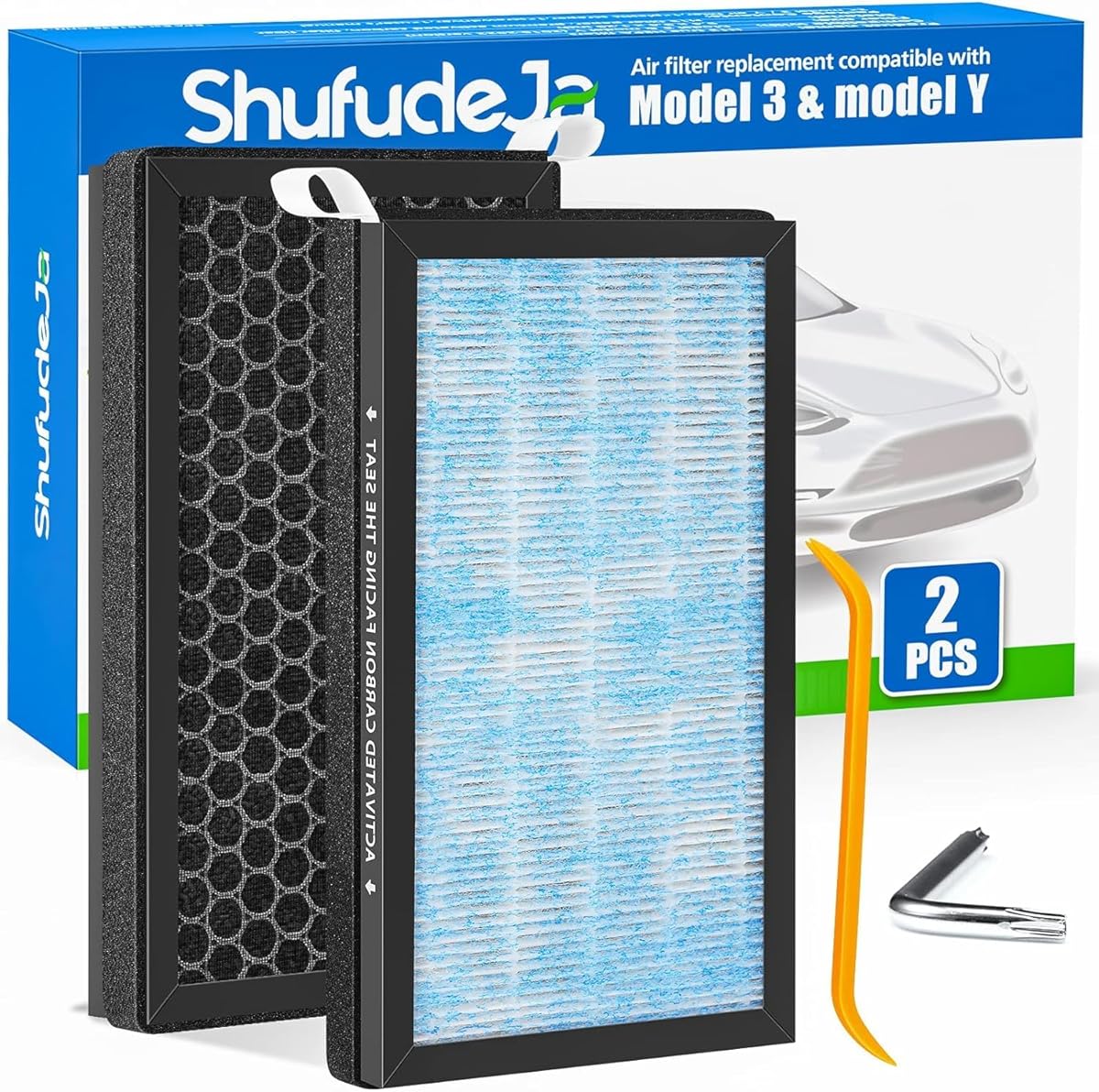
Keep Your Tesla's Cabin Air Fresh: A Guide to Model 3/Y Filters
If you own a Tesla Model 3 or Model Y, replacing the cabin air filter is a straightforward DIY task that can dramatically improve air quality inside your vehicle. This guide focuses on aftermarket options like the two-pack filter set, which offers a cost-effective way to combat odors from HVAC systems and ensure clean airflow for you and your passengers.
Key Considerations Before Buying
- Ensure the filter is specifically designed for Tesla Model 3 and Model Y, as the housing dimensions and airflow direction are unique to these vehicles. Generic filters may not fit securely or seal properly.
- Look for filters with activated carbon layers to neutralize odors from outside pollutants, mildew, or the A/C system—a common complaint among Tesla owners. A multi-layer design (pre-filter, carbon, and fine particulate layer) enhances trapping efficiency.
- Check the filter's thickness and rigidity; a flimsy filter can collapse under high fan speeds, reducing effectiveness. Quality aftermarket packs often include two filters for a complete front and rear replacement.
What Our Analysts Recommend
High-quality Tesla cabin filters typically feature dense, pleated media with a bonded activated carbon layer that doesn't shed dust. Look for verified compatibility claims (e.g., 'OEM equivalent' or 'direct replacement') and user reports of easy installation without modification. A good indicator is consistent positive feedback on odor reduction and airflow maintenance over several months of use.
Passenger Compartment Air Filters Market Context
Market Overview
The market for Tesla Model 3 and Model Y cabin air filters has grown significantly as owners seek affordable alternatives to dealership replacements. Many brands now offer two-pack options that undercut OEM pricing while promising similar or better performance, especially with upgraded carbon layers.
Common Issues
Common problems include filters that are too thin to trap fine particles, carbon layers that degrade quickly, and poor fitment causing rattles or air leaks. Some aftermarket filters also lack the electrostatic charge found in premium OEM filters, which can reduce initial particulate capture efficiency.
Quality Indicators
Quality indicators include multiple filtration layers (pre-filter, activated carbon, and fine media), a sturdy frame that resists warping, and clear installation instructions. Filters with a high pleat count and sealed edges tend to perform better, as do those with positive reviews specifically mentioning long-lasting odor control.
Review Authenticity Insights
Grade B Interpretation
With a Review Authenticity Grade of B and an estimated 10% fake review rate, this product's feedback is largely trustworthy but not flawless. The B grade suggests most reviews are genuine, but you should still approach a small subset of overly promotional or vague reviews with caution.
Trust Recommendation
Given the high average rating (4.89 overall, 4.60 adjusted) and strong authenticity signals, you can be confident that the majority of buyers are satisfied. Focus on reviews that detail installation experience, odor elimination, and filter longevity to get the most reliable picture of real-world performance.
Tips for Reading Reviews
When reading reviews for cabin air filters, prioritize those that mention specific Tesla model years, describe the installation process, and note changes in cabin air quality after weeks of use. Be wary of reviews that only praise 'great price' without discussing fit or function, as these may be less reliable.
Expert Perspective
This two-pack cabin air filter for Tesla Model 3 and Model Y appears to be a solid aftermarket option, backed by a high volume of authentic positive feedback and a strong adjusted rating of 4.60 out of 5. The 10% estimated fake review rate is relatively low, suggesting the product's popularity is genuine. Buyers consistently highlight easy installation, effective odor reduction, and good value compared to single OEM filters, making it a compelling choice for Tesla owners looking to save money without sacrificing performance.
Purchase Considerations
Consider this filter if you're comfortable with a DIY replacement every 12-18 months and want to avoid dealership costs. However, if you have severe allergies or live in a high-pollution area, you may want to compare the carbon layer thickness and particulate efficiency with premium brands or OEM options.
Comparing Alternatives
While this filter performs well for most users, shoppers should compare specifications like MERV rating or carbon weight with other aftermarket options to ensure it meets their specific air quality needs.
![[2-Pack] EPAuto CP182 (CF11182) Cabin Air Filter Replacement for Honda Accord, Civic, CR-V, Fit, HR-V, Insight, Odyssey, Pilot, CR-Z, Clarity;Acura Integra,MDX,RDX,TLX - Fits Select Models 2009-2025](https://m.media-amazon.com/images/I/91tgohNmNiL._AC_SY300_SX300_QL70_FMwebp_.jpg)


