
Why Teak Wood Spoons Outperform Bamboo and Silicone in Your Kitchen
When choosing cooking spoons, material matters more than most shoppers realize, especially if you frequently use nonstick cookware. This 10-piece teak wood set offers a distinct advantage over bamboo or plastic alternatives: natural hardness and low water absorption that resist warping, staining, and cracking over time. Understanding how teak’s dense grain interacts with heat and moisture will help you decide if this set fits your cooking habits.
Key Considerations Before Buying
- Teak wood contains natural oils that repel moisture and provide mild heat resistance up to about 400°F, but avoid leaving spoons soaking in water or resting on hot burners to prevent splitting. This set’s ergonomic handles improve grip comfort during extended stirring, but the smooth finish can become slippery when wet.
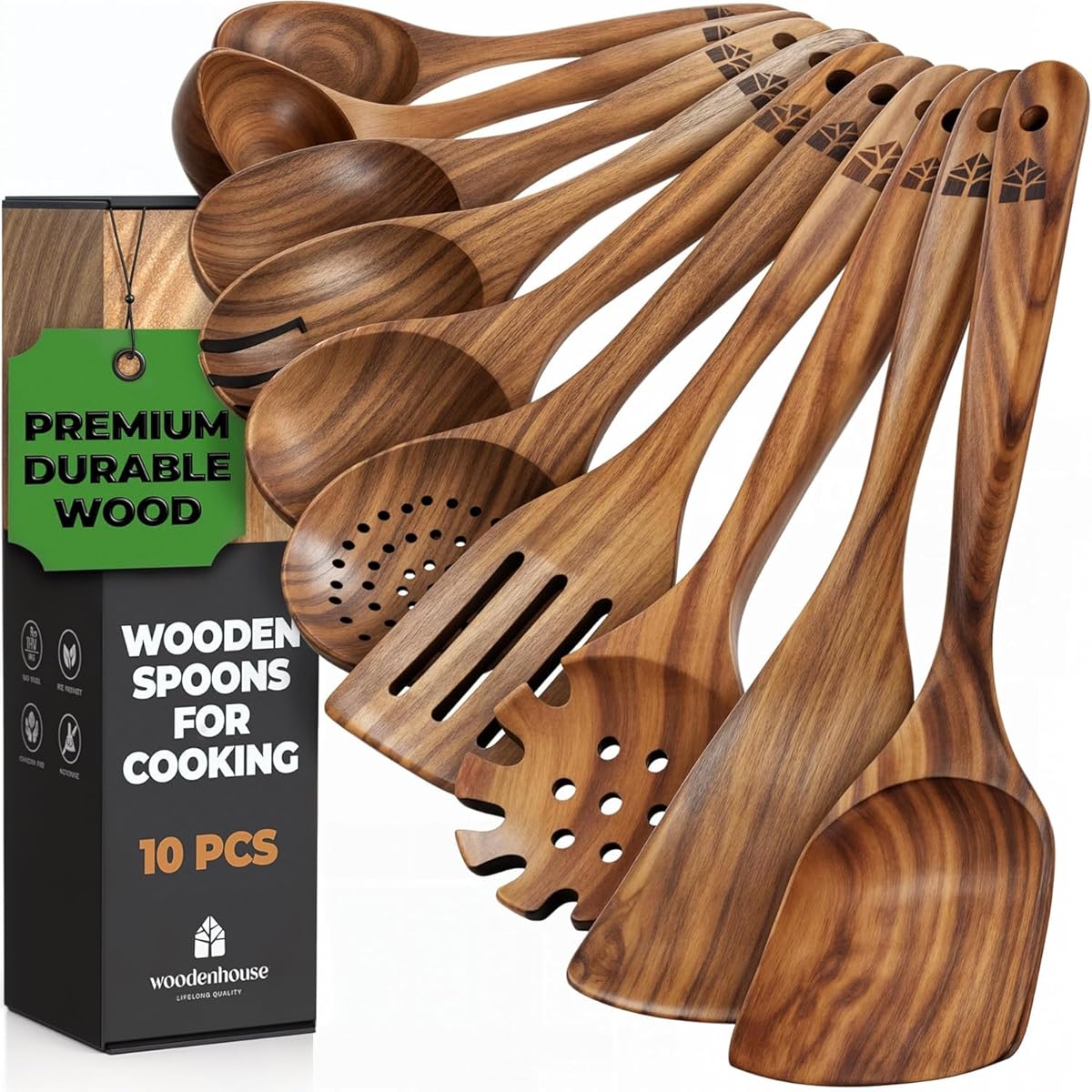
- Because teak is harder than bamboo or acacia, these spoons won’t scratch nonstick pans as easily as metal utensils, but they may show surface wear faster than silicone counterparts. The 10-piece variety—including slotted and solid spoons, a spatula, and a turner—covers most cooking tasks, but check that each piece’s size fits comfortably in your hand and pot.
- Authenticity of teak wood is critical; genuine teak has a rich golden-brown hue and a slightly oily feel. Lower-quality imitations or rubberwood marketed as teak will absorb moisture and degrade quicker. Look for a smooth, splinter-free finish and visible grain patterns that indicate solid wood construction rather than glued scraps.
What Our Analysts Recommend
High-quality teak utensils should feel substantial but not heavy, with no rough edges or loose fibers. The wood should be uniformly colored and free of knots or cracks that could harbor bacteria. A food-safe mineral oil finish is preferable to varnish, which can peel into food over time.
Cooking Spoons Market Context
Market Overview
The wooden cooking utensil market has grown steadily as more home cooks move away from plastic and metal to protect nonstick cookware and reduce plastic waste. Teak wood sets occupy a premium niche, priced higher than bamboo but offering superior durability and natural resistance to moisture and heat. Many brands now emphasize ergonomic design and multi-piece sets to compete with silicone alternatives.
Common Issues
A frequent problem with wooden spoons is splitting or cracking after repeated washing or exposure to high heat. Some cheaper sets use glued wood strips that separate over time, while others lack proper finishing, leading to rough surfaces that can splinter or absorb food odors. Consumers also report that lightweight bamboo spoons warp more easily than denser hardwoods like teak.
Quality Indicators
Look for utensils made from a single piece of wood (not laminated), with a smooth, food-safe finish that feels slightly waxy from natural oils. Weight is a clue: quality teak is denser than pine or bamboo but lighter than maple. A set that includes a variety of spoon shapes and sizes suggests the manufacturer has considered practical cooking needs beyond basic stirring.
Review Authenticity Insights
Grade B Interpretation
With a Grade B rating and an estimated 10% fake review rate, this product shows strong overall authenticity but still has a small cluster of potentially fabricated reviews. The 4.89 average rating drops to a still-impressive 4.60 after adjusting for suspicious reviews, indicating that genuine buyers are largely satisfied. The 10% fake rate is moderate—not alarming, but worth noting for a product with over 8,000 reviews.
Trust Recommendation
You can generally trust the positive consensus here, but pay more attention to reviews with verified purchase badges and detailed usage descriptions, such as those mentioning specific cookware types or cooking tasks. Be cautious of reviews that use overly generic language or lack personal context, especially if they were posted in a short time window.
Tips for Reading Reviews
When scanning reviews for wooden utensils, focus on comments about durability after several months of use, resistance to staining from tomato-based sauces, and whether any splintering occurred. Look for photos of the spoons after repeated washing—these often reveal real-world wear better than text alone. Also note any mentions of the wood’s scent or oiliness, as these can indicate genuine teak versus treated alternatives.
Expert Perspective
This teak wood spoon set appears to be a solid choice for home cooks seeking a durable, nonstick-safe alternative to silicone or metal. The high adjusted rating of 4.60 from verified buyers suggests that most users find the ergonomics and variety meet their daily cooking needs, and the natural teak properties reduce common issues like warping. However, the 10% fake review rate and Grade B authenticity grade remind buyers to approach the 4.89 average with slight caution, focusing on detailed reviews rather than just the star count.
Purchase Considerations
If you frequently cook with nonstick pans or enameled cast iron, these teak spoons are a worthwhile investment, but be prepared to hand-wash and occasionally oil them to maintain their appearance. The 10-piece set offers good value if you need multiple tools, but if you only use one or two spoons, a smaller set or individual pieces might be more economical.
Comparing Alternatives
Shoppers should compare this teak set with bamboo or silicone options if they prioritize dishwasher safety or ultra-low maintenance, but for natural durability and heat resistance, teak remains a top contender in the wooden utensil category.


