
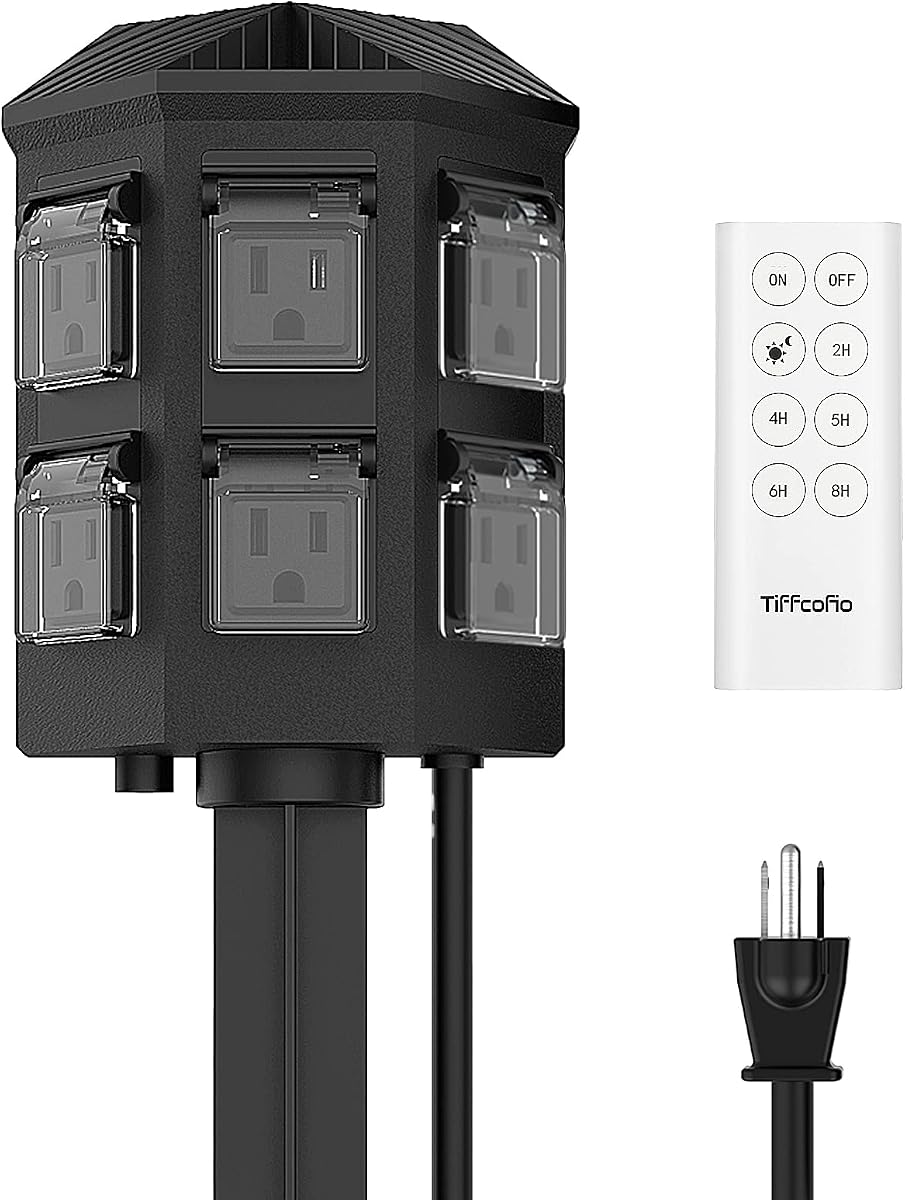
Outdoor Timer Stakes: What to Know Before You Buy
An outdoor power stake timer like this model combines a 6-outlet grounded stake, a 6-foot cord, and a 100-foot remote plus dusk-to-dawn control — a lot of capability in one unit. Because these devices sit outside year-round and switch Christmas lights or holiday decor on and off unattended, the details that matter most are weather sealing, outlet spacing, and how the timer logic behaves in bad weather.
Key Considerations Before Buying
- Remote range and line-of-sight: A 100-foot remote rating is usually measured in open air, so walls, metal siding, and dense landscaping will cut that distance. Check whether the remote uses RF (works through walls) or infrared (needs line of sight) before counting on control from inside the house.
- Timer modes and override behavior: Dusk-to-dawn photocells can be tripped by porch lights, street lamps, or reflected headlights, causing lights to switch off unexpectedly. Look for a manual override and confirm whether the schedule resets after a power outage.
- Outlet layout and load capacity: Six grounded outlets are only useful if the spacing accommodates bulky plug-in adapters and timers. Also verify the total wattage rating against your actual load — LED strings draw little, but inflatables and halogen decor add up fast.
What Our Analysts Recommend
Prioritize ETL listing, a clearly rated waterproof enclosure (IP rating or explicit 'weatherproof when closed' language), and a stake that anchors firmly in frozen or sandy soil. Cord gauge matters too: a 6-foot 14-gauge cord handles heavier loads than 16-gauge, and heavier gauge reduces voltage drop on long runs. Read the manual's fine print on whether outlets are individually switched or all controlled together.
Timers Market Context
Market Overview
Plug-in outdoor timers have shifted from simple mechanical dials to remote-controlled and photocell-based units, and combination stake-plus-timer products have become popular for holiday lighting because they eliminate a separate timer and power strip. The category is crowded with unbranded imports, so listing credentials and build quality vary widely at similar price points.
Common Issues
The most frequent complaints in this category involve water intrusion at the outlet covers, remotes that lose pairing, and photocells that trigger at the wrong light level. Users also report confusion when a timer's dawn-off setting conflicts with a manual schedule, leaving lights on all day.
Quality Indicators
Strong indicators include ETL or UL listing, gasketed covers with individual outlet flaps, a grounded plug and outlets, and a remote with a replaceable battery. Brands that publish clear wattage limits and IP ratings tend to have fewer weather-related failures.
Review Authenticity Insights
Grade A Interpretation
A Grade A authenticity score with an estimated 5% fake review rate is about as clean as Amazon listings get — the vast majority of the 3,417 reviews read as genuine, detailed, and tied to verified purchases. The adjusted rating of 4.60 versus the displayed 4.67 suggests only minor inflation, not a manipulated score.
Trust Recommendation
You can treat the aggregate rating as broadly reliable, but still weight reviews that mention specific conditions — cold-weather performance, heavy rain, or long cord runs — since those reflect real-world use of an outdoor device. Sort by 'recent' to catch any batch-related quality drift.
Tips for Reading Reviews
For outdoor timers, focus on reviews that describe installation context (soil type, outlet load, distance from the house) and note whether the remote worked through walls. Skip generic five-star one-liners and look for mentions of the photocell misbehaving or covers leaking, which are the failure modes that matter.
Expert Perspective
This stake timer's spec sheet — 6 grounded outlets, 100-foot remote, dusk-to-dawn photocell, 6-foot cord, ETL listing — covers the core needs of holiday and landscape lighting in one unit, and the 4.60 adjusted rating across thousands of reviews suggests it delivers reliably for most buyers. The combination of remote and automatic control is genuinely convenient for lights mounted in hard-to-reach spots. The main caveats are typical of the category: remote range in real-world obstructions and photocell sensitivity to nearby light sources.
Purchase Considerations
Weigh your actual load and outlet needs first — if you run inflatables or high-wattage decor, confirm the unit's total wattage rating with margin to spare. Consider whether you need independent outlet control or are fine with all six switching together, and check that the stake height suits your soil and snow depth.
Comparing Alternatives
Compare against single-outlet smart plugs with weatherproof housings and against mechanical stake timers if you don't need remote control — they cost less and have fewer failure points.


