
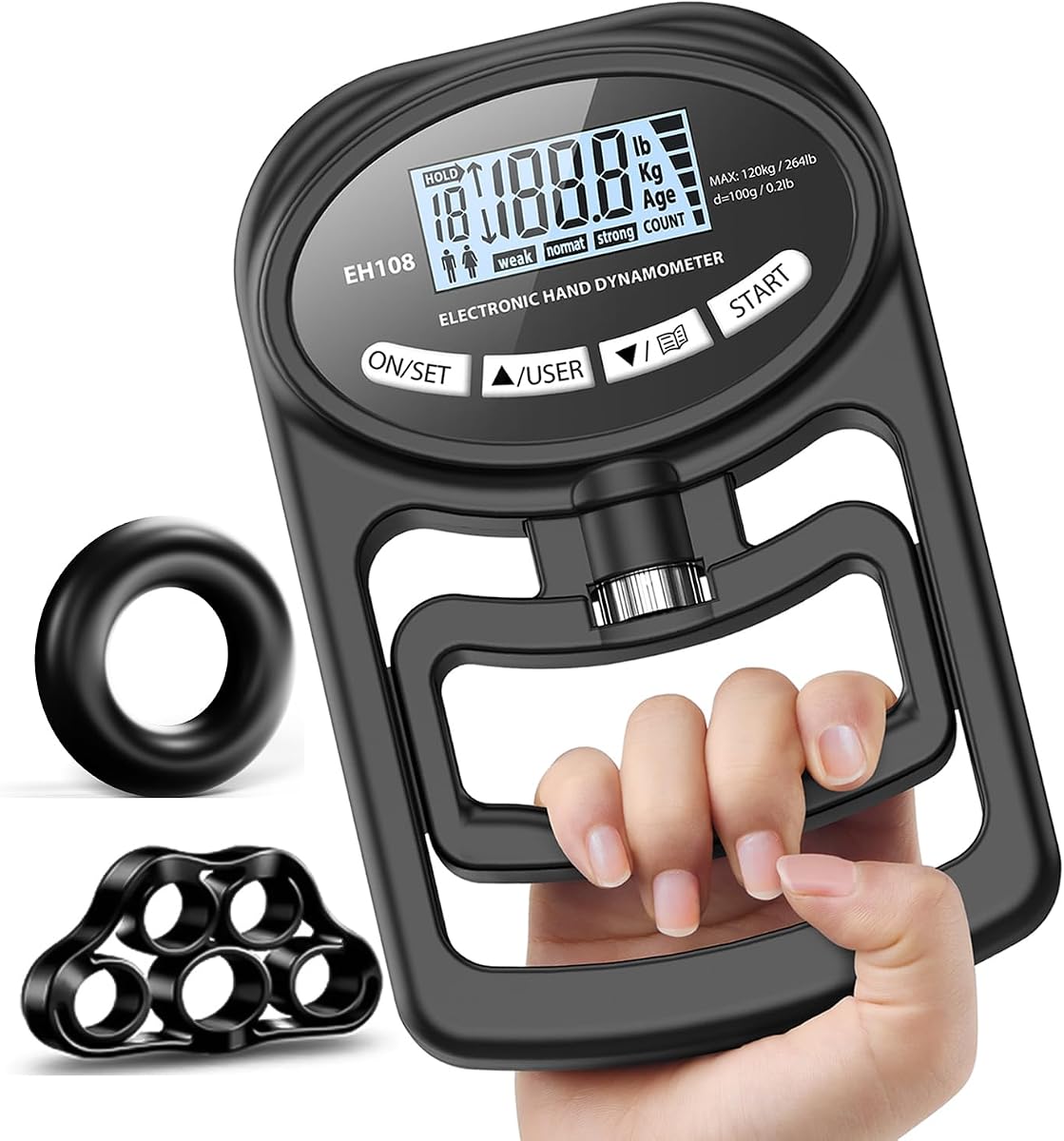
Grip Strength Tester: What to Know Before You Squeeze
A hand grip dynamometer like this one combines measurement and training, letting you track progress in kilograms or pounds. Unlike basic spring grippers, it adds a digital readout and often a trainer mode, so you can both assess and build grip strength.
Key Considerations Before Buying
- Accuracy matters: Look for a device with a clear LCD and consistent readings; some budget models drift after repeated use. Check reviews for mentions of calibration or comparison with gym equipment.
- Build quality: The handle and load cell should feel solid; plastic creaks or slipping grips are common complaints in low-end units. A textured, ergonomic handle improves comfort during max-effort squeezes.
- Training features: Some models offer adjustable resistance or app connectivity, but for most users a simple peak-hold and unit toggle suffice. Avoid paying extra for features you won't use.
What Our Analysts Recommend
Prioritize a dynamometer with a metal load cell and a warranty of at least one year. Look for reviews that mention durability after months of use, and ensure the display is easy to read at various angles. A auto-off function and low-battery indicator are small but useful touches.
Grip Strengtheners Market Context
Market Overview
The grip strengthener category has expanded beyond simple spring grippers to include digital dynamometers that measure force output. With home fitness on the rise, these devices appeal to climbers, athletes, and rehab patients seeking objective data. Prices range widely, but mid-tier models like this one aim to balance accuracy and affordability.
Common Issues
Inconsistent readings and flimsy construction are frequent complaints among budget dynamometers. Some units fail to zero properly or show significant variance between squeezes. Additionally, the included trainer mode can be too basic for serious strength training.
Quality Indicators
A reliable dynamometer will specify its measurement range and accuracy (e.g., ±2%). Reviews that compare readings with known weights or gym equipment are a good sign. Solid customer service and a clear warranty also indicate a quality product.
Review Authenticity Insights
Grade B Interpretation
A Grade B authenticity rating with an estimated 15% fake reviews means most reviews are genuine, but a noticeable minority may be manipulated. This is typical for mid-priced fitness gadgets, where sellers sometimes solicit positive feedback. The adjusted rating of 3.90 versus the Amazon 4.22 suggests some inflation, so real-world satisfaction is likely lower.
Trust Recommendation
Focus on reviews with detailed usage stories, especially those mentioning long-term durability or comparisons to other devices. Disregard generic five-star reviews with no specifics. Given the 15% fake rate, weigh the adjusted rating more heavily than the displayed one.
Tips for Reading Reviews
Look for reviews that mention specific measurements, such as 'reads 5% higher than my gym's dynamometer' or 'battery died after two weeks.' Pay attention to complaints about accuracy and build quality, as these are common pain points. Sort by 'Top Reviews' but also check 'Recent' to catch newer issues.
Expert Perspective
This grip strength tester offers a convenient way to measure and train grip strength, but the adjusted rating of 3.90 indicates mixed satisfaction. While many users find it useful for tracking progress, others report accuracy issues and durability concerns. The included trainer mode adds value, but don't expect lab-grade precision. It's a reasonable entry-level tool for casual users, but serious athletes may want a more robust device.
Purchase Considerations
Consider your primary need: if you want a basic measurement tool for occasional use, this may suffice. If you require high accuracy for rehab or competitive training, invest in a higher-end model with calibration certificates. Also factor in the risk of receiving a unit with inconsistent readings, and buy from a retailer with a good return policy.
Comparing Alternatives
Compare this with other digital dynamometers in the $30–$50 range, such as those from established fitness brands, which may offer better accuracy and customer support.


