
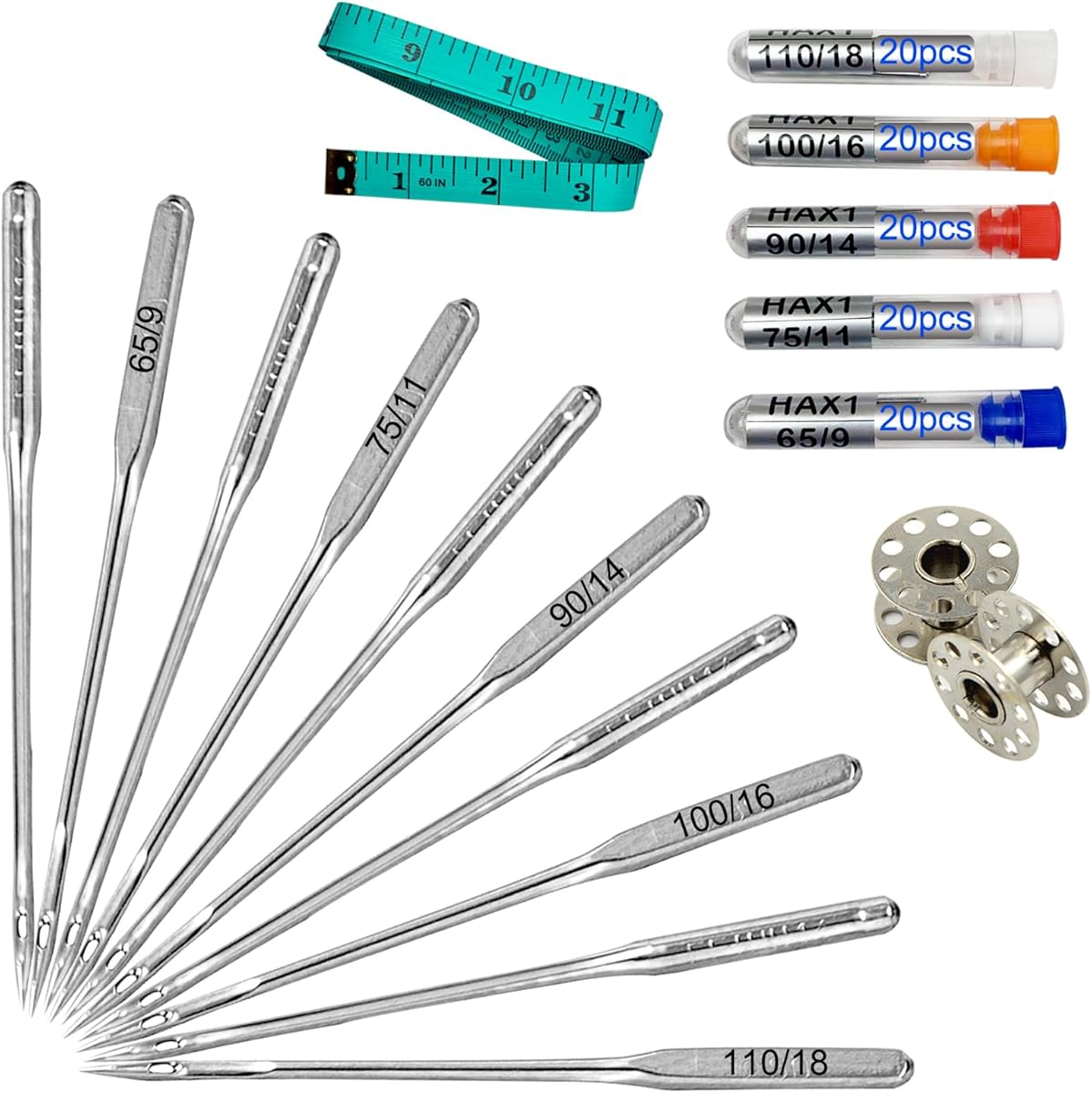
Universal Needle Sets: Balancing Bulk Value with Proper Size Selection
This 100-piece universal needle set offers five European/American size combinations (65/9 through 110/18) in a single package, which is ideal for sewists who work with multiple fabric weights. Buyers should understand that 'universal' refers to the point style and shank compatibility, not that one needle fits all machines—proper installation remains crucial. The included size range covers everything from fine silks to medium-weight denim, but lacks specialized needles for knits, leather, or embroidery.
Key Considerations Before Buying
- The 100-count bulk packaging is cost-effective but requires proper storage; needles can develop microscopic rust or burrs if left exposed to humidity.
- Universal point needles (sometimes called 'regular point') work for most woven fabrics but can cause skipped stitches or snags on knits—this set doesn't include ballpoint or stretch needles.
- While compatible with Singer, Brother, and Janome home machines, always verify your machine uses 130/705 H system needles; some industrial or older models require different shank types.
What Our Analysts Recommend
Quality universal needles should have consistently polished eyes (no visible machining marks) and symmetrical points when viewed under magnification. The chrome plating should appear uniform without cloudy patches, which indicates proper corrosion resistance. Packaging that seals each size group separately, as this set appears to do, helps maintain needle sharpness during storage.
Sewing Machine Needles Market Context
Market Overview
The sewing needle market is saturated with bulk packs, but few offer this specific five-size progression (65/9 to 110/18) in one set—most competitors provide either fewer sizes or larger quantity jumps. Universal needle sets have become commodity items, with price-per-needle often dropping below $0.10 in 100-count packs, though quality control varies significantly between manufacturers.
Common Issues
The most frequent complaints in this category involve inconsistent sharpness within batches, improper sizing labeling (where 90/14 needles measure closer to 100/16), and packaging that damages needle points. Some bulk sets mix needle systems (like including industrial 134R needles) despite 'universal' claims, causing machine damage.
Quality Indicators
Look for needles manufactured in Germany, Japan, or the Czech Republic, where metallurgy standards are higher. Quality sets maintain consistent shaft diameter across all needles—test by trying several in your machine's needle clamp; wobble indicates poor tolerances. The color-coded band system (used by Schmetz and Organ) is absent here, so careful size identification is necessary.
Review Authenticity Insights
Grade B Interpretation
A Grade B with 15% estimated fake reviews suggests generally reliable feedback, but approximately 1 in 7 reviews may be artificially positive. The 0.39-point drop from the displayed 4.89 to the adjusted 4.50 rating indicates some review inflation, though the remaining score still reflects strong user satisfaction.
Trust Recommendation
Focus on reviews that mention specific performance details like 'sewed through 8 layers of quilting cotton without breaking' or 'compared sharpness to my Schmetz needles' rather than generic praise. Given the authenticity grade, weigh the critical 1-3 star reviews more heavily—they often reveal batch consistency issues not apparent in 5-star reviews.
Tips for Reading Reviews
Prioritize reviews discussing actual sewing projects (denim repairs, quilt piecing, curtain making) over those simply praising packaging or delivery speed. Look for mentions of needle breakage frequency, as even one broken needle per 20 suggests metallurgical flaws. Reviews comparing these needles to known brands like Organ or Klasse provide the most useful benchmarks.
Expert Perspective
This set represents solid value for sewists who regularly switch between fabric weights and don't want to purchase individual size packs. The inclusion of less common sizes (65/9 for sheer fabrics and 110/18 for heavier materials) makes it more versatile than typical 3-size bundles. The high adjusted rating (4.50/5) from nearly 3,000 reviews indicates reliable performance for basic sewing tasks, though the authenticity analysis suggests tempering expectations slightly. The size progression is logical for skill-building sewists learning fabric-needle-thread relationships.
Purchase Considerations
Consider whether you actually need all five sizes—if you primarily sew quilting cotton, a dedicated pack of 75/11 or 80/12 needles might offer better individual quality. The bulk quantity makes sense if you change needles every 6-8 hours of sewing as recommended, but improper storage could compromise unused needles over time. These are workhorse needles, not precision tools for challenging fabrics like silk charmeuse or technical outerwear materials.
Comparing Alternatives
Compare needle count and size distribution with competing sets—some offer 120 needles but only three sizes, while premium brands provide fewer needles with specialized types (microtex, denim) at similar price points.


