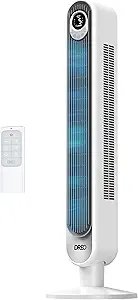
Choosing a 42-inch tower fan: balancing airflow, noise, and oscillation for home cooling
When evaluating a tower fan like the DREO 42-inch model, focus on how its specific features—such as the 120° oscillation, 28ft/s velocity, and 20dB quiet DC motor—translate to real-world bedroom or living room use. This category prioritizes space-saving vertical designs that deliver wide-area cooling without the bulk of traditional pedestal fans.
Key Considerations Before Buying
- The 20dB quiet motor rating is crucial for bedroom use; verify if this low-noise performance holds true across multiple speed settings, not just the lowest.
- A 120° oscillation angle is wider than many competitors; consider if your room layout benefits from this broad coverage or if a narrower, more focused sweep would suffice.
- The 12-speed range offers granular control, but assess whether you'll actually use all these increments or if 4-5 well-spaced speeds would be equally effective.
What Our Analysts Recommend
For bladeless tower fans, examine the design of the airflow aperture—wider, smoother exits typically distribute air more evenly with less buffeting. Quality indicators include a stable base to prevent wobble at full height, responsive touch controls, and a timer that integrates seamlessly with sleep cycles.
Tower Fans Market Context
Market Overview
The tower fan market is increasingly dominated by DC motor technology, which enables features like ultra-quiet operation and extensive speed options in slim 42-inch profiles. Brands like DREO compete by packing oscillation range, timer functions, and multiple modes into accessible price points.
Common Issues
Common complaints in this category include inconsistent airflow distribution across speed settings, timers that reset after power loss, and oscillation mechanisms that develop noise over time. Some bladeless designs can produce a noticeable 'whoosh' at higher speeds despite low motor decibel ratings.
Quality Indicators
Look for consistent user feedback on build material quality (especially the stability of the base), the accuracy of the advertised noise levels in real-world settings, and the reliability of the oscillation motor after months of daily use. A high number of reviews mentioning specific, long-term use cases is a positive signal.
Review Authenticity Insights
Grade B Interpretation
A Grade B with an 11.00% estimated fake review rate suggests the vast majority of the DREO fan's 6,267 reviews are authentic, but shoppers should be aware that approximately 1 in 10 reviews may be inauthentic. This is a moderate level common for popular home electronics.
Trust Recommendation
Focus on reviews that detail specific scenarios, like 'cooling a 12x15 bedroom at night on speed 4' or mention long-term performance over weeks or seasons. Be slightly more skeptical of overly vague 5-star reviews that lack personal context, as these could constitute part of the estimated 11%.
Tips for Reading Reviews
Prioritize verified purchase reviews that discuss the 28ft/s velocity's real-world impact, the practicality of the 4 modes (likely Normal, Natural, Sleep, Auto), and any experiences with the 12-hour timer for overnight use. Look for consistency in praise or criticism of the remote control and interface.
Expert Perspective
The DREO tower fan presents a strong value proposition based on its data: an adjusted 4.60/5 rating from authentic reviews indicates very satisfied customers, particularly with features like its wide oscillation and quiet DC motor. The high 4.89/5 raw Amazon rating, while slightly inflated, is still underpinned by genuine positive experiences. Its specification sheet targets the core needs of bedroom users—quiet operation, multiple speed options, and a set-and-forget timer.
Purchase Considerations
Weigh the need for 12 precise speed settings against simpler models; for most, 5-7 speeds are adequate. Consider if the 42-inch height is optimal for your space—it's ideal for airflow over a bed or sofa. The bladeless design is safer for homes with children but requires periodic cleaning of the internal intake vents.
Comparing Alternatives
Shoppers should compare this model's 120° oscillation and 20dB claim against similar Vornado or Honeywell tower fans, which may offer different airflow patterns or simpler controls.