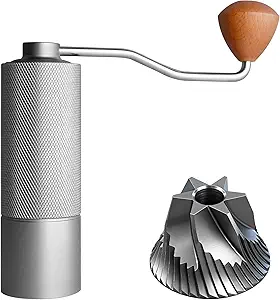
Manual Grinder Buying Guide: What to Know Before You Buy
A manual coffee grinder is only as good as its burr, and the TIMEMORE Chestnut C2S pairs CNC-machined stainless steel conical burrs with dual-bearing shaft stabilization, a combination that usually signals consistent grind quality. With a 25g capacity and internal adjustment, it targets pour-over and French press drinkers who want control without electricity.
Key Considerations Before Buying
- Burr material and geometry drive grind consistency: stainless steel conical burrs like those in the C2S resist dulling better than ceramic and produce fewer fines, which matters for French press and pour-over clarity.
- Adjustment mechanism type affects repeatability: the C2S uses an internal stepped adjustment under the burr, so you must empty the grinder to change settings, a trade-off for precise, drift-resistant grind sizes.
- Build and stabilization determine longevity: double-bearing positioning keeps the shaft aligned to reduce burr wobble, a common cause of uneven grounds in cheaper hand grinders.
What Our Analysts Recommend
Check for machined metal burrs, not stamped or ceramic, and a shaft supported by at least one bearing. A capacity around 25g suits single-serve brewing, but if you regularly brew for two, expect to refill. Also verify the adjustment range covers your brew method, from fine for AeroPress to coarse for French press.
Manual Grinders Market Context
Market Overview
Manual coffee grinders have surged as home brewing grows, with brands like Timemore, 1Zpresso, and Comandante competing on burr quality and portability. Many sub-$100 options now offer stainless steel burrs, but consistency and build tolerances still vary widely.
Common Issues
Buyers frequently report burr wobble, inconsistent grind size, and handle slippage in budget grinders. Static cling and retention are also common, leaving grounds stuck in the catch cup. Adjustment mechanisms can drift or be hard to read, especially on stepless models.
Quality Indicators
Look for CNC-machined burrs, dual-bearing shaft support, and a metal body with tight tolerances. Reviews mentioning consistent grind size across settings and minimal fines are strong signals. A well-machined adjustment dial that holds its setting is another mark of quality.
Review Authenticity Insights
Grade A Interpretation
The Grade A authenticity rating with an estimated 5% fake review rate means the vast majority of the 522 reviews are genuine. This is a strong signal that the 4.22 rating (adjusted to 4.10) reflects real user experiences, not manipulated feedback.
Trust Recommendation
You can trust the overall rating as a reliable indicator of product performance. Focus on reviews that mention specific use cases like French press or pour-over, and look for balanced pros and cons, as these are typical of authentic feedback.
Tips for Reading Reviews
Pay attention to reviews that detail grind consistency, adjustment ease, and build quality over time. Ignore generic praise and look for mentions of specific brewing methods, as these provide actionable insights for your own use.
Expert Perspective
The TIMEMORE Chestnut C2S sits in a competitive mid-range manual grinder segment, offering stainless steel conical burrs and dual-bearing stabilization at a reasonable price. Its 25g capacity and internal adjustment cater to single-serve brewers who prioritize grind consistency. The high authenticity of reviews suggests the 4.10 adjusted rating is trustworthy, indicating solid performance with some minor drawbacks noted by users.
Purchase Considerations
Weigh the internal adjustment against your workflow: if you frequently switch between brew methods, a grinder with external adjustment may be more convenient. Consider capacity if you brew for multiple people, and check whether the handle ergonomics suit your grip. Also factor in portability if you plan to travel with it.
Comparing Alternatives
Compare the C2S with similar hand grinders from 1Zpresso and Normcore, which may offer external adjustment or larger capacities at similar prices.