![[2 Pack] 20W USB C Charger Block Fast Charging Dual Ports Adapter](https://m.media-amazon.com/images/I/71y3dPmtaeL._AC_SL1200_.jpg)
20W Dual-Port USB-C Charger: Is Two-Pack Value Worth the Compromise?
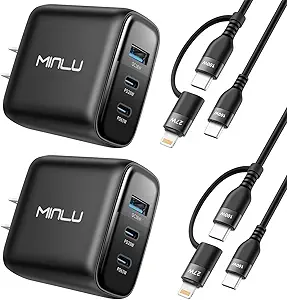
When your phone arrives without a charger—like many Motorola and other Android models—a reliable wall adapter becomes essential. This 20W dual-port USB-C charger promises fast charging for compatible devices, but its dual-port design means power is shared, not doubled. Understanding how 20W is distributed between ports is key to matching it with your devices.
Key Considerations Before Buying
- Check your device's fast-charging protocol: This charger supports Power Delivery (PD) for iPhones (20W max) and likely PPS for Samsung, but not proprietary standards like OnePlus Warp Charge. If you own a phone that requires special protocols, this generic adapter may only charge at standard speeds.
- Dual-port reality: With two ports, the total output is typically capped at 20W. Plugging in two devices splits that power (e.g., 10W+10W or 15W+5W), so if you need to fast-charge two phones simultaneously, this adapter won't cut it—look for a 30W+ dual-port model with smart power allocation.
- Physical size and build: Since it's a 2-pack, you'll likely use one at home and one in a travel bag. Verify the prongs are foldable or at least compact, and that the casing is flame-retardant (UL/ETL certification) for safety, especially if you plug it into older wall outlets.
What Our Analysts Recommend
For a 20W USB-C charger, prioritize safety certifications (UL, CE, FCC) and PD/PPS support for broad compatibility. Look for a compact design that doesn't block adjacent outlets, and check for over-current, over-voltage, and short-circuit protection. Genuine reviews often mention heat generation—a well-designed charger stays warm but not scorching during a full-speed charge.
Wall Chargers Market Context
Market Overview
The wall charger market has shifted to USB-C PD as the default, with 20W being the sweet spot for smartphones and small tablets. While Apple and Samsung now ship 20W-25W chargers, many budget and mid-range phones still omit them, fueling demand for affordable third-party alternatives. Two-packs are popular for multi-location convenience, but they often trade off higher wattage and smart features for cost savings.
Common Issues
Consumers frequently complain about chargers that run hot under load, which can degrade battery health over time. Another issue is misleading wattage claims—some adapters deliver 20W only on a single port, but drop to 5W when both are used, which isn't always clear in product descriptions. Finally, durability of the USB-C port and cable retention are common weak points in budget adapters.
Quality Indicators
High-quality chargers use reputable controller chips (e.g., from Power Integrations or Cypress) and have solid build quality—no rattles, tight port fit, and a sturdy plug. Look for a UL or ETL listing mark, which indicates safety testing. Reviews that mention consistent charging speeds across different devices and lack of overheating after weeks of use are strong signals of reliability.
Review Authenticity Insights
Grade B Interpretation
A Grade B with an estimated 10% fake review rate is quite good for a product with over 25,000 reviews. This suggests that the 4.89-star rating is only slightly inflated—the adjusted 4.60 is still excellent. The 10% fakes could be promotional reviews from incentivized buyers or a few early incentivized posts, but they don't overwhelm the genuine signal.
Trust Recommendation
You can trust the overall positive sentiment, but read a few 3- and 4-star reviews to understand minor drawbacks like heat or power-sharing quirks. Since the fake rate is low, the core functionality is likely solid. Still, cross-check recent reviews for any quality control changes—sometimes sellers switch components after a product gains popularity.
Tips for Reading Reviews
For chargers, focus on reviews that mention specific phone models and charging times—these are often from users who actually measured performance. Look for photos of the charger in use, which are harder to fake. Also, be wary of reviews that repeat the same phrases or lack personal context; those are more likely to be incentivized.
Expert Perspective
Based on the data, this 20W dual-port charger appears to be a reliable, budget-friendly solution for everyday charging needs. The high genuine rating and low fake percentage suggest that it delivers on its promise for most users, particularly those with iPhones or USB-C PD-compatible Android devices. However, the dual-port design is a compromise—if you frequently charge two devices at once, you'll need to manage expectations about speed.
Purchase Considerations
Consider your device ecosystem: if you own an iPhone 12 or newer or a Samsung Galaxy (with PPS), this charger will deliver fast speeds on a single device. If you have a tablet that needs more than 20W, or you often charge a phone and a smartwatch together, you might outgrow this adapter. Also, the two-pack price should be compared to buying two single-port 20W chargers—sometimes the value is similar, but you lose the flexibility of separate port management.
Comparing Alternatives
Shoppers should compare this with Anker and Aukey 20W chargers, which often have similar specs but may offer better build quality or faster shipping. Also, consider a 30W dual-port charger if you need simultaneous fast charging—the price difference is often small.