
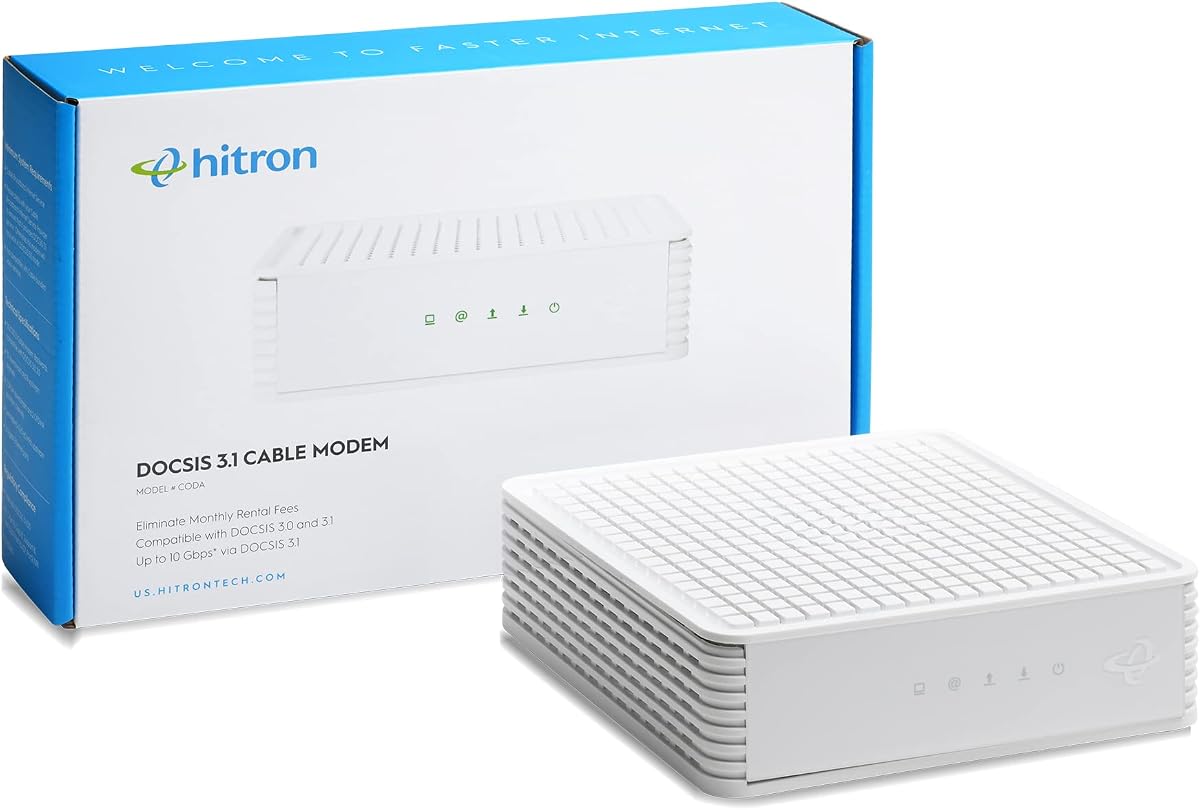
Hitron CODA DOCSIS 3.1: Maximize Cable Internet for 1 Gbps Speed
When upgrading to a DOCSIS 3.1 cable modem like the Hitron CODA, you're targeting gigabit speeds from providers like Xfinity, Spectrum, or Cox—but only if you have cable internet, not fiber or DSL. This guide helps you verify compatibility and optimize performance for a seamless home network.
Key Considerations Before Buying
- Ensure your internet plan is cable-based (e.g., Xfinity, Spectrum, Cox) and not fiber or DSL, as the Hitron CODA is strictly for cable connections and won't work with other types.
- The CODA lacks built-in WiFi, so you'll need a separate router; pair it with a quality WiFi 6 router to avoid bottlenecks when streaming or gaming at gigabit speeds.
- Check your ISP's approved modem list for the CODA model number to confirm activation, as some providers may require firmware updates or specific configurations for DOCSIS 3.1 devices.
What Our Analysts Recommend
Look for modems with a Broadcom or Intel chipset for reliable DOCSIS 3.1 performance, and verify support for 32x8 channel bonding to handle up to 1 Gbps downloads. A low latency profile and active cooling (like heat sinks) indicate better thermal management for sustained high-speed use.
Modems Market Context
Market Overview
The DOCSIS 3.1 modem market is maturing as cable ISPs push gigabit plans, with devices like the Hitron CODA offering backward compatibility with older DOCSIS 3.0 networks. Consumers increasingly seek standalone modems to avoid rental fees, driving demand for models that balance cost, speed, and ISP certification.
Common Issues
Common issues include overheating in poorly ventilated spaces, which can throttle speeds, and compatibility hiccups with ISP firmware updates that may require manual resets. Some users report intermittent disconnects when paired with older routers, emphasizing the need for a modern WiFi router.
Quality Indicators
Quality indicators include OFDM/OFDMA support for efficient data transmission, a sturdy metal chassis for heat dissipation, and a low power consumption rating. Positive user feedback on consistent speeds under load and easy ISP activation also signal a reliable modem.
Review Authenticity Insights
Grade B Interpretation
With a Grade B and an estimated 10% fake review rate, most feedback for the Hitron CODA is genuine, but a small fraction may be incentivized or fabricated. This suggests you can trust the 4.67-star average, but you should still watch for overly glowing or vague reviews.
Trust Recommendation
Focus on verified purchase reviews that mention specific ISPs like Xfinity or Spectrum, as these are more likely authentic. The adjusted rating of 4.40/5 accounts for suspicious reviews, making it a safer benchmark for decision-making.
Tips for Reading Reviews
Look for reviews that detail real-world scenarios, such as speed tests during peak hours or setup with specific routers, as these provide actionable insights. Be cautious of reviews with generic language or no mention of technical specs, as they may lack authenticity.
Expert Perspective
The Hitron CODA DOCSIS 3.1 modem is a solid choice for cable internet users targeting gigabit speeds, backed by strong user ratings and broad ISP certification. Its lack of WiFi integration is a trade-off that suits purists who prefer separate routers, but the 10% fake review rate and Grade B authenticity suggest some noise in feedback. Overall, it delivers reliable performance for home labs and heavy streaming, though thermal management could be an issue in enclosed spaces.
Purchase Considerations
Weigh the upfront cost against monthly rental fees from your ISP—typically $10-15/month—to see if you'll break even within a year. If you have a large home or many devices, budget for a quality WiFi 6 router to complement the modem's speed potential.
Comparing Alternatives
Shoppers should compare with other DOCSIS 3.1 modems like the Motorola MB8611 or Netgear CM1000, which offer similar specs but different chipset reliability and form factors.


