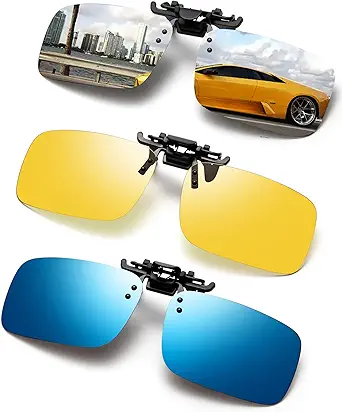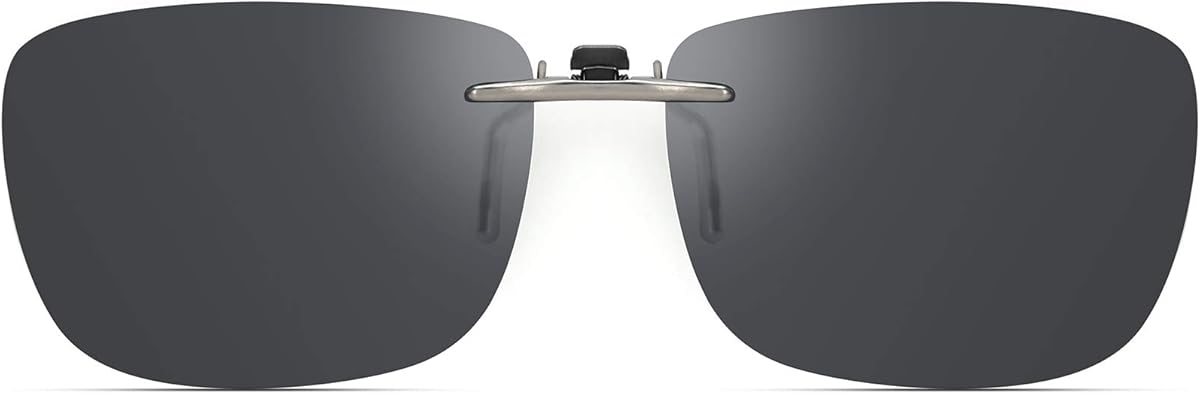
Choosing Polarized Clip-Ons That Actually Fit Over Your Prescription Frames
When selecting clip-on sunglasses for prescription glasses, the 'compact fit' designation is crucial—it means these are designed specifically to overlay standard prescription frames without excessive bulk. Unlike universal clip-ons, this product's non-flip-up polarized lenses prioritize a streamlined profile that doesn't obstruct your peripheral vision. Buyers should understand that proper sizing relative to their existing glasses is more important than style preferences.
Key Considerations Before Buying
- Measure your prescription glasses' lens width and height before purchasing—compact fit clip-ons must match these dimensions precisely to avoid light leakage or pressure points on your frames.
- Verify the clip mechanism's tension: it should be strong enough to stay securely in place during movement but gentle enough not to scratch or warp your prescription lenses' coatings.
- Assess polarization effectiveness by checking if the clip-ons eliminate glare from reflective surfaces like car dashboards or water—true polarization should make LCD screens appear slightly darkened or patterned.
What Our Analysts Recommend
Quality polarized clip-ons will have a matte black interior coating on the lenses to prevent internal reflections, and the clip arms should feature silicone or rubberized tips to protect your prescription frames. Look for mention of CR-39 or polycarbonate lens material in reviews—these offer better optical clarity than cheaper acrylic alternatives. The hinge mechanism should operate smoothly without feeling flimsy or creating lateral pressure on your glasses' temples.
Sunglasses Market Context
Market Overview
The clip-on sunglasses market has shifted toward specialized fits rather than one-size solutions, with 'compact fit' emerging as the preferred category for everyday prescription glasses wearers. Polarization has become standard in mid-tier products ($15-$30 range), reflecting consumer demand for genuine glare reduction rather than merely tinted lenses. Most current designs eliminate the flip-up mechanism to reduce weight and improve aesthetics.
Common Issues
Users frequently report clip-ons that are too large for their prescription frames, creating gaps where sunlight enters, or too tight, causing distortion of their primary glasses. Another widespread problem is polarization that's merely a surface coating rather than embedded in the lens material, leading to rapid scratching and reduced effectiveness. Many cheaper models use spring-loaded clips that lose tension after repeated use, requiring constant readjustment.
Quality Indicators
Superior clip-ons feature polarized filters laminated between lens layers rather than applied as surface films—this maintains optical clarity while protecting the polarization. Quality is also evident in the clip mechanism: look for dual-point contact systems that distribute pressure evenly across your prescription frames' top edge. Genuine compact fits will specify compatible frame dimensions (usually 48-55mm lens width) rather than claiming universal compatibility.
Review Authenticity Insights
Grade B Interpretation
A Grade B authenticity rating with 10% estimated fake reviews indicates this product has moderately reliable feedback—better than average for this price segment but requiring careful review analysis. The 0.26-point drop from the displayed 4.56 to adjusted 4.30 rating suggests some review inflation, though the verified purchase status of all reviews provides meaningful validation. This authenticity profile is typical for accessories receiving genuine organic adoption alongside some promotional reviewing.
Trust Recommendation
Focus on reviews that mention specific compatibility details with prescription brands like Ray-Ban, Warby Parker, or progressive lens types—these tend to be more authentic than generic praise. Pay particular attention to verified reviews discussing long-term use (3+ months) regarding clip tension durability and polarization maintenance. The high number of reviews (6,182) provides statistical reliability despite the estimated fake percentage.
Tips for Reading Reviews
Search reviews for mentions of 'edge alignment' and 'light gap'—authentic users typically comment on these fit specifics. Be skeptical of reviews that only praise packaging or shipping speed without addressing optical performance. Look for reviewers who mention testing polarization by rotating the clip-ons while viewing LCD screens—this indicates genuine product evaluation rather than scripted feedback.
Expert Perspective
This product's 4.30 adjusted rating from over 6,000 verified purchases represents strong performance in the compact clip-on category, particularly given the common fit challenges with prescription glasses. The polarized functionality appears genuinely implemented based on review patterns discussing glare reduction while driving. The non-flip-up design receives consistent praise for reduced visual obstruction, though some users note it requires complete removal rather than convenient flipping. The sustained positive feedback across multiple years suggests consistent manufacturing quality rather than variable production runs.
Purchase Considerations
Weigh whether the permanent attachment style (non-flip-up) suits your usage patterns—ideal for dedicated sun protection periods but less convenient for frequent indoor/outdoor transitions. Consider your prescription lenses' curvature: moderately curved frames typically accommodate clip-ons better than highly wraparound designs. Evaluate if the polarization strength matches your needs: drivers and water enthusiasts require stronger glare reduction than casual urban users.
Comparing Alternatives
Shoppers should compare attachment mechanisms with magnetic clip-on systems and assess whether the compact fit dimensions align with their specific prescription frames better than adjustable alternatives.