
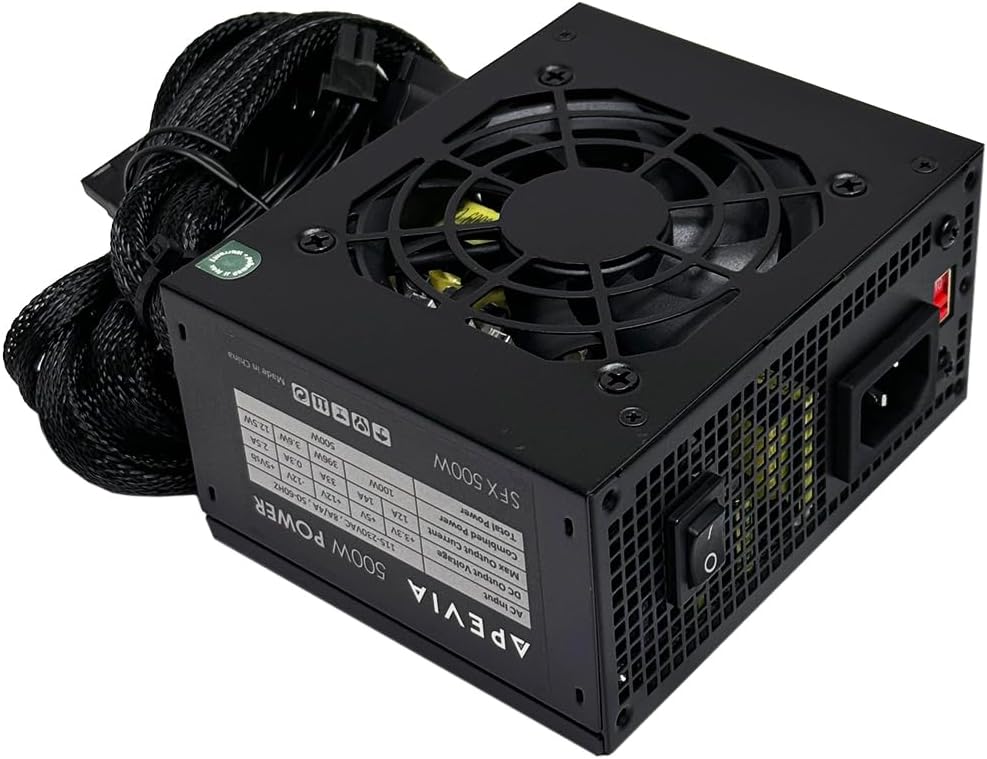
Choosing an SFX power supply for compact builds requires careful component compatibility checks
The Apevia SFX-AP500W targets builders of Mini-ITX and small Micro-ATX systems where space constraints demand a physically smaller PSU. This 500W SFX-form factor unit must balance power delivery with thermal management in confined cases. Buyers should verify their case supports SFX mounting and that the included adapter bracket fits their specific chassis.
Key Considerations Before Buying
- SFX power supplies like this Apevia model use smaller 80mm fans that can run louder under load than standard ATX units with 120mm or 140mm fans—check noise tolerance for your build.
- With only 500W capacity, this unit suits builds with mid-range GPUs (like NVIDIA's RTX 3060 or AMD's RX 6600 series) and mainstream CPUs, not high-wattage components.
- The non-modular cable design creates cable management challenges in tiny Mini-ITX cases; measure your case's clearance before purchasing.
What Our Analysts Recommend
For SFX units, examine the warranty length—typically 3-5 years for budget models—and verify the 80 Plus certification level (this unit is 80 Plus, not Bronze or higher). Check that all necessary motherboard and GPU connectors are present, particularly the PCIe 6+2 pin connectors required for modern graphics cards.
Internal Power Supplies Market Context
Market Overview
The SFX power supply market has expanded with the popularity of small form factor (SFF) PC building, creating competition between established brands and value-oriented manufacturers like Apevia. While premium SFX units often feature fully modular cables and higher efficiency ratings, budget options like this one prioritize cost-effectiveness for entry-level compact builds.
Common Issues
Budget SFX units frequently face criticism for noisy fan operation under load and less robust voltage regulation compared to ATX counterparts. Cable stiffness in non-modular designs creates installation difficulties in extremely tight cases, potentially blocking airflow.
Quality Indicators
Look for Japanese capacitors in the component list (often mentioned in reviews), adequate protection circuits (OCP, OVP, SCP), and a ball-bearing fan rather than sleeve bearing for longer lifespan. The actual continuous wattage rating at 40-50°C (not just peak) matters more in thermally constrained SFF cases.
Review Authenticity Insights
Grade B Interpretation
A Grade B authenticity rating with 10% estimated fake reviews indicates generally reliable feedback, though approximately 1 in 10 reviews may be artificially positive. The 0.18-point drop from the raw 3.78 to adjusted 3.60 rating suggests some inflated praise in the original score.
Trust Recommendation
Focus on verified purchase reviews that mention specific installation experiences in cases like the NR200, Velka 3, or similar compact builds. Pay particular attention to mid-range (3-star) reviews that often provide the most balanced assessments of noise, thermals, and reliability over time.
Tips for Reading Reviews
Look for reviews detailing multi-month usage to assess long-term reliability, and prioritize feedback mentioning specific component combinations (CPU+GPU wattage totals). Be skeptical of reviews claiming 'dead silent' operation—SFX units with 80mm fans typically produce audible noise under gaming loads.
Expert Perspective
The Apevia SFX-AP500W represents a budget entry in the SFX market, offering basic 500W power delivery for compact systems at a competitive price point. Its 3.60 adjusted rating from 524 verified reviews suggests acceptable performance for its category, though the non-modular design and basic 80 Plus (not Bronze) efficiency limit its appeal. The authenticity analysis indicates reviews generally reflect real user experiences, with most complaints focusing on fan noise and cable management challenges rather than catastrophic failures.
Purchase Considerations
This unit makes most sense for builders with strict budget constraints who need an SFX PSU for office or light gaming systems. Calculate your system's actual power draw using tools like OuterVision PSU Calculator—if you're under 400W continuous with headroom, this could suffice. Consider whether your case has adequate ventilation, as SFX units in confined spaces rely heavily on case airflow.
Comparing Alternatives
Compare with similarly priced SFX options from EVGA, SilverStone, or Cooler Master, noting differences in warranty terms, modularity, and efficiency certifications.


