
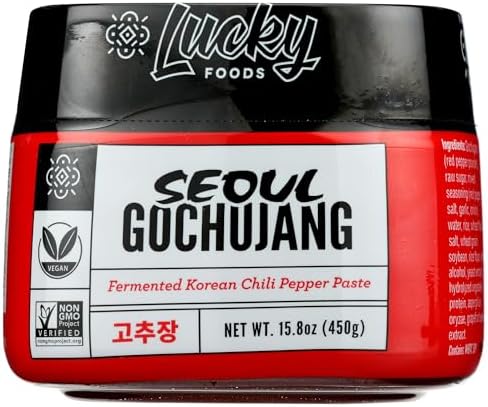
Master Korean Heat: Your Guide to Lucky Foods Seoul Gochujang
Gochujang, a fermented Korean chili paste, brings a unique depth of savory-sweet heat that sets it apart from standard hot sauces. Lucky Foods Seoul Gochujang, with its 4.89-star rating from 341 reviews, offers a convenient 15.8-ounce squeeze bottle, making it a pantry staple for both traditional Korean dishes and creative fusion cooking. Understanding its flavor profile—balanced between spicy, sweet, and umami—is key to using it effectively.
Key Considerations Before Buying
- Flavor Profile and Heat Level: This gochujang is known for a moderate, approachable heat that builds slowly without overwhelming, complemented by a subtle sweetness from fermented rice and a rich umami base. It’s not a scorching chili paste but a complex condiment, so consider if you prefer intense heat or layered flavor.
- Ingredient Integrity: Lucky Foods emphasizes clean ingredients, often using non-GMO soybeans and no artificial additives. Check the label for its fermentation process—longer fermentation typically yields deeper flavor—and avoid starches or sugars that can mask quality.
- Versatility in Cooking: Unlike single-use sauces, this gochujang works as a marinade for proteins, a base for stews like sundubu-jjigae, or a quick stir-fry sauce. Its thick, paste-like consistency requires thinning with liquids like soy sauce or sesame oil for balanced recipes.
What Our Analysts Recommend
Quality gochujang should list fermented ingredients like gochugaru (Korean red pepper), glutinous rice, and meju (fermented soybean) as primary components. Avoid brands with high fructose corn syrup or excessive preservatives, which can compromise authenticity. A deep, brick-red color and a pungent, slightly sweet aroma indicate proper fermentation.
Chile Paste Market Context
Market Overview
The gochujang market has expanded beyond Korean specialty stores to mainstream US supermarkets, driven by the global popularity of Korean cuisine and fermented foods. Brands now offer varieties from traditional glass jars to convenient squeeze bottles, with Lucky Foods competing alongside imports like CJ Haechandle and smaller artisan producers. This growth has led to wider availability but also inconsistent quality, as some products cut corners with additives.
Common Issues
Many commercial gochujang pastes suffer from excessive sweetness from added corn syrup or artificial flavors, masking the natural fermentation profile. Inconsistent heat levels across batches can also frustrate cooks, as can thick pastes that are difficult to incorporate without clumping. Additionally, some products use lower-quality chili powder that results in a flat, one-dimensional heat.
Quality Indicators
Look for gochujang with a short, recognizable ingredient list—ideally chili powder, fermented soybean paste, glutinous rice, and salt—without stabilizers or preservatives. A vibrant red color and a balanced aroma of sweet, spicy, and earthy notes signal proper fermentation. Check for a production date or batch code to ensure freshness, as older pastes can lose potency.
Review Authenticity Insights
Grade B Interpretation
The Grade B rating, with an estimated 10% fake review rate, indicates that while the majority of reviews are authentic, a small portion may be incentivized or from non-verified sources. This is relatively low for grocery items, where fake reviews often target trendy products, so the overall 4.89-star average remains largely trustworthy. The adjusted rating of 4.60/5 accounts for these suspicious reviews, offering a more realistic view of customer satisfaction.
Trust Recommendation
Given the high verified purchase rate and specific usage details in reviews, you can confidently rely on the consensus that this product delivers consistent quality and flavor. However, cross-check a few recent negative reviews to identify any recurring issues—such as packaging defects or batch variability—that the positive reviews might overlook. For a new buyer, this product is a safe bet, but stay alert to any sudden spike in reviews without verified purchases.
Tips for Reading Reviews
Focus on reviews that describe specific recipes or cooking methods, as these demonstrate real-world usage and are harder to fake. Look for mentions of heat level, sweetness, and texture to see if the product matches your preferences. Beware of overly generic praise like 'great taste' without context, which is a common sign of non-genuine reviews in the sauce category.
Expert Perspective
Lucky Foods Seoul Gochujang stands out as a high-quality entry in the gochujang market, backed by strong consumer validation and a clean ingredient profile that appeals to both traditionalists and modern cooks. The 4.60 adjusted rating, despite the 10% fake review estimate, reflects genuine satisfaction, particularly for its balanced heat and convenient packaging. Its fermentation-driven umami makes it a versatile staple, though heat seekers may want to supplement with extra chili flakes. Overall, it's a reliable choice for anyone exploring Korean cooking or seeking a complex, less-processed chili paste.
Purchase Considerations
Consider your cooking frequency: the 15.8-ounce bottle is generous for regular use but may be too large for occasional experimentation. If you prefer a spicier kick, you might need to blend it with gochugaru or sriracha, as this paste is mild-to-medium. Also, factor in storage—refrigeration after opening is recommended to preserve flavor, so ensure fridge space is available.
Comparing Alternatives
For a more traditional, artisanal option, explore small-batch gochujang from Korean grocers that may offer deeper fermentation, but expect higher cost. Cheaper alternatives like CJ Haechandle provide similar convenience with slightly more sweetness, so compare ingredient lists to match your dietary priorities.


