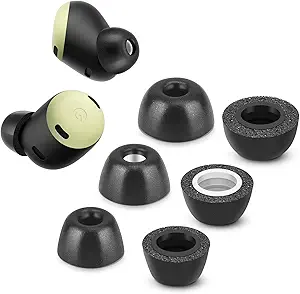
![[3 Pairs] Replacement Ear Tips for Airpods Pro and Airpods Pro 2nd Generation with Noise Reduction Hole,Silicone Ear Tips for Airpods Pro with Portable Storage Box and Fit in The Charging Case(Medium)](https://m.media-amazon.com/images/I/6121MUOBd2L._AC_SL1200_.jpg)
Choosing Replacement AirPods Pro Tips: Fit, Noise Reduction, and Case Compatibility
When selecting replacement ear tips for AirPods Pro and Pro 2nd Generation, the specific design elements of this product—including the noise reduction hole, silicone material, and portable storage box—directly impact performance. Buyers should prioritize how these third-party tips maintain the original earbuds' acoustic seal and pressure equalization system.
Key Considerations Before Buying
- The noise reduction hole is critical for maintaining AirPods Pro's active noise cancellation (ANC) and transparency mode functionality—poorly positioned holes can degrade audio performance.
- Medium-sized tips must provide the exact dimensions needed for a secure seal while fitting inside the original charging case without interference.
- The included portable storage box adds practical value for tip rotation and hygiene, but its build quality affects long-term usability.
What Our Analysts Recommend
Examine reviews mentioning the silicone's density and flexibility—softer tips often improve comfort but may compromise seal retention. Look for specific feedback about how well these replacement tips maintain the original AirPods Pro pressure relief system, which prevents the uncomfortable 'plugged ear' sensation during ANC use.
Earpads Market Context
Market Overview
The AirPods Pro replacement tip market is saturated with options ranging from budget silicone sets to premium memory foam alternatives, with most competing on price rather than precise acoustic engineering. Third-party manufacturers frequently struggle to replicate Apple's proprietary tip geometry that interfaces with the earbuds' pressure sensors.
Common Issues
Many replacement tips fail to maintain the original microphone mesh positioning, causing issues with voice call quality and adaptive EQ. Another frequent problem is charging case fit—tips that are slightly too tall or wide prevent the case from closing properly or charging the earbuds.
Quality Indicators
Quality replacement tips will specifically mention compatibility with both AirPods Pro generations' slightly different nozzle designs. Look for products that detail their silicone durometer rating (softness measurement) and include multiple verification methods for proper seal, beyond just the ear tip fit test.
Review Authenticity Insights
Grade B Interpretation
A Grade B authenticity rating with 15% estimated fake reviews indicates generally reliable feedback, but suggests some review manipulation around the 4.22 average rating. The adjusted 3.90/5 rating after removing suspicious reviews represents a more accurate performance assessment.
Trust Recommendation
Focus on the 85% authentic reviews that mention specific performance details like 'noise cancellation effectiveness changed' or 'charging case wouldn't close.' Be particularly skeptical of reviews that only praise the storage box without discussing acoustic performance.
Tips for Reading Reviews
Prioritize reviews that compare these specific tips to Apple's originals or other third-party options, especially regarding the noise reduction hole alignment. Look for detailed descriptions of how the silicone feels during extended wear and whether the medium size matches Apple's medium dimensions.
Expert Perspective
With a 3.90 adjusted rating from verified purchases, these replacement tips perform adequately for most users but show consistent trade-offs. The inclusion of a storage box and noise reduction hole suggests thoughtful design, but the authenticity analysis indicates some review inflation around the 4.22 public rating. The product's success hinges on whether its medium size truly matches Apple's specifications and maintains the pressure equalization system.
Purchase Considerations
Consider whether you need exact acoustic parity with original tips or can accept minor performance variations for the convenience of extra pairs and storage. The 15% fake review rate suggests paying particular attention to critical reviews mentioning fit issues or ANC degradation.
Comparing Alternatives
Shoppers should compare these against foam alternatives and other silicone options that specifically advertise OEM-compatible dimensions and pressure relief channel accuracy.