
Choosing a Carbon Steel Wok: Heat Performance, Seasoning, and Cooktop Compatibility
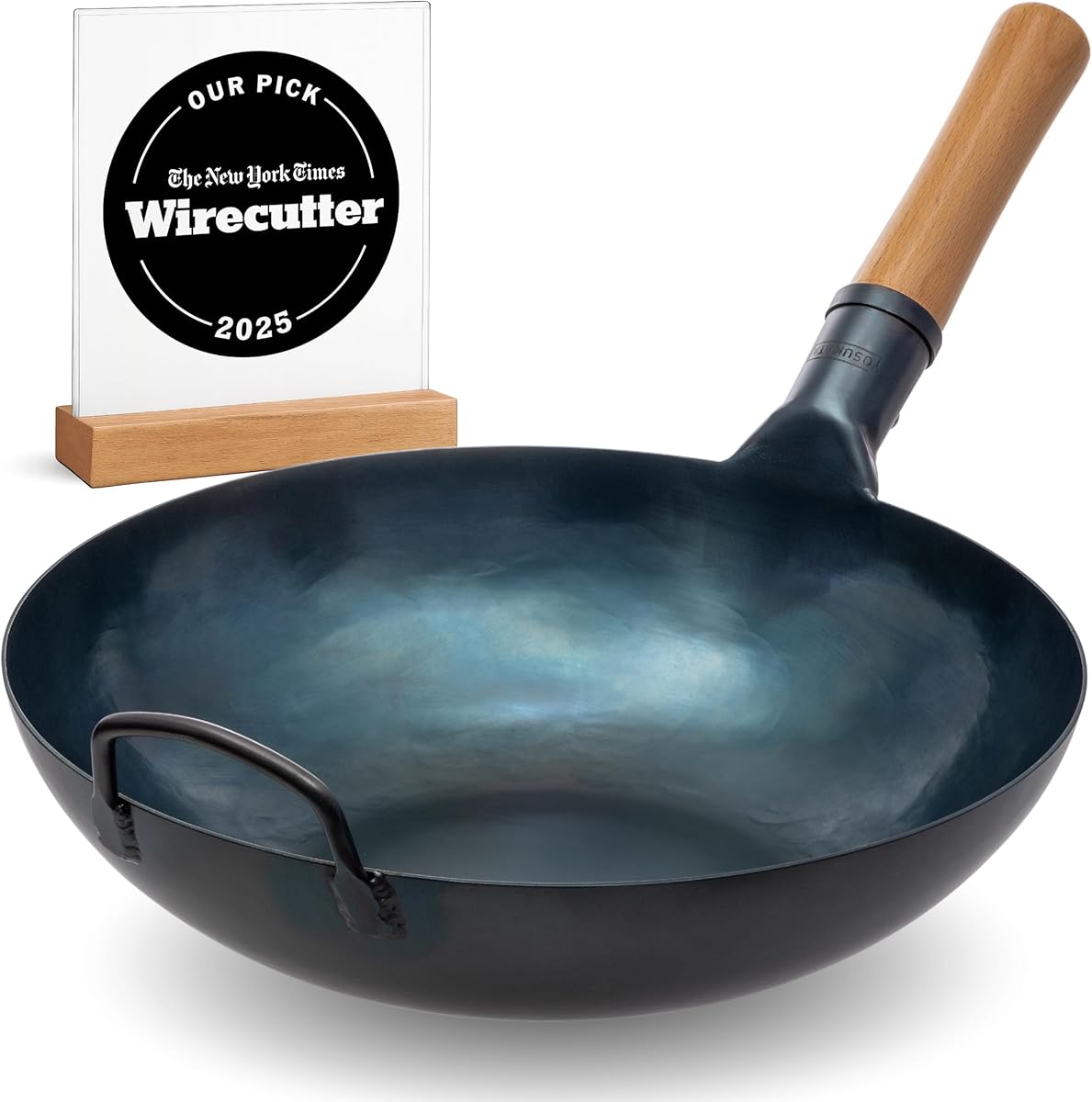
The YOSUKATA 13.5" wok represents a specific category of blue carbon steel cookware prized for its heat responsiveness and traditional cooking performance. Buyers should understand that this pre-seasoned, flat-bottom design prioritizes high-heat stir-frying while offering modern cooktop versatility, including induction compatibility that many traditional round-bottom woks lack.
Key Considerations Before Buying
- Blue carbon steel's thermal properties differ from cast iron or stainless steel—it heats rapidly and responds quickly to temperature adjustments, which is critical for authentic stir-fry technique but requires attentive heat management.
- The 13.5" diameter and flat bottom create a specific cooking geometry: the flat surface provides stable contact on Western stoves while the sloping sides allow proper food tossing; this hybrid design is a compromise for those without gas wok burners.
- Pre-seasoning on carbon steel is a starting layer, not a permanent finish; buyers must be prepared for ongoing maintenance and potential re-seasoning, especially if using acidic ingredients or high-heat searing that can strip the initial coating.
What Our Analysts Recommend
Quality indicators for this category include consistent metal thickness (especially at the weld point where the handle attaches), a smooth interior surface free of manufacturing grit, and a flat bottom that sits perfectly level. The YOSUKATA's compatibility with open fire and induction suggests specific material treatment and bottom construction that maintains magnetic properties without warping.
Woks & Stir-Fry Pans Market Context
Market Overview
The carbon steel wok market is currently divided between traditional round-bottom designs for professional gas setups and flat-bottom hybrids for home kitchens. Products like the YOSUKATA target Western consumers seeking authentic wok cooking results without specialized equipment, creating demand for versatile, pre-seasoned options that work across multiple heat sources.
Common Issues
Common problems include improper seasoning that leads to rusting, warping on electric/induction cooktops due to rapid heating, and handles that become uncomfortably hot during high-heat cooking. Many users also struggle with maintaining the carbon steel's patina when transitioning between cooking techniques like stir-frying and steaming.
Quality Indicators
Look for forged or spun construction rather than stamped metal, which affects heat distribution. Quality carbon steel woks typically have riveted or welded handles with heat-resistant materials, and the best show careful attention to edge finishing where the rolled rim meets the cooking surface.
Review Authenticity Insights
Grade B Interpretation
A Grade B authenticity rating with 11% estimated fake reviews indicates generally reliable feedback with some promotional noise. For this specific wok, the 4.20 adjusted rating (down from 4.44) suggests genuine satisfaction is strong but slightly inflated by a small percentage of questionable reviews.
Trust Recommendation
Focus on verified purchase reviews discussing long-term seasoning maintenance and specific cooking results. Given the 2,647-review volume, the consensus around heat performance and induction compatibility is statistically meaningful despite the estimated fake content.
Tips for Reading Reviews
Prioritize reviews that mention actual cooking scenarios (like achieving 'wok hei' or managing smoke points) over generic praise. Look for detailed discussions of how the flat bottom performs on different cooktop types, as this is the YOSUKATA's key design compromise.
Expert Perspective
The YOSUKATA wok presents a compelling option for home cooks seeking carbon steel's performance without specialized equipment. The 4.20 adjusted rating from substantial review volume indicates genuine satisfaction with its heat responsiveness and versatility. The pre-seasoning provides a functional starting point, though serious users should expect to develop their own patina through use. Its true value lies in the induction compatibility—a feature that eliminates the need for special interfaces required by many carbon steel woks.
Purchase Considerations
Weigh whether you need true induction compatibility or if you primarily cook with gas, where traditional round-bottom woks might offer superior performance. Consider your willingness to maintain carbon steel versus non-stick alternatives, and evaluate if the 13.5" size accommodates your typical batch cooking quantities for stir-fries.
Comparing Alternatives
Shoppers should compare thickness, handle design, and preseasoning methods with similar Joyce Chen, Craft Wok, or Made In carbon steel models.


