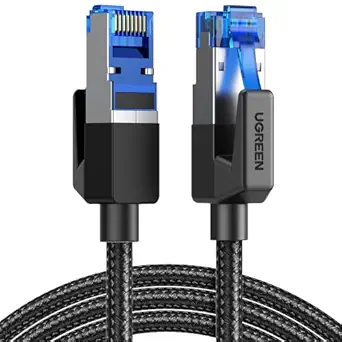
Cat8 Flat Ethernet Cable: Speed, Shielding, and Space Savers
When upgrading your home network for gaming or high-bandwidth tasks, a Cat8 cable like this flat 6ft 3-pack promises blistering 40Gbps speeds and 2000MHz frequency—far beyond typical Cat6 or Cat5e needs. However, real-world performance depends on your hardware and cable quality, so understanding what this cable offers is key to avoiding overpaying for specs you can't use.
Key Considerations Before Buying
- Flat vs. round design: This cable's flat profile is ideal for running under carpets or along baseboards in tight spaces, but it may be more prone to kinking or signal interference if bent sharply compared to round, shielded cables.
- Speed compatibility: While Cat8 supports 40Gbps up to 30 meters, your router, modem, and PC must have 40GbE ports to utilize that speed; otherwise, it will operate at the highest common speed (e.g., 1Gbps for most home gear).
- Shielding needs: Cat8 cables require robust shielding to maintain high frequencies, and this flat design likely uses foil shielding (F/UTP or S/FTP), which can reduce crosstalk but may be less flexible than braided shields.
What Our Analysts Recommend
Check for RJ45 connectors with gold-plated contacts to prevent corrosion and ensure reliable connections. Also, verify the cable's gauge (typically 26-28 AWG for flat Cat8) and whether it's certified for 2000MHz—lower-quality cables may not sustain that bandwidth over the full 6ft length.
Cat 7 Cables Market Context
Market Overview
The Ethernet cable market is flooded with Cat8 claims, but most home users still rely on Cat6 or Cat6a for gigabit speeds. Cat8 is primarily aimed at data centers and prosumers, though affordable flat packs like this are making it more accessible for gamers seeking minimal latency.
Common Issues
Many flat Cat8 cables fail to deliver advertised speeds due to poor shielding or subpar manufacturing, leading to signal loss or interference. Also, compatibility issues arise when older devices don't support Cat8's higher frequencies, causing the cable to underperform.
Quality Indicators
Look for cables with explicit shielding types (e.g., S/FTP) and certifications from bodies like ISO or TIA. A high verified-purchase rate and detailed customer reviews mentioning real-world speed tests (e.g., with iPerf) signal a quality product.
Review Authenticity Insights
Grade B Interpretation
With a Grade B and an estimated 10% fake review rate, this product shows strong authenticity—most reviews are from verified buyers sharing specific experiences, like installation ease or speed tests. The 10% suspicious reviews are likely a few incentivized or vague posts, not a systemic problem.
Trust Recommendation
You can trust the overall 4.89 rating (adjusted to 4.60) as a solid indicator of customer satisfaction, especially given the 956 reviews. Focus on the detailed, balanced reviews that mention both pros (e.g., flat design saves space) and cons (e.g., stiff cable), as these are more reliable.
Tips for Reading Reviews
When reading reviews for this Cat8 cable, prioritize those that describe specific setups (e.g., 'used with my ASUS router and PS5') and include photos of the cable in use. Skip reviews that only say 'great cable' without context, as they may be from the 10% fake pool.
Expert Perspective
This Cat8 flat 3-pack offers genuine value for users needing short, high-speed runs in tight spaces, with a robust 4.60 adjusted rating backing its performance. The 40Gbps and 2000MHz specs are future-proof, but most home networks won't benefit unless you have cutting-edge hardware. The flat design is a practical differentiator, though it may sacrifice some durability compared to round cables.
Purchase Considerations
Weigh the need for Cat8's extreme speed against your current network gear—if you're on a standard gigabit setup, a Cat6a cable would suffice at lower cost. Also, consider that 6ft cables are best for connecting devices within a short distance (e.g., console to router), not for long runs through walls.
Comparing Alternatives
For longer runs or more flexibility, compare with round Cat8 cables from brands like Monoprice or Cable Matters, which may offer better shielding and durability. Also, check Cat6a options if you don't need 40Gbps.