Choosing a Battery Organizer: Capacity, Protection, and Integrated Testing Matter Most
When selecting a battery storage solution like the Ontel Battery Daddy, focus on three critical aspects: physical protection against corrosion and short-circuiting, organizational efficiency for mixed battery types, and whether integrated testing justifies the premium. This specific model combines a 180-battery capacity with a built-in tester, which fundamentally changes its value proposition compared to basic trays.
Key Considerations Before Buying
- Assess your actual inventory: The 180-cell claim is theoretical; in practice, capacity depends on your mix of AA, AAA, 9V, and button cells. A household with mostly AA/AAA may not utilize all slots.
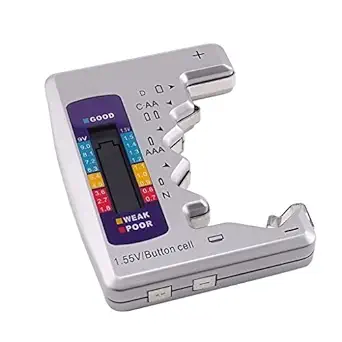
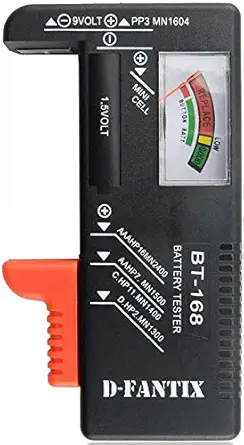
- Evaluate the tester's utility: The integrated tester is convenient for quick checks, but it's a basic continuity/power indicator. For precise voltage readings of partially used batteries, a dedicated digital multimeter is more accurate.
- Consider the sealing mechanism: The double-sided clear lid with secure latches is designed to prevent accidental spills and protect contents from humidity, a key failure point for cheaper organizers with loose lids.
What Our Analysts Recommend
High-quality organizers feature rigid, compartmentalized construction to prevent battery contact and potential short circuits. Look for clear labeling for battery types and polarities, and robust hinges/latches that will withstand repeated opening. The carrying handle should be firmly anchored, not a flimsy afterthought.
Battery Testers Market Context
Market Overview
The battery organizer market is bifurcated between simple, low-cost plastic trays and premium systems with added features like testers, enhanced sealing, and portability. The Ontel Battery Daddy sits in the latter segment, competing on organization density and multi-functionality rather than just price.
Common Issues
Common failures include flimsy latches that break, lids that warp and no longer seal, compartments that are too tight for branded batteries, and poor labeling that fades. Organizers without proper separation also risk batteries touching and discharging.
Quality Indicators
Superior products use thicker, shatter-resistant plastic for the lid and base, have positive-action locking latches (not just friction fit), and include polarized (+/-) markings molded into each compartment. Sealed edges or gaskets indicate serious protection against moisture.
Review Authenticity Insights
Grade B Interpretation
A Grade B with a 15% estimated fake review rate suggests the review corpus is generally reliable but requires discerning reading. The high volume of verified purchases (82,285 reviews) strongly supports genuine user experiences, though a portion of reviews may be overly enthusiastic.
Trust Recommendation
Prioritize reviews that discuss long-term durability (e.g., latch performance after a year), specific battery fit issues (like certain 9V brands), or the tester's real-world accuracy. Be slightly skeptical of reviews focusing solely on 'saving space' without detailing their battery mix.
Tips for Reading Reviews
Look for reviews with photos showing the unit loaded with batteries, as these demonstrate real-world capacity. Pay close attention to critical reviews mentioning broken components or tester failures—these often reveal design stress points not apparent in marketing.
Expert Perspective
The Ontel Battery Daddy's exceptional 4.89/5 rating, even when adjusted to a still-strong 4.50/5, indicates it successfully solves core pain points: disorganized battery drawers and dead-cell guesswork. Its value hinges on whether you need both high-density storage and the convenience of an integrated tester. For users with a large, mixed battery inventory (remote controls, toys, flashlights), the consolidation and protection are significant benefits. The minor drop in the adjusted rating likely reflects expectations around the tester's precision or long-term latch durability.
Purchase Considerations
This product makes the most sense for households or workshops with a substantial, frequently accessed battery collection. If you own fewer than 50 batteries or already have a dedicated digital tester, a simpler, less expensive tray may suffice. The portability offered by the handle is a legitimate advantage for technicians or frequent travelers.
Comparing Alternatives
Shoppers should compare the per-battery-stored cost and construction quality against simpler stacking trays or modular systems, especially if the integrated tester is not a required feature.