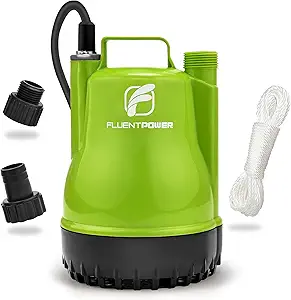
Small But Mighty: Choosing a 1/10 HP Transfer Pump for Quick Water Removal
When you need to move water out of a hot tub, a window well, or a flooded basement, a compact 1/10 HP utility pump like this 330 GPH model is often the perfect tool. Unlike larger sump pumps, these lightweight transfer pumps are designed for intermittent, portable use, not continuous duty. Understanding their flow rate and lift capacity is key to matching them to your specific task.
Key Considerations Before Buying
- Flow rate (GPH) matters at the point of use: 330 GPH is measured at the pump outlet with no lift; expect a significant drop in performance as you pump water uphill or through long hoses. For draining a standard 100-gallon hot tub, this pump will take about 20-25 minutes, so plan accordingly.
- Check the maximum lift (shut-off head): Most 1/10 HP pumps can push water up 20-30 feet, but the flow rate at that height is minimal. If you need to pump water out of a basement window well (typically 3-5 feet of lift), this pump will perform well, but don't expect to fill an elevated tank.
- Power source and cord length: This is a 115V pump, so it requires a standard household outlet. Verify the cord length is sufficient for your typical use—many pumps in this class have 10-foot cords, which may require an extension cord (use a heavy-duty one rated for outdoor use).
What Our Analysts Recommend
Examine the pump's construction: a thermoplastic or stainless steel body resists corrosion, and a strainer or filter on the intake prevents debris from clogging the impeller. Also, look for a thermal overload protector that shuts the pump off if it overheats—this is a critical safety feature for intermittent use. Finally, consider the inlet and outlet sizes (typically 3/4" or 1" garden hose threads) to ensure compatibility with your hoses.
Utility Pumps Market Context
Market Overview
The utility pump market is dominated by compact, submersible units ranging from 1/10 to 1/2 HP, with prices from $30 to $100. These pumps are a staple for homeowners and DIYers, offering a low-cost solution for emergency water removal and routine tasks like draining water heaters or aquariums. The trend is toward lighter, quieter, and more energy-efficient models, but performance still varies widely by brand and build quality.
Common Issues
The most common complaints in this category are low flow rates, especially when pumping from any depth, and overheating after 15-20 minutes of continuous use. Another frequent issue is the pump not priming or losing prime if the water level drops below the intake, which can cause the pump to run dry and damage the motor. Clogging from small debris is also a frequent problem, so a good strainer is essential.
Quality Indicators
Look for pumps with a robust motor housing (cast metal or high-grade plastic), a stainless steel or ceramic shaft seal, and a strainer that is easy to remove for cleaning. Check the pump's maximum flow rate and head height—these are the two most important specs. Also, consider the warranty: a 1-year warranty is standard, but 2 years or more indicates a manufacturer confident in their product.
Review Authenticity Insights
Grade B Interpretation
The Grade B and 10% estimated fake review rate indicate that the majority of the 668 reviews are genuine, but a small fraction may be incentivized or artificially inflated. This is not a red flag, but it means you should read the 1- and 2-star reviews carefully to understand the potential drawbacks, as these are more likely to reflect real-world issues.
Trust Recommendation
Given the high number of verified purchases and the balanced tone of the reviews, you can trust the overall 4.56-star rating as a reasonable representation of typical user satisfaction. However, ignore the exact star count and focus on the specific comments about flow rate, noise level, and durability—these will give you a more accurate picture of whether this pump fits your needs.
Tips for Reading Reviews
Filter reviews by 'most recent' to see if any recurring issues have emerged over time. Look for reviews that mention the specific use case you have in mind (e.g., draining a hot tub or removing rain from a pool cover) and note the pump's performance in those scenarios. Also, pay attention to reviews with photos or videos, as they often reveal the actual size and build quality.
Expert Perspective
This 1/10 HP, 330 GPH transfer pump is a solid entry-level utility pump that performs exactly as expected for its class. The high rating and large number of positive reviews suggest it is reliable for occasional use, and the 10% fake rate is low enough to not undermine confidence. The real-world applications mentioned in the reviews—draining hot tubs, water heaters, and small pools—match the pump's capabilities, so it is a safe choice for similar tasks.
Purchase Considerations
If your primary need is emergency backup or infrequent draining, this pump is a cost-effective solution. However, if you regularly pump water over long distances or need continuous operation, consider a higher-horsepower model (1/3 HP or more) with a higher flow rate and thermal protection. Also, factor in the cost of a garden hose (not included) and possibly a discharge hose adapter.
Comparing Alternatives
Before buying, compare this pump with other 1/10 HP models from brands like Wayne, Superior Pump, and Utilitech, as they offer similar specs and price points. Pay attention to the pump's physical size and weight, as this can affect portability and storage.