Precision Meets Practicality: Choosing a Digital Caliper That Won't Let You Down
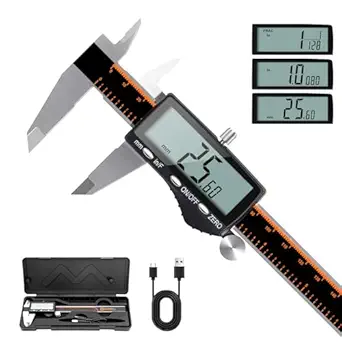
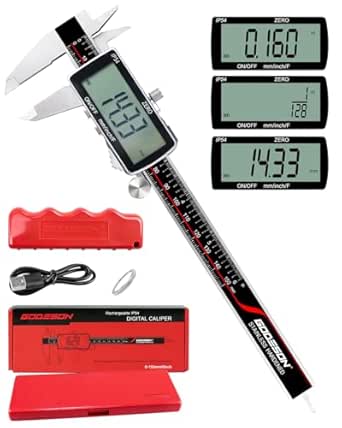
When you're in the market for a digital caliper, especially a 6-inch/150mm stainless steel model with a large LCD, you're looking for a tool that balances accuracy with everyday usability. This guide will help you navigate the key features that separate a reliable measuring instrument from a frustrating one, focusing on what matters for both hobbyists and professionals.
Key Considerations Before Buying
- Accuracy and resolution: Look for a caliper with a resolution of 0.01mm/0.0005 inches and an accuracy of ±0.02mm/0.001 inches for most general-purpose work. This ensures your measurements are reliable for everything from woodworking to metalworking.
- Jaw design and depth rod: Consider what you'll be measuring. A stepped jaw allows for measuring from a ledge, while a depth rod is essential for measuring hole depths. The included depth rod on this model is a versatile feature, but ensure it moves smoothly and locks securely.
- Battery life and auto-off: The auto-off feature is a practical convenience, but check how quickly it activates. Some users prefer a longer timeout to avoid interruption during a series of measurements. Also, consider battery type (commonly LR44 or SR44) and ease of replacement.
What Our Analysts Recommend
Beyond basic specs, feel the caliper's slider action—it should be smooth but with enough resistance to hold position. Check the zero button for easy recalibration and ensure the large LCD is clear and high-contrast for readability in various lighting conditions. A quality stainless steel frame should feel solid and not flex under normal pressure.
Caliper Gages Market Context
Market Overview
The digital caliper market is saturated with options ranging from budget plastic models to high-end Swiss-made instruments. The mid-range segment, where this stainless steel caliper sits, is highly competitive, with manufacturers offering similar specs at varying price points. Consumers often find it challenging to distinguish between durable, accurate tools and those that are merely adequate.
Common Issues
Common complaints in this category include battery drain, inconsistent readings due to poor internal components, and sloppy construction that leads to jaw misalignment. Another frequent issue is the LCD screen quality, which can become unreadable in low light or at certain angles. Calibration drift is also a concern, especially after the caliper is dropped or subjected to temperature changes.
Quality Indicators
For digital calipers, quality is often signaled by the use of hardened stainless steel, a smooth, precise rack and pinion mechanism, and a reliable capacitive or magnetic linear encoder. Look for IP ratings if you need dust or water resistance. Also, a brand with a track record of responsive customer service and available replacement parts is a plus.
Review Authenticity Insights
Grade B Interpretation
The Grade B review authenticity, with an estimated 10% fake reviews, suggests that the majority of the 2434 reviews are genuine, but a small fraction may be incentivized or overly promotional. This is typical for a popular product on Amazon. The adjusted rating of 4.50/5, down from 4.78, reflects the removal of these suspicious reviews, indicating that the true user satisfaction is slightly lower but still very positive.
Trust Recommendation
Given the B grade, you can generally trust the product's positive feedback, but be cautious of reviews that are overly detailed or use marketing language. Focus on reviews that mention specific testing methods or compare with other calipers. Since the fake rate is low, the product is likely a solid choice, but always cross-reference with independent sources if possible.
Tips for Reading Reviews
When reading reviews, look for comments about calibration stability over time, ease of zero-setting, and the quality of the included battery. Pay attention to any repeated complaints about specific failures, like the screen freezing or the slider becoming loose. Also, check if reviewers mention using the caliper in professional settings, as this adds credibility.
Expert Perspective
Based on the authenticity analysis, this digital caliper appears to be a reliable tool that meets the expectations of most users. The high genuine rating of 4.50/5 indicates that it performs well in real-world conditions, with the large LCD and stainless steel construction being frequently praised. The main caveats include the need for occasional recalibration and a 10% fake review rate, which is manageable but worth noting.
Purchase Considerations
Consider your primary use cases: if you need a caliper for occasional DIY projects, this model's features are more than adequate. For daily professional use, you might want to invest in a higher-end model with better repeatability and a longer warranty. Also, factor in the cost of replacement batteries and the potential need for a calibration certificate if you work in regulated industries.
Comparing Alternatives
It's wise to compare this caliper with other 6-inch digital models from brands like Mitutoyo, Fowler, and iGaging, which may offer different feature sets or build qualities at similar price points. Look for side-by-side comparisons in user reviews to see how this caliper stacks up in terms of feel and accuracy.