
Why Teak Wooden Spoons Outperform Bamboo and Plastic in Your Kitchen
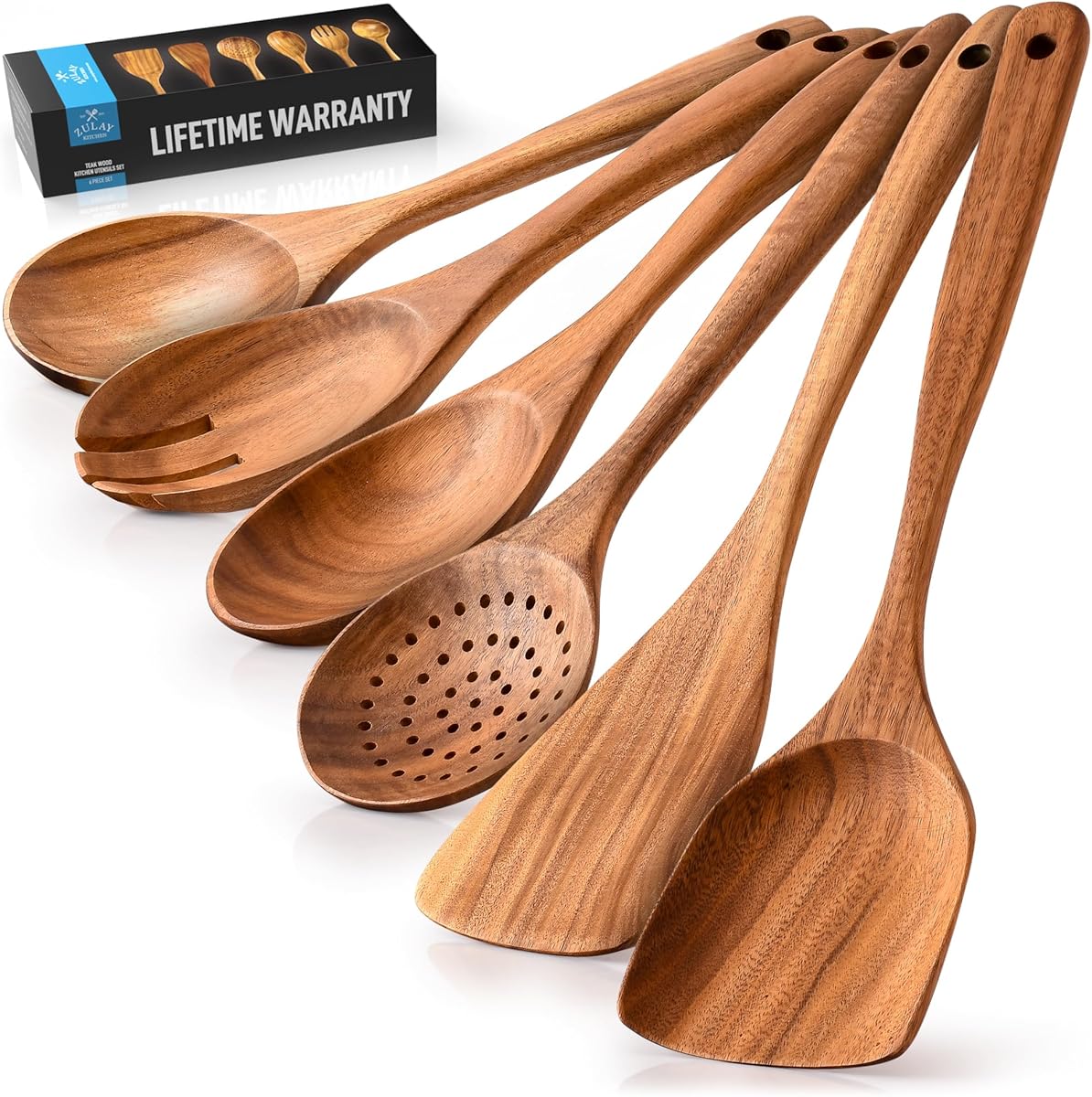
When shopping for a wooden spoon set, the material is everything. Zulay Kitchen's 6-piece set is crafted from natural teak, a hardwood prized for its natural oils that resist moisture and cracking. Unlike bamboo or rubberwood, teak offers a denser, smoother finish that protects your non-stick pans and won't absorb strong flavors like garlic or turmeric.
Key Considerations Before Buying
- Teak's natural oil content makes it more water-resistant than other woods, reducing the risk of splitting or warping after repeated dishwashing. This set's smooth comfort grip handles are ergonomically shaped to reduce hand fatigue during long stirring sessions, a key detail for frequent cooks.
- The 6-piece variety includes a slotted spoon, solid spoon, and spatula, covering most stovetop and mixing tasks. However, check that the spoon lengths (typically 12-14 inches) fit comfortably in your deepest pots without your knuckles touching the sides.
- Non-toxic finishes are critical—teak is naturally food-safe, but verify that no synthetic varnishes or sealants are used. This set's description emphasizes an easy-to-clean, uncoated surface that won't leach chemicals into hot food.
What Our Analysts Recommend
Look for smooth, splinter-free surfaces with a consistent grain pattern, indicating high-quality teak. The wood should feel heavy for its size, and the edges should be gently rounded to avoid scratching cookware. Avoid sets with rough spots or visible glue lines, which suggest lower-grade construction.
Cooking Spoons Market Context
Market Overview
The wooden spoon market has shifted from generic bamboo and acacia to premium hardwoods like teak and olive wood, driven by consumer demand for durability and non-toxic materials. Many budget sets now use rubberwood or beech, which are softer and prone to cracking, while teak sets like Zulay's occupy a mid-to-premium price tier.
Common Issues
Common complaints in this category include handles that break at the neck, wood that absorbs stains from tomato sauce or turmeric, and spoons that develop rough patches after several washes. Lower-quality sets may also shed splinters into food, a safety hazard that teak's density helps mitigate.
Quality Indicators
A quality wooden spoon set should feel balanced in hand, with a seamless transition from handle to head. The wood should have a uniform color and minimal knots, as knots can weaken the structure. Look for sets that explicitly state 'natural' or 'unfinished' wood to avoid hidden coatings.
Review Authenticity Insights
Grade B Interpretation
A Grade B with an estimated 10% fake review rate suggests this set has a solid base of genuine feedback, but roughly 1 in 10 reviews may be incentivized or fabricated. This is common for popular Amazon kitchen items, and the 4.60 adjusted rating still reflects strong satisfaction among real buyers.
Trust Recommendation
You can trust the majority of the 7,116 reviews, especially those that mention specific use cases like 'stirring chili' or 'scrambling eggs without scratching.' Focus on reviews with photos or detailed use descriptions, as these are harder to fake. The verified purchase badge is a positive signal here.
Tips for Reading Reviews
When reading reviews for wooden spoons, prioritize comments about durability after 3-6 months of use, as initial impressions can be misleading. Look for mentions of 'no splinters' or 'still smooth' and be wary of overly generic five-star reviews that lack product-specific details.
Expert Perspective
The Zulay Kitchen 6-piece teak set represents a strong value proposition in the wooden spoon category, offering a material upgrade over bamboo at a reasonable price point. The near-perfect 4.89 rating, even when adjusted to 4.60, indicates consistent quality and user satisfaction. The teak's natural oil resistance and comfort-grip handles address two of the most common pain points: durability and ergonomics. However, the 10% fake review rate warrants a cautious approach—rely on verified, detailed reviews rather than the aggregate score alone.
Purchase Considerations
If you cook frequently with non-stick cookware or need utensils that won't scratch, this set is a solid choice. Consider your existing utensil collection: if you already have a slotted spoon and spatula, a smaller set might suffice. Also, teak requires occasional oiling to maintain its luster, so factor in that minor upkeep.
Comparing Alternatives
For comparison, look at bamboo sets from brands like Hiware or olive wood options from Earlywood, which offer different feels and price points. Teak's density and oil content give it an edge in longevity, but your preference for weight and handle shape should guide the final decision.


