
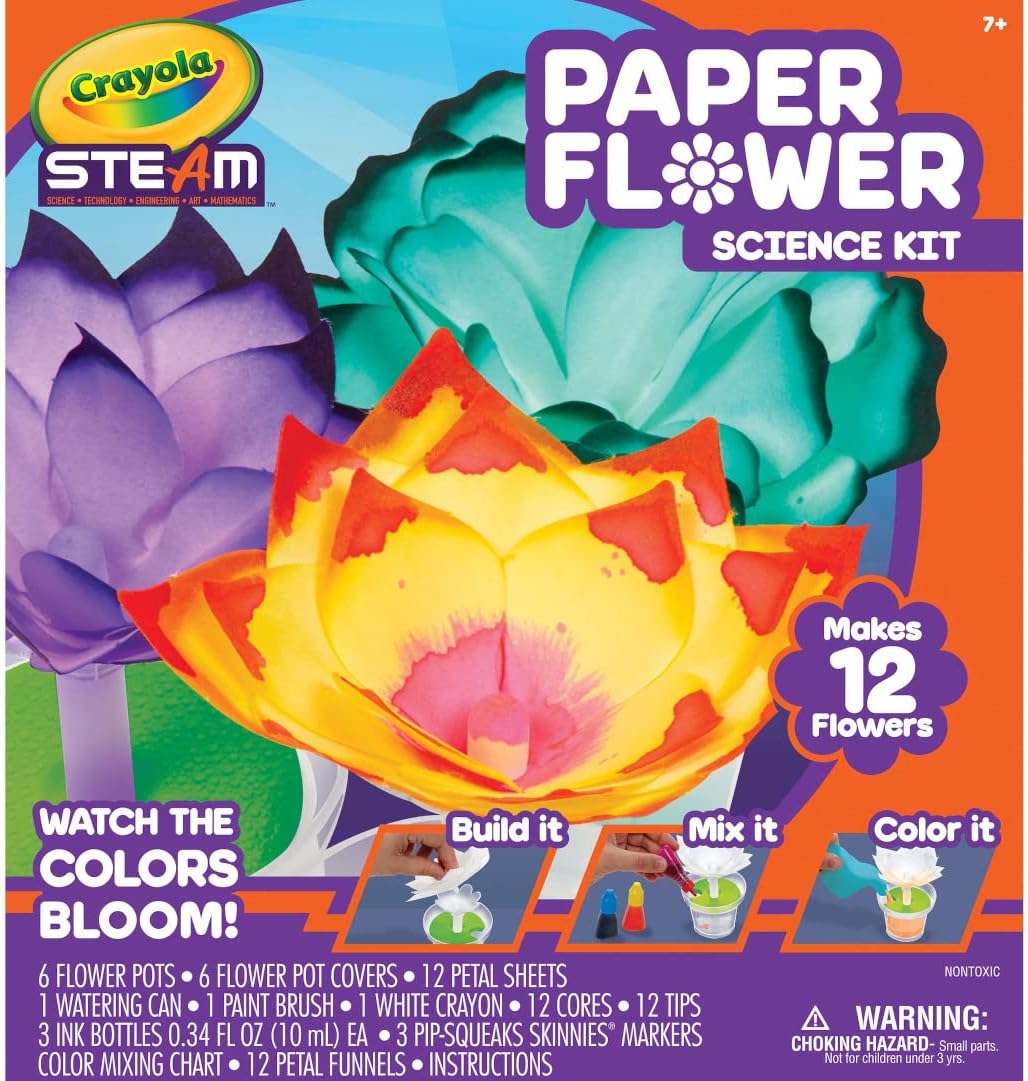
Color-Changing Flowers: What to Know Before Buying This Crayola Science Kit
The Crayola Paper Flower Science Kit offers a hands-on way for kids ages 7-10 to explore capillary action and color mixing through paper flowers that change hues. Unlike many science kits that rely on pre-packaged chemicals, this one uses simple household materials like water and food coloring to create a visually engaging experiment. Buyers should consider the kit's focus on craft and observation rather than complex scientific principles, making it ideal for younger learners.
Key Considerations Before Buying
- Age appropriateness: This kit is designed for ages 7-10, but younger children (like 5-year-olds) may need adult help with assembly and color mixing, while older kids might find the experiment too simple. Check your child's interest in craft-based activities rather than advanced lab-style science.
- Learning outcomes: The kit teaches capillary action and color theory through hands-on play, but it's more about observation than in-depth explanation. If you want a kit that also covers chemistry or physics, consider a more comprehensive set like a volcano or crystal growing kit.
- Reusability: The paper flowers are consumable, so the kit is a one-time experiment unless you buy refills. However, you can easily recreate the activity with coffee filters and markers, which extends its value for multiple sessions.
What Our Analysts Recommend
Look for kits that include clear instructions and enough materials for multiple trials, as kids often want to repeat experiments. High-quality paper that absorbs water evenly and holds color well is key for consistent results. Also, check for safety certifications and non-toxic materials, especially for younger children.
Science Kits & Toys Market Context
Market Overview
The science kit market is saturated with options from brands like Thames & Kosmos, National Geographic, and Crayola, ranging from simple craft-science hybrids to advanced STEM sets. Crayola's entry focuses on accessibility and creativity, appealing to parents who want a low-mess, visually rewarding activity that doesn't require extensive setup.
Common Issues
Many science kits suffer from flimsy components, unclear instructions, or experiments that fail to work as intended, leading to frustration. Another common issue is that kits promise educational value but lack depth, leaving kids with a one-time craft rather than a learning experience that sparks curiosity.
Quality Indicators
High-quality science kits feature durable materials, step-by-step guides with illustrations, and opportunities for open-ended exploration. Look for kits that include a 'science behind it' section or extension ideas, as these indicate thoughtful design. Verified positive reviews with specific details about the experiment's success are also strong signals.
Review Authenticity Insights
Grade B Interpretation
The Grade B rating and 10% estimated fake review rate suggest that while most reviews are genuine, a small fraction may be incentivized or unverified. This is typical for popular, lower-priced kids' toys where parents often leave quick, positive feedback. The high adjusted rating of 4.60/5 indicates real customer satisfaction despite the noise.
Trust Recommendation
You can generally trust the reviews, but focus on those with verified purchase badges and specific details about their child's age, engagement level, and whether the experiment worked as expected. Skip generic five-star reviews that just say 'great gift' without context, as these are more likely to be fake.
Tips for Reading Reviews
When reading reviews for science kits, look for comments about the quality of the paper flowers, the clarity of instructions, and whether the color change was dramatic or subtle. Also, note any complaints about missing pieces or the kit being too simple, as these reveal real-world limitations.
Expert Perspective
The Crayola Paper Flower Science Kit is a solid entry-level choice for introducing young children to basic scientific concepts through a creative, low-stakes activity. Its high rating and genuine reviews confirm that it delivers on its promise of a fun, mess-free experiment, though it lacks the depth of more comprehensive kits. The 10% fake review rate is minimal and doesn't undermine the product's overall positive reputation, but buyers should be aware that the kit is best suited for casual learning rather than serious STEM education.
Purchase Considerations
Weigh the kit's simplicity against your child's age and curiosity—if they're already asking 'why' about everyday phenomena, this kit can spark further exploration. However, if you're looking for a reusable or more advanced science experience, you may need to supplement with additional materials or move to a different product.
Comparing Alternatives
Shoppers should compare this with other craft-science hybrids like the Scientific Explorer Magic Science Kit or National Geographic's Light-Up Crystal Growing Lab, which offer more experiments and educational depth for a similar price.


