Night Vision Binoculars: What to Know Before You Buy
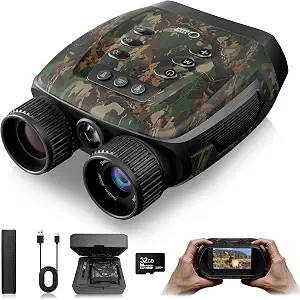
The GTHUNDER Night Vision Goggles pair digital 4K UHD video and 52MP full-color photos with a 4-inch HD screen and a remote app monitor, aiming to make nighttime observation easier for campers, hunters, and wildlife watchers. But night vision optics live or die on real-world low-light performance, battery endurance, and build quality—not headline specs alone.
Key Considerations Before Buying
- Digital night vision relies on an infrared illuminator, so usable range depends on IR power and ambient light; check whether the claimed viewing distance holds up in full darkness versus twilight conditions.
- The 10X zoom is digital, not optical, which magnifies pixels along with the subject—expect the sharpest image at base magnification and softer detail as you zoom in.
- The app-based remote monitor and 4-inch screen add convenience for framing shots and reviewing footage, but they also draw battery power, so plan on spare cells or a power bank for long nights.
What Our Analysts Recommend
Prioritize reviews that describe actual nighttime sessions—image clarity at distance, IR reach, and how the unit performs in cold or damp conditions. Look for specifics on battery life with the screen and Wi-Fi/app features active, plus feedback on ergonomics during extended handheld use, since these details separate capable night vision from spec-sheet marketing.
Night Vision Binoculars & Goggles Market Context
Market Overview
The night vision binocular market has shifted heavily toward affordable digital units that record video and photos, undercutting traditional analog and thermal optics on price while offering features like built-in screens and app connectivity. This makes capable entry-level night observation more accessible, but performance varies widely across brands and price tiers.
Common Issues
Buyers frequently report that advertised viewing distances are optimistic, that image quality degrades noticeably at high digital zoom, and that IR illuminators perform poorly in truly pitch-black conditions. Battery drain from screens and wireless features, plus durability concerns in wet or cold weather, are also recurring complaints in this segment.
Quality Indicators
Strong products in this category publish realistic IR range figures, use quality sensors for low-light clarity, and offer sensible battery solutions such as removable cells or USB power. Reviews that mention consistent performance across multiple outings, responsive customer service, and accessories like straps or cases are good signs of a mature, well-supported product.
Review Authenticity Insights
Grade B Interpretation
A Grade B authenticity rating with an estimated 15% fake review rate means most reviews are genuine, but a meaningful minority may be inflated or incentivized. The adjusted rating of 3.50 out of 5—lower than the displayed 3.78—suggests that stripping out suspicious reviews reveals a more mixed, though still positive-leaning, customer experience.
Trust Recommendation
Treat the 3.5 adjusted rating as the more honest baseline and weight detailed, verified-purchase reviews more heavily than star averages. Look for reviewers who describe specific nighttime use cases, mention both strengths and shortcomings, and include photos or video samples, as these are harder to fabricate.
Tips for Reading Reviews
For night vision gear, focus on reviews that quantify performance—actual distances, battery hours, and conditions tested—rather than vague praise like 'works great.' Pay attention to complaints that repeat across multiple reviewers, such as zoom softness or battery drain, since patterns are more telling than any single review.
Expert Perspective
The GTHUNDER Night Vision Goggles offer a feature-rich package for the price: 4K video, 52MP stills, a 4-inch HD screen, app-based remote monitoring, and 10X zoom. However, the adjusted 3.50 rating and 15% estimated fake review rate suggest buyers should temper expectations—particularly around true-dark performance and digital zoom clarity—and verify claims against detailed user experiences rather than marketing copy.
Purchase Considerations
Weigh whether you need recording and app connectivity or simply clear low-light viewing, since those extras add cost and battery demand. Consider your typical conditions—deep woods versus backyard observation—and whether the unit's IR range and battery setup match how and where you'll actually use it.
Comparing Alternatives
Compare this model against other digital night vision binoculars in the same price band, paying attention to IR range, sensor quality, and battery design, as well as analog options if pure low-light clarity matters more than recording features.