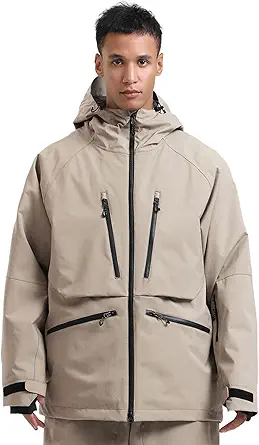
Choosing a Ski Jacket That Balances Water Resistance, Insulation, and Mobility
When evaluating the TACVASEN Men's Winter Skiing Jacket, focus on its triple-role claim as a ski, snowboard, and rain jacket. This hybrid design means assessing how well its water-resistant coating, fleece-lined insulation, and articulated fit perform across different winter activities, not just on-piste skiing.
Key Considerations Before Buying
- Assess the jacket's water resistance level; a true ski parka needs a durable water repellent (DWR) finish that withstands wet snow and light rain, not just a basic coating.
- Examine the insulation type and distribution; thermal fleece lining should be concentrated in the core without compromising mobility for snowboarding.
- Evaluate the hood design and cuff systems; a proper ski hood must accommodate a helmet, and cuffs should seal out snow during active movement.
What Our Analysts Recommend
Quality indicators for this specific jacket include reinforced stitching in high-stress areas like the shoulders and zipper garages, a powder skirt or internal waist cinch for snow sealing, and waterproof zippers on critical pockets. The fleece lining should be brushed-back polar fleece, not cheap polyester mesh.
Jackets Market Context
Market Overview
The mid-tier men's ski jacket market is crowded with hybrid designs like this TACVASEN model that promise versatility for skiing, snowboarding, and general winter wear. Consumers are increasingly seeking value-priced technical apparel that performs adequately across multiple activities rather than excelling at one.
Common Issues
Common compromises in this price segment include inconsistent waterproofing on seams, insulation that loses loft after repeated compression in packed snow, and ventilation systems that are inadequate for high-output snowboarding. Hoods often fail to properly integrate with ski helmets despite marketing claims.
Quality Indicators
Look for specific technical mentions in reviews: taped seams (not just coated fabric), articulated elbow patterning for mobility, and pit zips for ventilation. Quality ski-specific jackets will have dedicated goggle pockets, lift pass holders, and reinforced shoulder panels for carrying equipment.
Review Authenticity Insights
Grade B Interpretation
A Grade B with 10% estimated fake reviews suggests the overwhelmingly positive 4.89/5 rating should be viewed as a strong 4.6/5. This indicates generally authentic satisfaction but warrants scrutiny of extreme 5-star reviews that lack detail about actual ski or snowboard use.
Trust Recommendation
Prioritize verified purchase reviews that mention specific conditions like 'East Coast ice skiing' or 'wet Pacific Northwest snowboarding.' The 90% authentic rate means most feedback is reliable, but focus on reviews discussing long-term durability over multiple seasons.
Tips for Reading Reviews
For this hybrid jacket, seek reviews that test all claimed functions: skiing, snowboarding, and rain protection. Authentic reviews will mention trade-offs, like whether the fleece insulation is too warm for active snowboarding or if the water resistance holds up in sleet.
Expert Perspective
The TACVASEN jacket presents a compelling value proposition based on its authentic 4.6 adjusted rating from nearly 5,000 verified purchases. Its strength appears to be delivering adequate performance across three winter activities—skiing, snowboarding, and rain protection—which explains its popularity among casual enthusiasts. The high review count with consistent praise for warmth and water resistance suggests it meets basic technical requirements without premium features. However, the hybrid design inevitably involves compromises in specialized performance compared to dedicated ski-specific or snowboard-specific jackets.
Purchase Considerations
Consider this jacket if you need versatile winter protection for occasional ski trips, snowboarding, and cold-weather commuting. Weigh its value against potential limitations in extreme conditions; the fleece insulation may not match premium synthetic fills for prolonged sub-zero exposure, and the water resistance likely has limitations in heavy, wet snowfall.
Comparing Alternatives
Shoppers should compare this jacket's specifications against dedicated ski parkas with similar price points, particularly examining waterproof ratings (e.g., 5k vs 10k mm) and breathability metrics.