
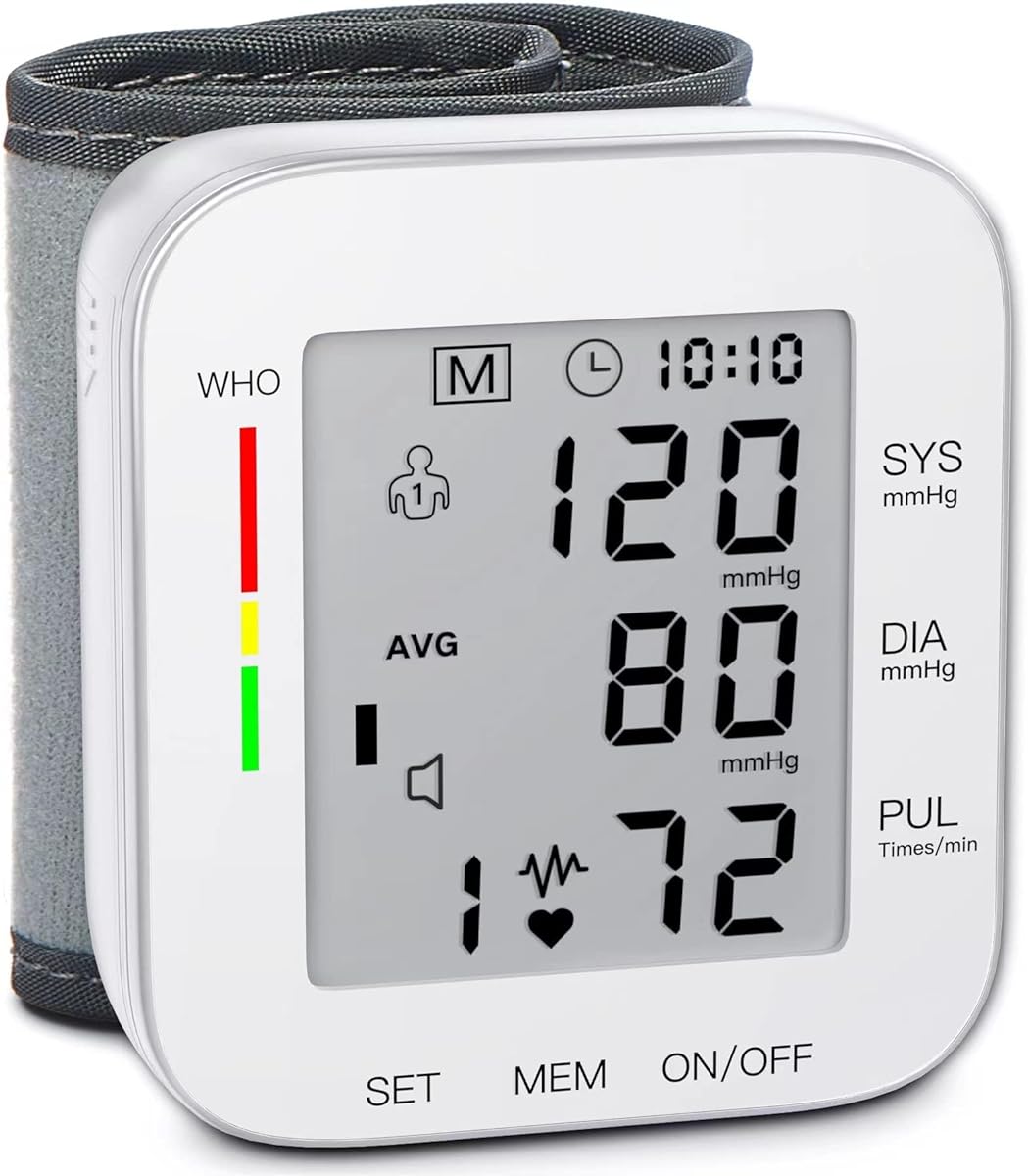
Wrist Monitor Buying: Accuracy, Cuff Fit, and Memory Storage
For home blood pressure monitoring, wrist monitors like the MMIZOO offer a compact, travel-friendly alternative to traditional upper-arm cuffs. However, accuracy can be more sensitive to body position, making proper usage crucial. This guide covers what to look for in a wrist monitor to ensure you get reliable readings.
Key Considerations Before Buying
- Cuff size is critical: The MMIZOO's adjustable cuff (5.31-7.68 inches) may not fit larger arms, so measure your wrist circumference before purchase to ensure a snug fit. An ill-fitting cuff can lead to inaccurate readings.
- Memory capacity matters for tracking trends: The MMIZOO stores 99x2 sets of readings with timestamps, which is great for monitoring blood pressure over time. Check if the device can store enough data for your needs and whether it can display averages.
- Proper positioning is non-negotiable: Wrist monitors require your wrist to be at heart level during measurement. Even with a high-quality device, incorrect arm position can skew results. Look for a monitor with a positioning indicator or clear instructions.
What Our Analysts Recommend
When evaluating wrist blood pressure monitors, prioritize FDA clearance as a baseline for safety and accuracy. Look for features like irregular heartbeat detection, a large display for easy reading, and a carrying case for travel. Also, consider the ease of use, including one-touch operation and a comfortable cuff.
Health & Household Market Context
Market Overview
The home blood pressure monitor market is saturated with options, ranging from basic upper-arm models to high-tech wrist devices. Wrist monitors are popular for their portability and convenience, but they often require more careful use. Many consumers are shifting toward devices that offer smartphone connectivity and multiple user profiles.
Common Issues
Common complaints across this category include inaccurate readings due to improper cuff placement or body position, difficulty fitting the cuff on larger wrists, and inconsistent performance compared to clinical measurements. Battery life and durability are also frequent concerns, especially for travel-friendly devices.
Quality Indicators
Look for FDA clearance or CE marking, as these indicate regulatory approval. A strong warranty and responsive customer support are also good signs. User reviews that mention comparing readings with a doctor's office or a professional device can be a practical indicator of accuracy.
Review Authenticity Insights
Grade B Interpretation
The Grade B authenticity rating and the estimated 10% fake review rate suggest that while the majority of the 60,974 reviews are genuine, a noticeable portion may be incentivized or inauthentic. This means you should not blindly trust the overall 4.11-star rating; instead, focus on detailed, verified purchase reviews.
Trust Recommendation
Given the 3.90 adjusted rating, which is slightly lower than the displayed rating, you should be cautious. Look for reviews that describe specific user experiences, such as how the monitor performed in daily use or during travel. Pay special attention to negative reviews to identify potential recurring issues.
Tips for Reading Reviews
For this product, filter reviews to those from verified purchases and sort by 'Most Recent' to see current quality. Read the 3-star reviews, as they often provide the most balanced insights—highlighting both pros and cons. Be wary of overly enthusiastic or vague reviews, which might be fake.
Expert Perspective
The MMIZOO wrist monitor offers a compelling balance of features, portability, and affordability, making it a solid choice for travelers or those who need occasional monitoring. However, the slightly lower adjusted rating and the 10% fake review rate indicate that it is not without flaws, particularly concerning accuracy and cuff fit. It appears to be a decent budget option, but not a top-tier clinical-grade device.
Purchase Considerations
If you have a smaller wrist and prioritize convenience over ultimate accuracy, this could be a good fit. However, if you have hypertension or need precise readings, consider investing in a higher-end upper-arm monitor. Always follow the instructions carefully and verify readings with your healthcare provider.
Comparing Alternatives
Shoppers should compare this model with other wrist monitors from brands like Omron or Withings, which may offer better accuracy and more advanced features, albeit at a higher price point. Look for devices with strong clinical validation and a track record of reliable performance.